ELSEVIE
journal homepage: www.elsevier.com/locate/jgeoexp
Zinc-enriched and zinc-biofortified feed as a possible animal remedy in pastora. agriculture: Animal health and environmental benefits
Christopher W.N. Anderson ,*, Brett H. Robinson ", David M. West ', Lynne Clucas ", Denise Portmani
· The New Zealand Biofortification Initiative, Soil and Earth Sciences Group, Massey University, Private Bag 11-222, Palmerston North, New Zealand
· The New Zealand Biofortification Initiative, Agriculture & Life Sciences Division, Lincoln University, Canterbury, New Zealand
· Institute of Veterinary, Animal and Biomedical Sciences, Massey University, Private Bag 11-222, Palmerston North, New Zealand
· Department of Environmental Sciences, Swiss Federal Institute of Technology, Zurich, Switzerland
ARTICLE INFO
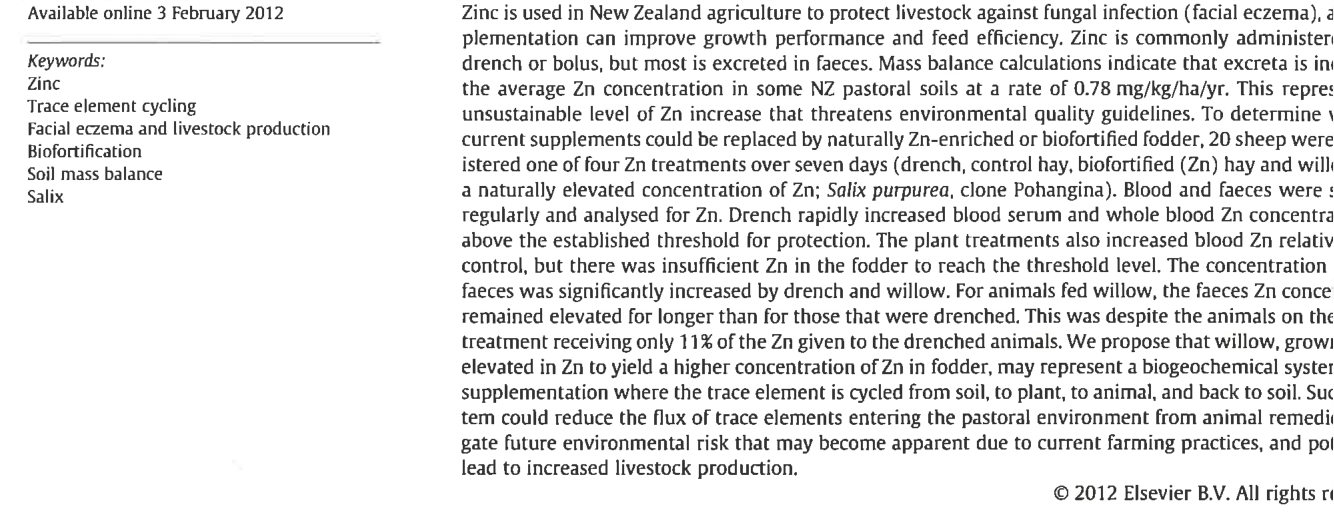
ABSTRACT摘要
1Introduction引言
Zinc (Zn) is an essential trace element for plants and all animals. Animal deficiencies are generally associated with Zn deficiencies in food/fodder (Branca and Ferrara, 2002; White and Broadley, 2005) and Zn supplementation can result in improved growth performance and feed efficiency (Herdt and Hoff, 2011). But high levels of Zn in soil can have the opposite effect. Zinc concentrations above a critical threshold level are toxic to plants and animals, and a build up of Zn in soil can have negative environmental and production implications. In New Zealand pastoral agriculture, Zn is utilised primarily as an animal remedy, particularly against facial eczema, a disease that affects ruminant animals and represents a significant production-limiting factor for New Zealand agriculture.
锌(Zn)是植物和所有动物必需的微量元素。动物缺锌通常与食物/饲料中锌含量不足有关(Branca and Ferrara, 2002; White and Broadley, 2005),补充锌可改善动物的生长性能和饲料利用效率(Herdt and Hoff, 2011)。然而,土壤中高水平的锌可能产生相反的效应。锌浓度超过临界阈值时对植物和动物具有毒性,土壤中锌的累积可能对环境和生产造成不利影响。在新西兰草地畜牧业中,锌主要用作动物防治药剂,尤其用于防治面部湿疹——一种危害反刍动物的疾病,是制约新西兰农业生产的重要因素。
* Corresponding author. Tel.: + 64 6 356 9099; fax: + 64 6 350 5632. E-mail address: c.w.n.anderson@massey. ac.nz (C.W.N. Anderson).
Facial eczema (FE) is a secondary response (a photosensitivi occurs due to liver damage inflicted by the mycotoxin sporidesn tained within spores of the saprolytic fungus Pithomyces cho (Gibson, 2008). Warm humid conditions at the end of summer p the growth of the fungus, which infects swards of grass with spo may be ingested by cattle and sheep. Acute exposure can lead to distress and death. Animals which have suffered chronic exposu several seasons, show signs of significant damage to bile ducts liver (Smith and Towers, 2002). The liver enzyme gamma-g transpeptidase (GGT) is used as a biochemical indicator of facial and is elevated in animals with either chronic or acute exposur disease.
面部湿疹(FE)是一种继发性反应(光敏反应),源于腐生真菌 Pithomyces chartarum 孢子中所含的霉菌毒素葚孢菌素(sporidesmin)对肝脏造成的损伤(Gibson, 2008)。夏末温暖潮湿的条件促进该真菌生长,其孢子侵染草丛,并可被牛羊摄入。急性暴露可导致动物痛苦乃至死亡。经数个季节慢性暴露的动物,其胆管和肝脏表现出明显损伤迹象(Smith and Towers, 2002)。肝酶γ-谷氨酰转肽酶(GGT)被用作面部湿疹的生化指标,在慢性或急性暴露于该病的动物中均呈升高。
A preventative treatment against FE is the administration doses of Zn; 15-20 mg/kg LW/day (Grace et al., 2010), well ab tritional or physiological requirements. Administration must b to or during the exposure of animals to pasture with high spore counts; treatment is ineffective in curing animals tha clinical signs of photosensitivity (Towers, 1976). Zinc salt form of ZnO is more effective than other forms of Zn such metal when administered to animals via a drench or intraruminal bolus (Bennison et al., 2010). The effective protection afforded by these treatments can range from days/weeks (drench) to months (bolus). The healthy range of Zn in sheep blood serum is 9.2-18 uM (Grace et al., 2010), but levels between 20 and 30 pM are thought to provide protection against FE (Munday et al., 1997). The precise mode of action of Zn in preventing FE is unknown, and a direct association between the concentration of Zn in serum and prophlaxis has not been demonstrated. However, a general correlation between the serum Zn concentration and reduced GGT activity is reported in the literature. Recent data indicates that high Zn concentrations in the gastrointestinal tract may also protect against FE; this is potentially very important as most ingested Zn is excreted in faeces. Bennison et al. (2010) suggested that a threshold Zn concentration in faeces must be exceeded before protective effects against an increase in GGT levels are observed, and these authors suggested a concentration of 250 mg/ kg fresh weight.
预防FE的一种措施是给予动物高剂量锌,即15-20 mg/kg 活体重/天(Grace et al., 2010),远高于营养或生理需求。给药必须在动物接触高孢子计数牧场之前或期间进行;对已出现光敏临床症状的动物,该处理无治愈效果(Towers, 1976)。经灌服或瘤胃内缓释丸给药时,ZnO形式的锌盐比锌金属等其他形式的锌更为有效(Bennison et al., 2010)。这些处理所提供的有效保护期从数天/数周(灌服)到数月(缓释丸)不等。绵羊血清锌的健康范围为9.2-18 μM(Grace et al., 2010),但一般认为20至30 μM的水平可提供针对FE的保护(Munday et al., 1997)。锌预防FE的确切作用机制尚不清楚,血清锌浓度与预防效果之间的直接关联也尚未得到证实。然而,文献报道血清锌浓度与GGT活性降低之间存在普遍相关性。近期数据表明,胃肠道中的高锌浓度也可能起到预防FE的作用;这一点可能非常重要,因为摄入的锌大部分随粪便排出。Bennison et al. (2010) 提出,粪便锌浓度必须超过某一阈值,才能观察到抑制GGT水平升高的保护效应,并建议该浓度为250 mg/kg 鲜重。
0375-6742/$ - see front matter © 2012 Elsevier B.V. All rights reserved.
0375-6742/$ - see front matter © 2012 Elsevier B.V. All rights reserved.
doi: 10.1016/j.gexplo.2012.01.009
There is environmental concern associated with the high level of Zn that is added to the pastoral environment through animal excreta (Zn flux). The use of Zn as an animal remedy has increased the level of Zn in soil by approximately 100% relative to background levels for pastoral soils in some regions of New Zealand (Kim et al., 2008). Elevated concentrations of soluble Zn, beyond the sufficient range for organisms, will impair soil functioning through toxicity to plants and soil biota. A New Zealand environmental issue of emerging concern is the potential for future changes in the health of the pastoral ecosystem due to human-induced increases in regional soil Zn concentrations.
通过动物排泄物进入草地环境的大量锌(锌通量)引发了环境方面的担忧。在新西兰部分地区,将锌用作动物防治药剂已使草地土壤中的锌含量较背景值提高约100%(Kim et al., 2008)。可溶性锌浓度升高并超出生物所需的适宜范围后,将通过对植物和土壤生物的毒性损害土壤功能。新西兰一个日益受到关注的环境问题是:人为导致的区域土壤锌浓度升高,可能在未来引起草地生态系统健康状况的变化。
An alternative Zn remedy may be to produce stock fodder with an elevated Zn concentration. This concept is described by a group of technologies known as biofortification, which seeks to increase the concentration of Zn and other trace element micronutrients in food or fodder pre-harvest using natural means (White and Broadley, 2005). Robinson et al. (2005) reported that some varieties of willow (Salix spp.) accumulate inordinate concentrations of Zn relative to pasture growing in the same soil. Poplars and willows are used extensively in New Zealand for soil conservation and supplementary stock fodder during times of drought (Wilkinson et al., 1999). Both foliage and small twigs can be browsed by sheep and cattle (Douglas et al., 1996; Hathaway, 1986). In addition to providing an emergency food source, the use of poplars and willows as stock feed has proven health benefits including an improvement in fecundity (Barry and Kemp, 1991). These benefits may be derived from high protein, tannin or nutrient concentrations. The use of willow with a naturally elevated concentration of trace element as described here does not directly constitute biofortification. However, the action of increasing an already high trace element concentration through breeding or agronomic practices would meet the definition of biofortification.
另一种替代性的补锌方法是生产锌浓度较高的牲畜饲料。这一理念属于统称为生物强化(biofortification)的一类技术,其目的是在收获前通过自然手段提高食物或饲料中锌及其他微量元素营养素的浓度(White and Broadley, 2005)。Robinson et al. (2005) 报道,与生长在同一土壤上的牧草相比,某些柳树(Salix spp.)品种可累积异常高浓度的锌。在新西兰,杨树和柳树被广泛用于水土保持,并在干旱期间作为补充牲畜饲料(Wilkinson et al., 1999)。其叶片和细枝均可被绵羊和牛采食(Douglas et al., 1996; Hathaway, 1986)。除作为应急饲料来源外,以杨树和柳树饲喂牲畜已被证实具有健康益处,包括提高繁殖力(Barry and Kemp, 1991)。这些益处可能源于其较高的蛋白质、单宁或养分含量。本文所述利用天然微量元素浓度较高的柳树,并不直接构成生物强化;然而,通过育种或农艺措施进一步提高本已较高的微量元素浓度,则符合生物强化的定义。
A potential advantage of biofortification over conventional facial eczema prophylaxis may be realised in environmental management. Elevated soil Zn concentrations resulting from conventional drenching practices should increase Zn uptake in pasture and fodder crops. It is possible that such fortified fodder (naturally or through adoption of biofortification practice) could afford some protection against FE and thus reduce the need for further conventional drench- or bolus-based treatment. Were fortified fodders found to be more efficient in supplementing Zn, the total Zn burden on the pasture soil could potentially be reduced. We therefore hypothesise that continuous feeding with fortified fodder may elevate blood serum and/or faeces Zn levels to levels that afford protection against FE and improve general animal health, and result in a more efficient and environmentally sustainable Zn transfer to the animal compared to a conventional drench. To provisionally test this hypothesis, and to assess the likely mass-balance of Zn in the pastoral environment, we sought to compare blood and faeces Zn concentrations in sheep fed fortified fodder to animals administered a negative (hay) and positive (drench) control.
与常规面部湿疹预防措施相比,生物强化的潜在优势可能体现在环境管理方面。常规灌服措施导致的土壤锌浓度升高,应会增加牧草和饲料作物对锌的吸收。这类强化饲料(天然形成或通过采用生物强化措施获得)有可能提供一定程度的FE保护,从而减少对常规灌服或缓释丸处理的需求。若发现强化饲料在补锌方面更为高效,则牧场土壤的总锌负荷有望降低。因此,我们假设:与常规灌服相比,持续饲喂强化饲料可使血清和/或粪便锌水平提高至足以预防FE的水平,并改善动物总体健康状况,同时实现更高效、在环境上更可持续的锌向动物的传递。为初步检验这一假设,并评估草地环境中锌的可能质量平衡,我们比较了饲喂强化饲料的绵羊与给予阴性对照(干草)和阳性对照(灌服)的动物的血液及粪便锌浓度。
2.1. Sheep2.1. 绵羊
Twenty four female lambs, with weights ranging from 3 (average weight 34.5 kg), were randomly selected from University production farm on 19 April 2010, and transfe the Animal Production Unit at the Palmerston North Campu sey University. The animals were randomly placed in indivi each with their own water and feed containers.
2010年4月19日,从梅西大学生产农场随机选取24只雌性羔羊(平均体重34.5 kg),并转移至梅西大学北帕默斯顿校区的动物生产单元。动物被随机安置于单独的围栏中,每栏配有独立的饮水和饲料容器。
Control hay (predominantly Lolium perenne) was fed to a for the first three days of the trial. At the end of the three dai tion period, the 20 animals, in blocks of five, that were best ing to the trial conditions were assigned to one of four ti (drench, willow, biofortified grass, control hay), and a d feeding regime was started. The first day of treatment wa as Day 0 and treatment continued for seven days (Day 1 is defined as 24 h after the initiation of treatment). From Day 10, all animals were placed back on the control hay diet, pi lease back onto the Massey University production farm. water were replaced daily.
试验最初三天,所有动物均饲喂对照干草(主要为 Lolium perenne)。三天适应期结束后,选出最能适应试验条件的20只动物,以每组五只的区组方式分配至四个处理之一(灌服、柳树、生物强化牧草、对照干草),并开始按规定方案饲喂。处理的第一天记为第0天,处理持续七天(第1天定义为处理开始后24 h)。自第10天起,所有动物恢复饲喂对照干草,之后放回梅西大学生产农场。饮水每日更换。
A jugular blood sample (5 mL) was collected from each experimental sheep on Days 0, 2, 4, 7 and 10 using a vacupa· er. The blood samples were centrifuged at 3000 RPM for 4°C (Heraeus Megafuge). Blood serum was then separated red blood cells and both components frozen in preparation sis. The weights of the whole blood, serum and red blood recorded. A sample of faeces from each animal was also col Days 0, 2, 4, 7 and 10, then dried at 70 °C until a consta was obtained.
于第0、2、4、7和10天,使用真空采血管采集每只试验羊的颈静脉血样(5 mL)。血样在4°C下以3000 RPM离心(Heraeus Megafuge)。随后将血清与红细胞分离,两部分均冷冻保存以备分析。记录全血、血清和红细胞的重量。同时于第0、2、4、7和10天采集每只动物的粪便样品,并在70 °C下烘干至恒重。
2.2. Feed treatments2.2. 饲料处理
Biofortified hay was harvested from research plots at Lin versity in Canterbury, New Zealand where soil was amen biosolids to contain Zn up to a concentration of 250 mg/k (predominantly L. perenne) was cut in March and April 201 aration for the sheep trial. The grass was then dried, well n packed for transport to Massey University. Willow (S. clone Pohangina) was harvested each day by cutting stem year old trees growing at the RST Environmental Solutions nursery in Aokautere near Palmerston North. The willo were coarsely chopped, then fed to the relevant sheep. Co was purchased from the animal production unit, for the z drench, commercial ZnO (500 g) was mixed with water and 100 mL of Nutrimole suspending agent. Twelve mL this suspension was administered orally to each of the fiv sheep using a plastic syringe. A single dose of drench was the treated sheep on Day O. The drenched animals were sub fed control hay for the duration of the trial.
生物强化干草采自新西兰坎特伯雷林肯大学的研究小区,该处土壤经生物固体(污泥)改良后锌浓度达250 mg/kg。牧草(主要为 L. perenne)于2010年3月和4月刈割,以备绵羊试验之用。牧草随后经干燥、充分混匀并打包,运往梅西大学。柳树(S. 无性系 Pohangina)每日从生长于北帕默斯顿附近 Aokautere 的 RST Environmental Solutions 苗圃中的柳树上截取茎枝收获。柳枝经粗切后饲喂相应处理的绵羊。对照干草购自动物生产单元。锌灌服剂的配制方法为:将商品ZnO(500 g)与水及100 mL Nutrimole 悬浮剂混合,用塑料注射器对五只处理羊每只口服灌服12 mL该悬浮液。处理羊于第0天接受单次灌服,此后在整个试验期间饲喂对照干草。
A weighed amount of feed was presented to each anin start of controlled feeding on Day 0. The amount remai then recorded either daily, or twice daily, and feed toppe known weight. The cumulative amount of feed ingested seven day feeding trial could therefore be accurately calcul
在第0天控制饲喂开始时,向每只动物提供称量过的饲料。之后每日或每日两次记录剩余饲料量,并补充已知重量的饲料。因此,可准确计算七天饲喂试验期间的累计采食量。
Hay was fed to animals as dry weight feed. Willow was imals on the basis of fresh weight feed. A bulk sample of w dried at 70°C until constant weight, and the dry weight c factor calculated.
干草按干重饲喂动物,柳树按鲜重饲喂动物。取柳树混合样品在70°C下烘干至恒重,计算干重换算系数。
2.3. Analysis2.3. 分析方法
The Zn concentration in all samples was determined usin (Varian), at Lincoln University. Blood serum was analyse after 1:4 dilution of the samples. A known volume of red b was digested in nitric acid for 2 h using a digestion block, the to 25 mL with de-ionised water. Based on the weights of the serum and red blood cells recorded, it was possible to express the Zn concentration in the serum, the red blood cells, and by calculation, in the whole blood mass and volume. The dry faeces samples were ground using a mortar and pestle, and dry herbage samples using a Cyclotec sample mill. Subsamples (0.5 g) were weighed into a microwave digestion container and pre-digested in concentrated nitric acid (5 mL) overnight. The following day the samples were microwave digested (700 W) at 75°C for 15 min then diluted to 25 mL with deionised water.
所有样品的锌浓度均在林肯大学使用(Varian)仪器测定。血清样品经1:4稀释后分析。取已知体积的红细胞在消解块上用硝酸消解2 h,然后用去离子水定容至25 mL。根据所记录的血清和红细胞重量,可分别表示血清和红细胞中的锌浓度,并通过计算得到全血质量和体积基础上的锌浓度。干燥粪便样品用研钵和研杵研磨,干草样品用 Cyclotec 样品粉碎机粉碎。称取子样品(0.5 g)置于微波消解罐中,加入浓硝酸(5 mL)预消解过夜。次日将样品进行微波消解(700 W,75°C,15 min),然后用去离子水定容至25 mL。
For quality assurance, a reference material (Wageningen 100 GR94) was analysed alongside the experimental samples. The analytical result differed by less than 10% from the certified value.
为保证质量,将标准参考物质(Wageningen 100 GR94)与试验样品同步分析。分析结果与认定值的偏差小于10%。
The Zn bioaccumulation factor for the biofortified fodder is calculated in this work as the concentration of Zn in the fodder divided by the concentration of Zn in the soil in which this fodder was grown.
本研究中,生物强化饲料的锌生物富集系数计算为饲料中锌浓度除以该饲料生长土壤中的锌浓度。
2.4. Statistical treatment of data2.4. 数据统计处理
Analysis of Variance (ANOVA) was performed using the SAS 9.1.2 statistical software package to determine significant differences between Zn concentrations as a function of both treatment, and days after treatment.
采用 SAS 9.1.2 统计软件进行方差分析(ANOVA),以确定锌浓度在不同处理及处理后不同天数之间的显著性差异。
3Results and discussion结果与讨论
3.1. Zinc ingestion3.1. 锌的摄入
Table 1 shows the Zn concentration of each treatment, and the amount consumed over the seven days of controlled feeding. The total amount of Zn administered through drenching was an order of magnitude greater than for the control or plant treatments. There were variations in the amount of feed consumed by animals on each treatment. The fresh weight of willow consumed was considerably lower than the dry weight of hay consumed by animals on the three hay treatments (control, drench and hay). However, despite the low feed intake, there was no apparent loss of animal condition during the trial. The Zn intake of animals on the willow treatment was higher than that on the control or hay treatment, and was 11% of that administered to the drenched animals. The Zn intake of animals fed willow was at least twice that of the animals fed hay (control or biofortified).表1列出了各处理的锌浓度及七天控制饲喂期间的摄入量。灌服给予的锌总量比对照或植物处理高一个数量级。各处理动物的采食量存在差异。柳树的鲜重采食量明显低于三个干草处理(对照、灌服和干草)动物的干草干重采食量。然而,尽管采食量较低,试验期间动物体况并无明显下降。柳树处理动物的锌摄入量高于对照或干草处理,为灌服动物所给予锌量的11%。饲喂柳树动物的锌摄入量至少是饲喂干草(对照或生物强化)动物的两倍。
3.2. Zinc concentration in sheep blood3.2. 绵羊血液中的锌浓度
Animal bodies contain no significant mobilisable stores of zinc and therefore a continuous dietary supply is necessary to meet the requirements of nutrition (Grace et al., 2010). Blood is therefore a key indicator of the Zn status of animal physiology and concentration will change as a function of the amount of Zn in an external supply (fodder or drench). In the context of mineral nutrition, blood is comprised of two fractions, blood serum (or plasma) and red-blood cells (the erythrocyte fraction), and Zn is unevenly partitioned between these two fractions. Deficiency levels or prophylaxis targets for Zn are generally made for the serum fraction, as serum results are generally considered to reflect the mineral status of the transport pool of trace elements (Herdt and Hoff, 2011). In the current study : centrations are reported for both the serum fraction and the blood fraction. The results can in this way be directly comp published guideline values for serum Zn, but can also be con in the context of whole blood chemistry. For some trace el for example selenium, the mineral concentration of the red cell fraction is important in making sound conclusions on min trition (Herdt and Hoff, 2011).
动物体内没有显著的可动员锌储备,因此需要持续的膳食供给以满足营养需求(Grace et al., 2010)。因此,血液是反映动物生理锌状况的关键指标,其浓度将随外部锌供给量(饲料或灌服剂)的变化而变化。就矿质营养而言,血液由血清(或血浆)和红细胞(红细胞组分)两部分组成,锌在这两部分之间分配不均。锌的缺乏水平或预防目标值通常针对血清组分制定,因为血清结果一般被认为能够反映微量元素转运库的矿质状况(Herdt and Hoff, 2011)。本研究同时报告了血清组分和全血组分的锌浓度。这样,结果既可直接与已发表的血清锌指导值进行比较,也可从全血化学的角度加以考量。对于某些微量元素(例如硒),红细胞组分的矿质浓度对于得出可靠的矿质营养结论十分重要(Herdt and Hoff, 2011)。
Detailed description of the Zn treatments used during the controlled feeding trial.
控制饲喂试验中所用锌处理的详细说明。
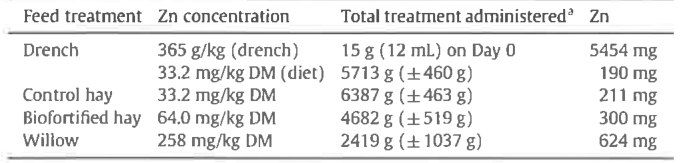
a The total treatment administered for each feed is cumulative dry matter ingested presented as an average for the five animals and standard error. All fodder concentrations and quantities are dry matter (DM).
a 各饲料的处理总量为累计干物质摄入量,以五只动物的平均值和标准误表示。所有饲料浓度和数量均以干物质(DM)计。
3.2.1. Serum zinc concentration3.2.1. 血清锌浓度
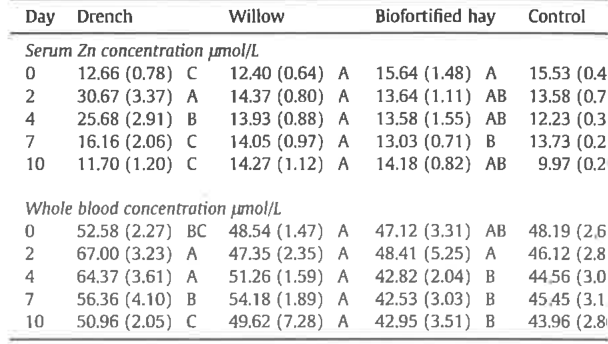
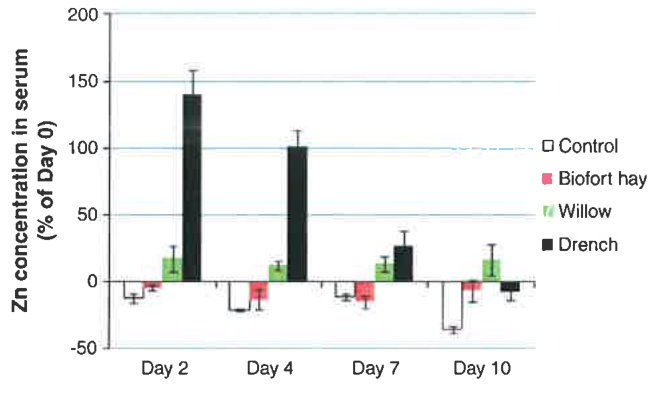
The blood serum Zn concentration of the control anim creased from Day 0 to Day 10 (P<0.01) (Table 2). This is att to a lower concentration of Zn in the control hay relative to concentration in the grass the animals were grazing in th This established a dropping baseline Zn concentration for the treatment that must be considered in the presentation of our To delineate the effects of the various treatments against this base line, the results in Table 1 are also presented in terms of p age change for each treatment relative to the concentration d treated animals on Day 0 (Fig. 1).
对照动物的血清锌浓度从第0天至第10天显著下降(P<0.01)(表2)。这归因于对照干草中的锌浓度低于动物此前在牧场所采食牧草中的锌浓度。由此形成了对照处理锌浓度逐渐下降的基线,在呈现结果时必须予以考虑。为区分各处理相对于该基线的效应,表1中的结果也以各处理相对于处理动物第0天浓度的百分比变化形式呈现(图1)。
Administration of the ZnO drench resulted in an immed crease in the serum Zn concentration of the treated sheep to the serum Zn concentration of those animals on Day 0 (] Fig. 1). However, the serum Zn concentration began to rapi crease during the days after administration (maximum 30.7 uM on Day 2). The serum Zn concentration of the drench mals was significantly higher than that for the other treatm Day 2 and Day 4 (P<0.01). By Day 7 the serum Zn concentra the drenched animals was the same as that for the sheep fed By Day 10 the serum Zn concentration of the drenched anim decreased relative to the concentration at Day 0 (Fig. 1) a the same as that recorded in the serum of the animals that r the control treatment.
给予ZnO灌服后,处理羊的血清锌浓度相对于第0天立即升高(表2,图1)。然而,给药后数天内血清锌浓度开始迅速下降(第2天最高值为30.7 μM)。第2天和第4天,灌服动物的血清锌浓度显著高于其他处理(P<0.01)。至第7天,灌服动物的血清锌浓度与饲喂柳树的绵羊相同。至第10天,灌服动物的血清锌浓度相对于第0天有所下降(图1),并与对照处理动物血清中记录的浓度相同。
The significant decrease in the serum Zn concentration of t trol animals was not observed for the animals fed willow (T The animals fed willow therefore recorded a relative incr blood serum Zn concentration for all days when compared serum Zn concentration for those animals on Day O and to the animals, although the magnitude of this increase was not as g that for drench (Fig. 1).
饲喂柳树的动物未出现对照动物那样的血清锌浓度显著下降(表2)。因此,与这些动物第0天的血清锌浓度及对照动物相比,饲喂柳树的动物在所有天数均表现出血清锌浓度的相对升高,但升幅不及灌服处理(图1)。
The serum Zn concentration of the animals fed biofortifi was lower at all sampling times relative to the initial concer on Day 0 (Fig. 1). However, when compared to the blood seru centration of the control animals on Day 10, the Zn concentrati significantly higher, and the same as the serum concentratior sheep fed willow (Table 2).
饲喂生物强化干草的动物,其血清锌浓度在所有采样时间均低于第0天的初始浓度(图1)。然而,与第10天对照动物的血清锌浓度相比,其锌浓度显著较高,且与饲喂柳树绵羊的血清浓度相同(表2)。
Serum and whole blood Zn concentration as a function of time for each tr Values are mean and standard error (n = 5). Significance testing (Duncan's Range Test) is for concentration as a function of day for each treatment. Me the same letter are not significantly different (P<0.05).
各处理血清和全血锌浓度随时间的变化。数值为平均值和标准误(n = 5)。显著性检验(Duncan 多重极差检验)针对各处理中浓度随天数的变化。字母相同的平均值之间无显著差异(P<0.05)。
3.2.2. Whole blood zinc concentration3.2.2. 全血锌浓度
The whole blood Zn concentration of the control animals again decreased through the 10 day feeding trial (P<0.01) (Table 2). Therefore, the Zn concentration in the whole blood is again presented in terms of percentage change for treatments relative to the concentration on Day 0 (Fig. 2).
在10天饲喂试验期间,对照动物的全血锌浓度同样下降(P<0.01)(表2)。因此,全血锌浓度也以各处理相对于第0天浓度的百分比变化形式呈现(图2)。
Animals administered the ZnO drench showed a rapid increase in whole blood Zn (Fig. 2), but the concentration decreased after Day 2 (maximum value 67.0 pM on Day 2) (Table 2). By Day 10 the blood Zn concentration of the drenched animals was the same as the concentration of these animals on Day 0 (P<0.01).
给予ZnO灌服的动物全血锌迅速升高(图2),但第2天后浓度下降(第2天最高值为67.0 μM)(表2)。至第10天,灌服动物的血锌浓度与其第0天浓度相同(P<0.01)。
The animals fed willow recorded a nominal increase in the whole blood Zn concentration relative to Day 0 for all days after Day 2 (Fig. 2). This is in contrast to a significant reduction in the concentration of Zn in the whole blood of the control animals. The concentration of whole blood Zn increased over the 7 days of willow feeding, reaching a maximum concentration of 54.2 pM on Day 7. By Day 7 the whole blood concentration of the willow-fed animals was the same as that of the animals that were drenched.
饲喂柳树的动物在第2天之后的所有天数,全血锌浓度相对于第0天均有小幅升高(图2)。这与对照动物全血锌浓度的显著下降形成对比。在7天柳树饲喂期间,全血锌浓度持续升高,于第7天达到最高值54.2 μM。至第7天,饲喂柳树动物的全血浓度与灌服动物相同。
The concentration of Zn in the whole blood of the animals fed biofortified hay did not show a clear trend. There was a slight increase in the Zn concentration for these animals on Day 2 relative to Day 0 (Fig. 2), however for all other sampling times there was a relative decrease (significant at P<0.06). The whole blood Zn concentration of animals fed biofortified hay was the same as that for the control animals throughout the trial.
饲喂生物强化干草的动物,其全血锌浓度未表现出明显趋势。这些动物第2天的锌浓度相对于第0天略有升高(图2),但在其他所有采样时间均相对下降(在P<0.06水平上显著)。在整个试验期间,饲喂生物强化干草动物的全血锌浓度与对照动物相同。
Our results show that drenching with ZnO immediately increased the blood serum and whole blood Zn concentration of the treated animals to levels prescribed as necessary to protect against FE. The maximum serum Zn concentration was reached on Day 2 This declined on Day 4 (25.7 pM), and had decreased by r on Day 7 (16.2 uM). Protection against FE is afforded by a concentration of 20-30 uM (Munday et al., 1997). Therefor in this trial had diminished protection from sometime betv 4 and 7. This observation supports the recommended dre animals once a week with the drench dose used in this wo
我们的结果表明,ZnO灌服可立即将处理动物的血清和全血锌浓度提高至预防FE所需的水平。血清锌浓度于第2天达到最高值,第4天下降(25.7 μM),至第7天进一步降低(16.2 μM)。20-30 μM的浓度可提供针对FE的保护(Munday et al., 1997)。因此,本试验中动物的保护作用在第4天至第7天之间的某一时刻已减弱。这一观察结果支持以本研究所用灌服剂量每周灌服动物一次的推荐做法。
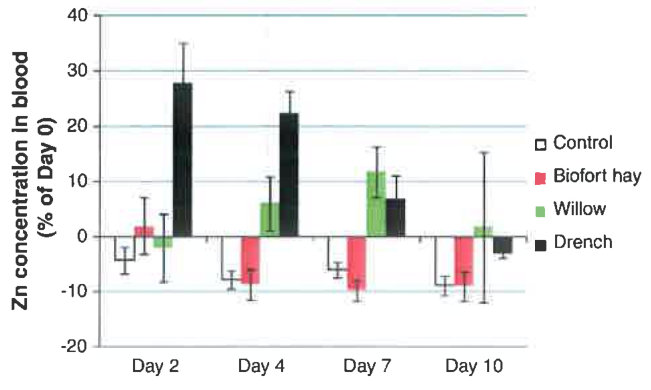
The Zn concentration in the serum and whole blood of th fed the control diet significantly decreased during the feeding trial. This is attributed to a reduction in the Zn con of the hay these animals were given, relative to their diet ir However, the Zn concentration in the serum and blood of th fed willow did not change. Zinc in the willow offset the de served for the control animals. We can therefore state that t treatment caused an increase in serum and whole blood Z trations relative to the control animals at each sampling to the willow animals on Day O. However, this Zn supple was insufficient to afford protection against FE based on lite ures (maximum value for serum 14.4 uM on Day 2). There · crease in the serum Zn concentration of the animals fed b hay relative to the control animals by Day 10 of the trial. this effect was less pronounced than that for willow, and ag ficient to reach the reported threshold value for protection a The data indicate that the serum fraction is more respon supply than the whole blood fraction.
在饲喂试验期间,饲喂对照日粮动物的血清和全血锌浓度显著下降。这归因于这些动物所饲喂干草的锌含量低于其此前日粮。然而,饲喂柳树动物的血清和血液锌浓度未发生变化。柳树中的锌抵消了对照动物所观察到的下降。因此可以认为,柳树处理使血清和全血锌浓度在各采样时间相对于对照动物及柳树组动物第0天的浓度有所升高。然而,根据文献数据,这种锌补充不足以提供针对FE的保护(血清最高值为第2天的14.4 μM)。至试验第10天,饲喂生物强化干草动物的血清锌浓度相对于对照动物有所升高。然而,这一效应不如柳树明显,同样不足以达到已报道的保护阈值。数据表明,血清组分对锌供给的响应比全血组分更为敏感。
3.3. Zinc concentration in sheep faeces3.3. 绵羊粪便中的锌浓度
The absolute concentration of Zn in the faeces of the a each treatment, for each sampling time, is shown in Fig. 3. there was a significant increase in the concentration of Zn i ces of the drenched animals to a maximum value of 3983 n There was a significant increase in the faeces Zn concentrat animals fed willow on Days 4 and 7 relative to these anima 0 (P<0.01) (Fig. 3). While the Zn concentration in the fae drenched animals decreased after Day 2, faecal Zn in th fed willow increased to a maximum value of 548 mg/kg Day 7. On Day 4, the Zn concentration in the faeces for treatments was not significantly different (P<0.01) (willow 506 mg/ kg; drench 889 mg/kg). On Day 7 the Zn concentration in the faeces of the sheep fed willow was higher than that in the sheep administered drench. By Day 10 the faeces Zn concentration for the drenchand willow-treated animals was the same as the concentration for that animal on Day O.
各处理动物在各采样时间粪便中锌的绝对浓度见图3。灌服动物粪便中锌浓度显著升高,最高值达3983 mg/kg。与第0天相比,饲喂柳树的动物在第4天和第7天粪便锌浓度显著升高(P<0.01)(图3)。灌服动物粪便锌浓度在第2天后下降,而饲喂柳树动物的粪便锌则持续升高,于第7天达到最高值548 mg/kg。第4天,这两个处理的粪便锌浓度无显著差异(P<0.01)(柳树506 mg/kg;灌服889 mg/kg)。第7天,饲喂柳树绵羊的粪便锌浓度高于灌服绵羊。至第10天,灌服和柳树处理动物的粪便锌浓度与各自第0天的浓度相同。
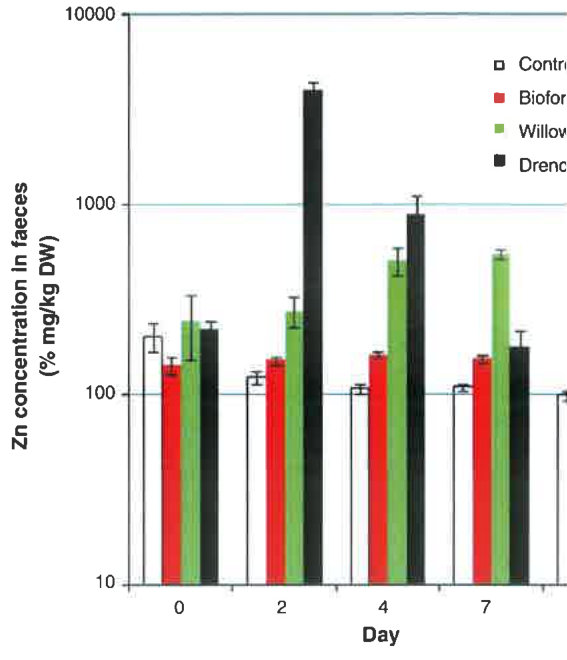
The faeces Zn concentration of the animals fed biofortified hay did not change from Days 0 to 7, but was significantly lower on Day 10. The faeces Zn concentration of the animals fed the control diet decreased on Day 2, but did not change thereafter.
饲喂生物强化干草的动物,其粪便锌浓度在第0天至第7天未发生变化,但在第10天显著降低。饲喂对照日粮动物的粪便锌浓度在第2天下降,此后保持不变。
3.4. Efficacy of treatments to protect against facial eczema3.4. 各处理对面部湿疹的保护效果
Serum Zn concentration is used as an indicator of FE protection due to the reported negative correlation between the serum Zn concentration and serum GGT activity. The threshold values to afford protection against FE have been generated through clinical trials where the relationship between serum Zn concentration, GGT activity and clinical affects have been investigated. These clinical trials have used inorganic forms of Zn as an FE prophylaxis (ZnO and Zn metal), not organic forms of Zn. There is insufficient data to suggest that the same threshold values can be used in the consideration of the level of protection that might be afforded by fortified fodder. In the current trial we did not expose animals to sporidesmin, and therefore, as there was no reason to expect an increase in the activity of liver enzymes (specifically GGT), we did not measure the GGT activity in the serum of the animals. We therefore have insufficient data to state whether any protection has been afforded against FE using the elevated Zn fodder treatments. However, our trial has recorded that the serum and whole blood Zn concentration of ruminant animals (sheep) can be manipulated through amendment of an animal's diet to include biomass with an elevated concentration of Zn.
由于已报道血清锌浓度与血清GGT活性呈负相关,血清锌浓度被用作FE保护的指标。提供FE保护的阈值是通过临床试验得出的,这些试验考察了血清锌浓度、GGT活性与临床效应之间的关系。这些临床试验使用的是无机形态的锌(ZnO和锌金属)而非有机形态的锌作为FE预防剂。目前尚无足够数据表明,同样的阈值可用于评估强化饲料可能提供的保护水平。本试验未使动物暴露于葚孢菌素,因此没有理由预期肝酶(特别是GGT)活性会升高,故未测定动物血清中的GGT活性。因此,我们尚无足够数据判断高锌饲料处理是否提供了针对FE的保护。然而,本试验证实,通过在反刍动物(绵羊)日粮中添加高锌生物质,可以调控其血清和全血锌浓度。
Administration of the ZnO drench resulted in an immediate increase in the Zn concentration of the faeces of the treated animals (3983 mg/kg DW). At a dry weight content of sheep faeces of 30%, this is equivalent to a fresh weight concentration of 1196 mg/kg, well in excess of the reported threshold value for protection (250 mg/kg FW; Bennison et al., 2010). The willow diet resulted in a significant increase in the Zn concentration in the faeces. By Day 7, the Zn concentration in the faeces of the drenched animals had dropped to 54 mg/kg (FW), whereas the Zn concentration in the faeces of the sheep fed willow was still relatively high; 165 mg/kg (FW). While this is below the reported threshold, it is not dissimilar. There is the potential that these animals did gain some protection against sporidesmin and therefore against FE. No elevation of faeces Zn to a level that could likely begin to afford protection against FE was recorded for the control animals or those fed biofortified hay.
给予ZnO灌服后,处理动物粪便中的锌浓度立即升高(3983 mg/kg DW)。按绵羊粪便干物质含量30%计算,相当于鲜重浓度1196 mg/kg,远超已报道的保护阈值(250 mg/kg FW;Bennison et al., 2010)。柳树日粮使粪便锌浓度显著升高。至第7天,灌服动物粪便锌浓度已降至54 mg/kg(FW),而饲喂柳树绵羊的粪便锌浓度仍相对较高,为165 mg/kg(FW)。该值虽低于已报道的阈值,但相差不大。这些动物有可能获得了一定程度针对葚孢菌素、进而针对FE的保护。对照动物或饲喂生物强化干草的动物,其粪便锌均未升高至可能开始提供FE保护的水平。
3.5. Environmental consideration of facial eczema prophylaxis3.5. 面部湿疹预防的环境考量
The data generated during the feeding trial allows for general mass balance calculations to explore the environmental fate of Zn administered to animals for FE prophylaxis. The drenched animals in this trial were administered a dose containing 5.45 g of Zn (Table 1). This is a minimum amount of Zn that can be expected to be administered to sheep each week during the facial eczema period in a pastoral environment. Assuming 95% of this 2n is excreted (substantiated by the faeces Zn concentration of the drenched animals), 5.18 g of Zn per week is added to soil by each treated animal. The facial eczema challenge period in New Zealand can last for up to 10 weeks (on average). Therefore, assuming a stocking rate of 15 lambs per hectare, the total input of Zn to soil in the form of excreta is approximately 550 g per ha per eczema season. Further assuming that this Zn is retained in the top 10 cm of soil through adsorption to organic matter, this would result in an average increase in the Zn concentration of the surface soil by 0.78 mg/kg per year (bulk 1.0 t/m3).
利用饲喂试验获得的数据,可进行总体质量平衡计算,以探讨为预防FE而给予动物的锌的环境归趋。本试验中灌服动物所给予剂量含锌5.45 g(表1)。这是草地环境中面部湿疹期间每周给予绵羊锌量的最低预期值。假设其中95%的锌被排出(灌服动物粪便锌浓度可证实这一点),则每只处理动物每周向土壤输入5.18 g锌。新西兰面部湿疹高发期平均可持续长达10周。因此,假设载畜量为每公顷15只羔羊,每个湿疹季节以排泄物形式输入土壤的锌总量约为每公顷550 g。进一步假设这些锌通过吸附于有机质而保留在表层10 cm土壤中,则表层土壤锌浓度每年平均增加0.78 mg/kg(容重1.0 t/m3)。
Our average annual soil-Zn increase concentration agre that proposed by Kim et al. (2008). These authors cond study investigating the flux of Zn in pastoral soils of the Wail gion and estimated that the Zn loading to soil through the us imal remedies was 5-7 kg/ha/yr, at an average annual concei increase of 0.7 mg/kg. The average background concentratio in Waikato soils is reported as 35 mg/kg, while the average tration for pastoral soils is 59.4 mg/kg. In a recent review of tl cal concentration of Zn in the soil, Jeyakumar et al. (2010) cal the concentration of total soil Zn that promoted a 10% yield re in poplar and pine trees to be 120 and 103 mg/kg respectiv though the critical concentration was higher for soil bacteria a corrhiza. This was for a pastoral soil amended with biosolids t been contaminated with Zn. Consideration of these values s revision downwards of the intervention concentration of tot soil from the current value of 300 mg/kg (NZWWA, 20 100 mg/kg. Approximately 10% of pastoral soils sampled by al. (2008) had a soil Zn concentration above the interventio of 100 mg/kg. Assuming the annual concentration increases r here, the majority of soils sampled may exceed this investigati within 40 years. This is clearly an issue of potential concern; concentration in New Zealand pastoral soils is steadily increa
我们得出的土壤锌年均增加浓度与Kim et al. (2008) 提出的数值一致。这些作者开展了一项研究,调查怀卡托地区草地土壤中锌的通量,估算使用动物防治药剂向土壤输入的锌负荷为5-7 kg/ha/yr,年均浓度增加0.7 mg/kg。据报道,怀卡托土壤锌的平均背景浓度为35 mg/kg,而草地土壤的平均浓度为59.4 mg/kg。在近期一篇关于土壤锌临界浓度的综述中,Jeyakumar et al. (2010) 计算出导致杨树和松树减产10%的土壤全锌浓度分别为120和103 mg/kg,但土壤细菌和菌根的临界浓度更高。该结果针对的是经受锌污染的生物固体改良的草地土壤。综合考虑这些数值,建议将土壤全锌的干预浓度由现行的300 mg/kg(NZWWA, 2003)下调至100 mg/kg。Kim et al. (2008) 所采集的草地土壤中,约10%的土壤锌浓度超过100 mg/kg的干预值。按照本文所报道的年浓度增幅推算,大多数采样土壤可能在40年内超过该调查限值。这显然是一个值得关注的潜在问题;新西兰草地土壤中的锌浓度正在稳步上升。
These calculations assume that the animals evenly distrib ces across 1 ha, which is not a realistic assumption. Excrem be applied to concentrated areas, leading to localised hot spot plied soil Zn. Shorter or longer periods of FE risk will result i variation of the amounts of input both up and down. This Zr sents an anthropogenic input that is poorly contained and has tial to readily interact with the productive environment. The e future environmental risk that may be incurred through this I is unknown.
上述计算假设动物将粪便均匀分布于1 ha范围内,这一假设并不现实。排泄物可能集中于某些区域,导致施入土壤的锌形成局部热点。FE风险期的缩短或延长将使输入量相应减少或增加。这部分锌代表了一种控制不佳的人为输入,易于与生产环境发生相互作用。通过这一途径可能带来的未来环境风险程度尚不清楚。
3.6. Practical application of biofortification for facial eczema prop animal remedy and environmental management
3.6. 生物强化在面部湿疹预防、动物防治和环境管理中的实际应用
The willows used for this feeding trial were grown on a s taining just 36 mg/kg Zn. The biofortified hay was prepared vesting grass from soil amended with biosolids that had a t concentration of 250 mg/kg. The increased bioaccumulatior for willow (7.17) relative to the biofortified hay (0.26) his the ability of willow to accumulate Zn. If willows were to be on areas of known, higher-concentration (and thus enviror risk) soil, then the concentration of Zn in the plant may be n higher. The willow species Salix viminalis (Gigantia) common in New Zealand as a fodder tree species, has been reported t mulate Zn to a concentration in excess of 1000 mg/kg grov soil with 97 mg/kg Zn (Hermle et al., 2007).
本饲喂试验所用柳树生长于仅含锌36 mg/kg的土壤上。生物强化干草则采自经生物固体改良、全锌浓度为250 mg/kg的土壤上的牧草。柳树的生物富集系数(7.17)高于生物强化干草(0.26),突显了柳树累积锌的能力。若在已知锌浓度较高(因而具有环境风险)的土壤上种植柳树,植物中的锌浓度可能会更高。据报道,在新西兰常作为饲料树种的柳树 Salix viminalis(Gigantia)生长于含锌97 mg/kg的土壤上时,可累积锌至1000 mg/kg以上(Hermle et al., 2007)。
Drenching is expensive and time consuming, requiring t sheep be mustered and manually administered the drench. trast, supplying fortified fodder could be less expensive and n ficient. A land management strategy can be envisaged whe critically high in Zn are planted exclusively in willow. This wo resent an active attempt to increase the Zn content of willow t agronomic practice (an example of biofortification). During the and summer months as these plants are growing, Zn will be a lated into the above-ground biomass. During periods of high fa zema risk (late summer, early autumn) stock could be allo graze the willow, either directly from the tree, or by way o and carry system. Generally, in New Zealand, times of high fa zema risk coincide with periods of low grass production at the ning of a period of autumn growth. The willow would th represent a valuable source of fodder to sustain live weigh The distribution of excrement concentrated in Zn as a result of digestion could be limited through holding animals in the areas during the periods of high eczema risk. In subsequent seasons this Zn would be cycled from soil back into the trees, limiting the need for further Zn input into the agricultural system. This would not only represent a sustainable system for animal trace element nutrition, but a sustainable system for the management of potential trace element contaminants in soil.
灌服成本高且耗时,需要将绵羊集中并人工灌服。相比之下,提供强化饲料可能成本更低、效率更高。可以设想这样一种土地管理策略:在锌含量极高的区域专门种植柳树。这将是通过农艺措施主动提高柳树锌含量的尝试(即生物强化的一个实例)。在春夏季植物生长期间,锌将累积于地上部生物量中。在面部湿疹高风险期(夏末、初秋),可让牲畜直接在树上采食柳树,或通过刈割饲喂方式饲喂。在新西兰,面部湿疹高风险期通常与秋季生长期开始时牧草产量较低的时期相重合。因此,柳树将成为维持活体重的宝贵饲料来源。在湿疹高风险期将动物圈养于这些区域,可限制因消化而富含锌的排泄物的扩散。在随后的季节中,这些锌将从土壤重新循环回树木中,从而减少向农业系统进一步输入锌的需求。这不仅是一种可持续的动物微量元素营养体系,也是一种可持续的土壤潜在微量元素污染物管理体系。
In this scenario we propose that biofortified pasture is not suitable for use as fortified fodder because of the low bioaccumulation factor of Zn for grass (hay). Biofortified pasture in this experiment had no clear, significant effect on blood or faeces chemistry. But the relatively high Zn bioaccumulation factor for willow leads us to believe that use of willow as biofortified fodder has potential as an animal remedy. The total amount of Zn ingested by the animals fed willow was only 11% of that ingested by the animals administered drench. However, by Day 7 of the trial the Zn concentration in serum, whole blood and faeces were the same (serum and whole blood) or higher (faeces) for the sheep fed willow relative to the drenched animals. The concentration of Zn in blood serum, whole blood and faeces for the sheep fed willow increased throughout the period of controlled feeding. This indicates that Zn in the fodder is being slowly released from the stomach. A key factor in the dietary supplementation of animals is the bioavailability of the trace elements in the fodder. Compounds such as tannins and oxylates inhibit the uptake of trace elements, including Zn and Fe, while uptake is promoted by ascorbates and citrates (Fuxia et al., 2009). Under the conditions of the current trial, tannins in the willow biomass may have retarded the release of Zn into the blood stream. This could represent a further beneficial effect of biofortified willow as an animal remedy.
在此情景下,我们认为由于牧草(干草)的锌生物富集系数较低,生物强化牧草不适合用作强化饲料。本试验中生物强化牧草对血液或粪便化学组成无明显、显著的影响。但柳树相对较高的锌生物富集系数使我们相信,将柳树用作生物强化饲料具有作为动物防治药剂的潜力。饲喂柳树的动物摄入的锌总量仅为灌服动物的11%。然而,至试验第7天,饲喂柳树绵羊的血清、全血和粪便锌浓度与灌服动物相同(血清和全血)或更高(粪便)。在控制饲喂期间,饲喂柳树绵羊的血清、全血和粪便锌浓度持续升高。这表明饲料中的锌正从胃中缓慢释放。动物膳食补充的一个关键因素是饲料中微量元素的生物有效性。单宁和草酸盐等化合物会抑制包括锌和铁在内的微量元素的吸收,而抗坏血酸盐和柠檬酸盐则促进其吸收(Fuxia et al., 2009)。在本试验条件下,柳树生物质中的单宁可能延缓了锌向血液的释放。这可能是生物强化柳树作为动物防治药剂的又一有益作用。
A key unknown that is pertinent to this strategy is the extent to which Zn in naturally fortified/biofortified fodder provides protection against sporidesmin, and the length of time after ingestion of the fodder this effect is apparent for. These questions are being addressed through ongoing research.
与该策略相关的一个关键未知问题是:天然强化/生物强化饲料中的锌在多大程度上能提供针对葚孢菌素的保护,以及摄入饲料后该效应可持续多长时间。这些问题正在后续研究中加以探讨。
3.7. The general health context of the research results3.7. 研究结果的总体健康背景
Zinc deficiencies in livestock are less widely quantified than deficiencies in the human population, but will occur for the same reasons. Deficiency of all trace elements will lead to decreased production and economic retum. A general theme of literature is that supplementation of Zn beyond normal physiological requirements will lead to increased livestock growth performance relative to control populations (Herdt and Hoff, 2011; Lee et al., 1999). Our data shows that Zn-fortified fodder (biofortified or naturally enriched) will readily increase the serum and whole blood Zn concentration of sheep. Therefore, the positive effects of Zn biofortification of animal fodder may extend beyond just prophylaxis for tungal infection. In this sense, biotortification for animal health could be considered a research direction of similar importance to that
与人类群体相比,牲畜缺锌的量化研究较少,但其成因相同。所有微量元素的缺乏都会导致生产力和经济回报下降。文献中的一个普遍观点是,超出正常生理需求的锌补充可使牲畜生长性能优于对照群体(Herdt and Hoff, 2011; Lee et al., 1999)。我们的数据表明,富锌饲料(生物强化或天然富集)可显著提高绵羊的血清和全血锌浓度。因此,动物饲料锌生物强化的积极作用可能不仅限于预防真菌感染。从这个意义上说,面向动物健康的生物强化可被视为与之同等重要的研究方向
4Conclusion结论
The findings of this research support biofortification as a valid mechanism to increase the blood concentration of Zn in sheep. Willow, which has a bioaccumulation factor greater than that of grass (hay), is the most promising candidate as fortified fodder. Selective planting of willow on soil with an elevated concentration of zinc, or harvest of native willow with a higher concentration of zinc than that used in this study (258 mg/kg), could yield Zn-enriched fodder that can more readily increase blood or faeces concentration to above levels prescribed as necessary to protect against facial eczema. A planting strategy, where willow is grown on soil that is becoming gradually contaminated due to the amount of Zn entering the environment through the use of conventional animal remedies (agronomic biofortification), to the sustainable biogeochemical recycling of trace elem minimise the need for new inputs of Zn into the pastoral env An increased level of Zn in animal diets beyond normal physi nutritional requirement achieved through the use of biofor low fodder may promote the additional benefits of improve performance and feed efficiency.
本研究结果支持生物强化是提高绵羊血锌浓度的有效途径。柳树的生物富集系数高于牧草(干草),是最有前景的强化饲料候选植物。在锌浓度较高的土壤上选择性种植柳树,或收获锌浓度高于本研究所用柳树(258 mg/kg)的天然柳树,可获得富锌饲料,从而更易将血液或粪便锌浓度提高至预防面部湿疹所需的水平以上。将柳树种植于因使用常规动物防治药剂而输入环境的锌导致逐渐受污染的土壤上的种植策略(农艺生物强化),可促进微量元素的可持续生物地球化学循环,最大限度地减少向草地环境新输入锌的需求。通过使用生物强化柳树饲料,使动物日粮中的锌水平超出正常生理营养需求,还可能带来改善生长性能和饲料利用效率的额外益处。
Acknowledgements致谢
The authors gratefully acknowledge the financial supp Massey-Lincoln and Agricultural Industries Trust for the a Partnership for Excellence research grant in 2009. We a the Environmental Science and Research (ESR) and the Fo for Research, Science and Technology (now Ministry for Sc Innovation), for co-funding this work through the projec the loop - rebuilding our soils with biowastes'.
作者衷心感谢梅西-林肯农业产业信托基金(Massey-Lincoln and Agricultural Industries Trust)于2009年授予的卓越伙伴研究资助(Partnership for Excellence research grant)所提供的经费支持。我们还感谢环境科学与研究所(ESR)和研究、科学与技术基金会(现为科学与创新部)通过“Closing the loop - rebuilding our soils with biowastes”项目对本研究的联合资助。
References参考文献
Barry, T., Kemp, P., 1991, Ewes respond to poplar feed. Tree feed 1,2-3. Ac http://www.maf.govt.nz/sff/about-projects/search/01-208/tree-feed-1
Bennison, J.J., Nottingham, R.M., Key, E.L., Parkins, J.J., 2010. The effect of zi elemental zinc boluses on the concentration of Zn in serum and faeces, an ing protection from natural Pithomyces chartarum challenge in sheep. N Veterinary Joumal 58, 201-206.
Branca, F., Ferrara, M., 2002. Impact of micronutrient deficiencies on growtl ing syndrome. Annals of Nutrition & Metabolism 46 (suppl. 1), 8-17.
Douglas, G.B., Bulloch, B.T., Foote, A.G., 1996. Cutting management of w
spp.) and leguminous shrubs for forage during summer. New Zealan Agricultural Research 39, 175-184.
Fuxia, J., Frohman, C., Thannhauser, T.W., Welch, R.M., Glahn, R.P., 200
ascorbic acid, phytic acid and tannic acid on iron bioavailability from r ferritin measured by an in vitro digestion-Caco-2 cell model. British Jo Gibson, I., 2008. Facial eczema risk assessment. Synapse: New Zealand Ve thology Issue, 29. April 2008.
Grace, N., Knowles, S., Sykes, A., 2010. Managing mineral deficiencies in g stock. : Occasional Publication, 15. New Zealand Society of Animal Pro Hathaway, R.L, 1986. Short-rotation coppiced willows for sheep fodder in N New Zealand Agricultural Science 20, 140-142.
Herdt, T.H., Hoff, B., 2011. The use of blood analysis to evaluate trace mine
ruminant livestock. The Veterinary Clinics of North America. Food Ani
Hermle, S., Vollenweider, P., Gunthardt-Goerg, M.S., Mcquattie, C.J., Matyss Leaf responsiveness of Populus tremula and Salix viminalis to soil co with heavy metals and acidic rainwater. Tree Physiology 27, 1517-15
Jeyakumar, P., Loganathan, P., Sivakumaran, S., Anderson, C.W.N., McLaren Bioavailability of copper and zinc to poplar and microorganisms in amended soil. Australian Journal of Soil Research 48, 459-469.
Kim, N., Taylor, M., Chapman, R., Harris, J., Robinson, P., 2008. Inadverten trace elements in Waikato's rural soils. Proceedings of the NZ Tra Group Conference. University of Waikato, Hamilton, New Zealand
Lee, J., Masters, D.G., White, C.L, Grace, N.D.. Judson, G.J.. 1999. Current iss element nutrition of grazing livestock in Australia and New Zealand Journal of Agricultural Research 50, 1341-1364.
Munday, R., Thompson, A.M., Fowke, E.A., Wesselink, C.. Smith, B.L, T O'Donnell, K., McDonald, R.M., Stiremann, M., Ford, A.J., 1997. A zin intraruminal device for facial eczema in lambs. New Zealand Veterir
NZWWA, 2003. Guidelines for the Safe Application of Biosolids to Land in N New Zealand Water and Wastes Association, Wellington, NZ. Robinson, B.H., Mills, T.M., Green, S.R., Chancerel, B., Clothier, B.E., Fung, Mclvor, I., 2005. Trace element accumulation by poplars and willo
stock fodder. New Zealand Journal of Agricultural Research 48, 489-4' Smith, B.L, Towers, N.R., 2002. Mycotoxicoses of grazing animals in New Z Zealand Veterinary Joural 50 (suppl), 28-34.
Towers, N.R., 1976. More light on zinc and facial eczema. New Zealand Jou culture 132, 25-27.
White, P.J., Broadley, M.R., 2005. Biofortifying crops with essential miner Trends in Plant Science 10, 586-593.
Wilkinson, A.G., Zsuffa, L., Verwijst, T., 1999. Poplars and willows for soil e trol in New Zealand. Biomass and Bioenergy 16, 263-274.