This article was downloaded by: [Lincoln University Library] On: 08 May 2015, At: 19:15 Publisher: Taylor & Francis Informa Ltd Registered in England and Wales Registered Number: 1072954 Registered office: Mortimer House, 37-41 Mortimer Street, London W1T 3JH, UK
本文下载者:[Lincoln University Library],下载时间:2015年5月8日19:15。出版者:Taylor & Francis,Informa Ltd,于英格兰和威尔士注册,注册号:1072954,注册办公地址:Mortimer House, 37-41 Mortimer Street, London W1T 3JH, UK
Click for updates
Publication details, including instructions for authors and subscription information:
http://www.tandfonline.com/loi/wjsa21
Endemic Plants as Browse Crops in
Agricultural Landscapes of New Zealand
Nicholas Dickinsona, Marta Marmirolib, Bianca Dasc, Daniel
McLaughlina, David Leungd & Brett Robinsonc
a Department of Ecology, Lincoln University, Christchurch, New Zealand
b Dipartimento di Bioscienze, Università di Parma, Parco Area delle Scienze, Parma, Italy
c Department of Soil and Physical Sciences, Lincoln University, Christchurch, New Zealand
d School of Biological Sciences, University of Canterbury, Christchurch, New Zealand Published online: 09 Dec 2014.
To link to this article: http://dx.doi.org/10.1080/21683565.2014.967438
PLEASE SCROLL DOWN FOR ARTICLE
Taylor & Francis makes every effort to ensure the accuracy of all the information (the “Content”) contained in the publications on our platform. However, Taylor & Francis, our agents, and our licensors make no representations or warranties whatsoever as to the accuracy, completeness, or suitability for any purpose of the Content. Any opinions and views expressed in this publication are the opinions and views of the authors, and are not the views of or endorsed by Taylor & Francis. The accuracy of the Content should not be relied upon and should be independently verified with primary sources of information. Taylor and Francis shall not be liable for any losses, actions, claims, proceedings, demands, costs, expenses, damages, and other liabilities whatsoever or howsoever caused arising directly or indirectly in connection with, in relation to or arising out of the use of the Content.
Taylor & Francis尽一切努力确保其平台所载出版物中全部信息(“内容”)的准确性。然而,Taylor & Francis及其代理人和许可方对内容的准确性、完整性或对任何用途的适用性不作任何陈述或保证。本出版物中表达的任何意见和观点均为作者本人的意见和观点,并不代表Taylor & Francis的观点,亦未经其认可。不应依赖内容的准确性,而应通过原始信息来源进行独立核实。对于因使用内容而直接或间接引起的、与之相关的或由此产生的任何损失、诉讼、索赔、法律程序、要求、费用、开支、损害及其他任何责任,无论其成因如何,Taylor and Francis概不负责。
This article may be used for research, teaching, and private study purposes. Any substantial or systematic reproduction, redistribution, reselling, loan, sub-licensing, systematic supply, or distribution in any form to anyone is expressly forbidden. Terms &
本文可用于研究、教学及个人学习目的。严禁以任何形式向任何人进行任何实质性或系统性的复制、再分发、转售、出借、再许可、系统性供应或分发。条款 &
Agroecology and Sustainable Food Systems, 39:224–242, 2015 Copyright © Taylor & Francis Group, LLC ISSN: 2168-3565 print/2168-3573 online DOI: 10.1080/21683565.2014.967438
Agroecology and Sustainable Food Systems, 39:224–242, 2015 版权所有 © Taylor & Francis Group, LLC ISSN: 2168-3565(印刷版)/2168-3573(网络版) DOI: 10.1080/21683565.2014.967438
1Endemic Plants as Browse Crops in Agricultural Landscapes of New Zealand新西兰农业景观中作为嫩枝饲料作物的特有植物
NICHOLAS DICKINSON,1 MARTA MARMIROLI,2 BIANCA DAS,3 DANIEL MCLAUGHLIN,1 DAVID LEUNG,4 and BRETT ROBINSON3
NICHOLAS DICKINSON,1 MARTA MARMIROLI,2 BIANCA DAS,3 DANIEL MCLAUGHLIN,1 DAVID LEUNG,4 and BRETT ROBINSON3
1Department of Ecology, Lincoln University, Christchurch, New Zealand
1林肯大学生态学系,新西兰基督城
2Dipartimento di Bioscienze, Università di Parma, Parco Area delle Scienze, Parma, Italy 3Department of Soil and Physical Sciences, Lincoln University, Christchurch, New Zealand
2帕尔马大学生物科学系,Parco Area delle Scienze,意大利帕尔马 3林肯大学土壤与物理科学系,新西兰基督城
4School of Biological Sciences, University of Canterbury, Christchurch, New Zealand
4坎特伯雷大学生物科学学院,新西兰基督城
We investigated the benefits of restoring native plants to intensive agricultural landscapes of New Zealand. As a browse crop on paddock borders, endemic species potentially could add value to more sustainable food systems. Their foliage was found to contain less nitrogen but higher concentrations of a range of trace elements and tannins than both ryegrass and border-planted willows. While native plants could reduce the need for feed supplements, we conclude that the small amount consumed would provide negligible overall nutritional benefits to stock. Nevertheless, this may provide added justification for endemic species and agroecology in landscapes with a depauperate native biodiversity.
本研究探讨了在新西兰集约化农业景观中恢复本土植物的益处。作为围场边缘的嫩枝饲料作物,特有物种有望为更具可持续性的食物系统增添价值。研究发现,与黑麦草及边缘种植的柳树相比,其叶片含氮量较低,但多种微量元素和单宁的浓度较高。尽管本土植物可减少对饲料补充剂的需求,但我们认为,家畜采食的少量本土植物对其整体营养的益处可忽略不计。尽管如此,这可为在本土生物多样性贫乏的景观中推广特有物种和农业生态学提供额外依据。
KEYWORDS nutrients, trace elements, native plants, biosolids, agroecology
关键词 养分,微量元素,本土植物,生物固体(污泥),农业生态学
2INTRODUCTION引言
Rates of endemism of the native flora of New Zealand are high due to a uniquely long period of geographical and evolutionary isolation (Trewick et al. 2007). More than 80% of New Zealand’s native plants are found nowhere else (http://nzpcn.org.nz). The Province of Canterbury on the east coast of South Island is predominantly agricultural; 1.2 m ha of exotic grassland on the plains supports 20% of New Zealand’s farmland with a diverse mix of dairy, sheep and beef, and cropping operations (Dynes et al. 2010). Following European settlement in the early 1850s, sheep farming came to dominate the Canterbury economy, but a recent substantial conversion to intensive dairy is underpinned by availability of a large underground water resource and a substantial increase in spray irrigation. Land cover of native vegetation is particularly poor (Winterbourne et al. 2008) although there have been considerable efforts to reintroduce native species to shelterbelts, hedgerows, riparian zones, and marginal land during the last few decades (Meurk and Swaffield 2000; Meurk 2008). Benefits of restoring indigenous plant species to this landscape include increased provision of a range of ecosystems services, such as improved crop pollination, disease and pest control (Sandhu et al. 2008), riparian zone protection of water quaility (Wilcock et al. 2009) and contributing to New Zealand’s commitment to offset CO2 emissions (Trotter et al. 2005). This article investigates whether selective planting of native species has the additional potential to improve nutrient and trace element management as a component of New Zealand’s farming systems.
由于经历了独特而漫长的地理和进化隔离,新西兰本土植物区系的特有率很高(Trewick et al. 2007)。新西兰80%以上的本土植物在世界其他地方均无分布(http://nzpcn.org.nz)。位于南岛东海岸的坎特伯雷省以农业为主;平原上1.2 m ha的外来草地承载了新西兰20%的农田,经营类型多样,包括奶牛、羊和肉牛养殖以及作物种植(Dynes et al. 2010)。19世纪50年代初欧洲人定居后,养羊业逐渐主导坎特伯雷经济,但近年来大规模转向集约化奶业,其基础是大量地下水资源的可利用性以及喷灌面积的大幅增加。本土植被覆盖度尤其低(Winterbourne et al. 2008),尽管在过去几十年中,人们为在防护林带、树篱、河岸带和边际土地上重新引入本土物种付出了相当大的努力(Meurk and Swaffield 2000; Meurk 2008)。在该景观中恢复本土植物物种的益处包括增加一系列生态系统服务的供给,如改善作物授粉、病虫害防治(Sandhu et al. 2008)、河岸带对水质的保护(Wilcock et al. 2009),以及助力新西兰履行抵消CO2排放的承诺(Trotter et al. 2005)。本文探讨了有选择地种植本土物种是否还具有改善养分和微量元素管理的额外潜力,使其成为新西兰农业系统的组成部分。
Address correspondence to Nicholas Dickinson, Department of Ecology, Lincoln University, Lincoln 7647, Christchurch, New Zealand. E-mail: nicholas.dickinson@lincoln.ac.nz
Sustainable management of crop nutrition, soil fertility, and nutrient cycling requires and receives considerable and ongoing attention within intensive agricultural management systems. Optimal nitrogen and phosphorus management is critical (Di and Cameron 2000, 2007; Condron et al. 2006; McDowell and Smith 2012) but this also extends to other chemical elements. Widespread deficiencies of S, Cu, Co, Zn, Mg, Se, I, B, Mo, Mn, and Fe in plants and animals in New Zealand are also well defined; 20–30% of farms are micronutrient deficient; fertilizers and supplements are routinely provided to crops and stock (Will 1990; Grace 1992; Condron et al. 2000). Contamination from residual nonessential trace elements, especially Cd from phosphate fertilizers and As from sheep dips, also may be harmful in an environmental context (Rothbaum et al. 1986).
在集约化农业管理系统中,作物营养、土壤肥力和养分循环的可持续管理需要并已获得持续的高度关注。氮、磷的优化管理至关重要(Di and Cameron 2000, 2007; Condron et al. 2006; McDowell and Smith 2012),但这同样适用于其他化学元素。新西兰动植物普遍缺乏S、Cu、Co、Zn、Mg、Se、I、B、Mo、Mn和Fe的情况也已明确;20%–30%的农场存在微量养分缺乏;作物和家畜常规施用肥料和补充剂(Will 1990; Grace 1992; Condron et al. 2000)。残留的非必需微量元素污染,特别是来自磷肥的Cd和来自羊药浴的As,也可能对环境造成危害(Rothbaum et al. 1986)。
Many native plants are palatable to stock and recover well after grazing (Bee et al. 2007; Bee et al. 2011), and there is wide variation in foliar chemical element concentrations among species (Lambert et al. 1989). However, the linkage is poorly defined and there has been little exploitation of knowledge from traditional M¯aori native fodder and food crops, even though some exotic species including willows have been studied in the same context (Marmiroli et al. 2012). Little is known of the differences of foliar chemistry between forage crops and potential browse crops amongst the native species commonly planted on the borders of farmland. More detailed studies of Australian plants have shown that differences between exotic and native species reflect differences in the environmental conditions of the site where they occur rather than differences in carbon capture strategies such as leaf area, foliar N or assimilations rate (Leishman et al. 2010). In New Zealand, we know that indigenous woody species are adapted to soils of low phosphorus availability although, in comparison with undisturbed forests, soils of forest fragments in agricultural landscapes have been found to contain 10 times more Inorganic P and Olsen P. This has been found also to be reflected in higher soil Cd, Ca, Mg, and K concentrations (Stevenson 2004). It is also known that species with low foliar nutrient concentrations produce more phenolics, including tannins (Wright et al. 2010).
许多本土植物适口性好,且在采食后恢复良好(Bee et al. 2007; Bee et al. 2011),不同物种间叶片化学元素浓度差异很大(Lambert et al. 1989)。然而,二者之间的联系尚不明确,传统毛利本土饲料和粮食作物的知识也很少得到利用,尽管包括柳树在内的一些外来物种已在同一背景下得到研究(Marmiroli et al. 2012)。对于饲草作物与农田边缘常见种植的本土物种中潜在嫩枝饲料作物之间的叶片化学差异,目前所知甚少。对澳大利亚植物更为详细的研究表明,外来物种与本土物种之间的差异反映的是其生长地点环境条件的差异,而非叶面积、叶片N或同化速率等碳获取策略的差异(Leishman et al. 2010)。在新西兰,已知本土木本物种适应低磷有效性土壤,但与未受干扰的森林相比,农业景观中森林斑块的土壤中无机P和Olsen P含量高出10倍。研究还发现,这也反映在较高的土壤Cd、Ca、Mg和K浓度上(Stevenson 2004)。另外,已知叶片养分浓度低的物种会产生更多酚类物质,包括单宁(Wright et al. 2010)。
Recent research has shown the addition of biosolids and biochar mixtures to New Zealand soils results in increased growth and trace element uptake by plants (Gartler et al. 2013). Pasture and willows grown on biosolids amended soil has elevated Zn concentrations, and this Zn is transferred to sheep blood serum, where it may afford protection against fungal-induced facial eczema (Anderson et al. 2012). Potentially, biosolids and biochar additions may also improve the productivity and nutritive value of New Zealand’s native plants. The aim of the present work was to elucidate whether there is significant, consistent, and predictable variability in foliar chemistry between native species, of benefit to stock, that may be used to inform the species selection and planting of farm paddock margins.
近期研究表明,向新西兰土壤中添加生物固体(污泥)与生物炭混合物可促进植物生长及其对微量元素的吸收(Gartler et al. 2013)。在施用生物固体的土壤上生长的牧草和柳树Zn浓度升高,这些Zn会转移至绵羊血清中,从而可能对真菌引起的面部湿疹起到防护作用(Anderson et al. 2012)。添加生物固体和生物炭也有可能提高新西兰本土植物的生产力和营养价值。本研究旨在阐明本土物种之间的叶片化学是否存在显著、一致且可预测的、有益于家畜的差异,从而为农场围场边缘的物种选择和种植提供依据。
3MATERIALS AND METHODS材料与方法
Foliage Sampling叶片采样
One-year old shrubs were sampled from the Department of Conservation native plant nursery at Motukarara, Canterbury (Table 1). Eleven species were sampled, with five replicates per species, and additional sampling of the potting mixture. All samples were collected in paper bags, then oven-dried (105◦C), crushed, and stored prior to analysis for nutrient and trace element composition. Plant and soil samples were also obtained from two field locations, at Tai Tapu (43◦42′31.7 S, 172◦33′50.1 E, 17m asl) and Kaituna Valley Scenic Reserve (43◦44′34.7S, 172◦41′19.2E, 15m asl). The Tai Tapu site is a wetland Salix-dominated copse (approx. 1 ha), with an emergent understory community of native plants. The Kaituna Valley site is a scenic reserve with well-established native plants within 6 ha of bush (secondary broadleaf forest) dominantly Alectryon excelsus (t¯ıtoki) and Melicytus ramiflorus (mahoe) on lowland alluvium. Both sites are located within a largely pastoral farmed landscape. Five samples of each native species were also sampled from the field sites, collected in the same way. Soils were collected using a 2.5 cm auger after removing any surface litter; five soil samples were collected from each site, but the Tai Tapu soil was bulked due to difficulties of collecting waterlogged samples at the time of sampling.
从位于坎特伯雷Motukarara的新西兰保护部本土植物苗圃采集一年生灌木样品(表1)。共采集11个物种,每个物种5个重复,并额外采集了盆栽基质样品。所有样品均装入纸袋,然后烘干(105◦C)、粉碎并保存,待分析养分和微量元素组成。另外还从两个野外地点采集了植物和土壤样品,分别为Tai Tapu(43◦42′31.7 S, 172◦33′50.1 E,海拔17m)和Kaituna Valley风景保护区(43◦44′34.7S, 172◦41′19.2E,海拔15m)。Tai Tapu样地为以Salix为优势种的湿地小树林(约1 ha),林下有本土植物组成的新生群落。Kaituna Valley样地为风景保护区,在6 ha的灌丛(次生阔叶林)中生长着已稳定定植的本土植物,低地冲积土上的优势种为Alectryon excelsus(t¯ıtoki)和Melicytus ramiflorus(mahoe)。两个样地均位于以牧业为主的农业景观中。在野外样地中,每种本土物种同样采集5个样品,采集方式相同。清除地表凋落物后用2.5 cm土钻采集土壤;每个样地采集5个土壤样品,但由于采样时难以采集渍水样品,Tai Tapu土壤样品进行了混合。
Biochar and Biosolids Experiments生物炭与生物固体试验
Biosolids from a regional sewage treatment facility at Kaikoura, described previously (Knowles et al. 2011), were thoroughly mixed and sieved to 20 mm. Biochar was manufactured from Pinus radiata, as described in Clough et al. (2010) and Taghizadeh-Toosi et al. (2011), was crushed to a maximum diameter of 10 mm. A silt loam topsoil was obtained from a restoration site at Balmoral Forest in Canterbury (42◦47′45.24 S, 172◦34′08.26 E). The biosolids and biochar were mixed into the soil at rates of 10% and 20% by volume respectively. For each soil type, 75 [5 × 5 × 3] plastic pots (2 liter) were filled to 10 cm depth, arranged in a randomized block design, and left in a glasshouse for two weeks before planting. Five replicates each of five species of one-year old native plants and Lolium perenne were planted into each soil treatment and grown for four months, before destructive sampling of aboveground biomass and preparation for analysis as described above. Six soil samples from each treatment were also oven-dried and sieved to <2 mm prior to analysis.
生物固体(污泥)取自Kaikoura一处区域性污水处理设施,此前已有描述(Knowles et al. 2011),经充分混匀后过20 mm筛。生物炭以Pinus radiata为原料制备,方法见Clough et al. (2010)和Taghizadeh-Toosi et al. (2011),粉碎至最大直径10 mm。粉砂壤土表土取自坎特伯雷Balmoral Forest的一处修复样地(42◦47′45.24 S, 172◦34′08.26 E)。生物固体和生物炭分别按体积比10%和20%混入土壤。每种土壤类型用75个[5 × 5 × 3]塑料盆(2 L)装土至10 cm深,按随机区组设计排列,置于温室中两周后种植。在每种土壤处理中,5种一年生本土植物和Lolium perenne各种植5个重复,生长4个月后破坏性采集地上生物量,并按上述方法制备待分析样品。每个处理另取6个土壤样品烘干并过<2 mm筛后进行分析。
| Species物种 | Family科 | Vernacular俗名 |
|---|---|---|
| Olearia paniculata (J.R.Forst. & G.Forst.) Druce (1917) | Compositae | akiraho |
| Dodonaea viscosa Jacq. (1760) | Sapindaceae | akeake |
| Cordyline australis (G. Forst.) Endl. (1883) | Asparagaceae | cabbage tree, t¯ı k¯ouka |
| Phormium tenax J.R. & G. Forst. (1776) Pittosporum eugenioides A.Cunn. (1840) | Haemerocallidaceae Pittosporaceae | flax, harakeke lemonwood, k¯ıhihi |
| Griselinia littoralis Raoul (1846) | Griseliniaceae | broadleaf, k¯apuka |
| Hebe salicifolia (G.Forst.) Pennell (1921) | Plantaginaceae | koromiko, k¯ok¯omuka |
| Pittosporum tenuifolium Sol. ex Gaertn. (1788) | Pittosporaceae | black matipo, k¯oh¯uh¯u |
| Coprosma robusta Raoul (1844) | Rubiaceae | karamu |
| Aristotelia serrata (J.R.Forst. & G.Forst.) W.R.B.Oliv. (1921) | Elaeocarpaceae | wineberry, makomako |
| Chionochloa rigida (Raoul) Zotov (1963) | Gramineae | narrow-leaved snow tussock |
| Alectryon excelsus Gaertn. (1788) | Sapindaceae | t¯ıtoki |
| Melicytus ramiflorus J.R.Forst. & G.Forst. (1776) | Violaceae | whiteywood, m¯ahoe |
| Urtica ferox G. Forst (1786) | Urticaceae | tree nettle, ongaonga |
| Pseudopanax arboreus (Murray) Philipson (1965) | Araliaceae | five-finger, houhou |
| Kunzea ericoides (A.Rich.) Joy Thomps. (1983) | Myrtaceae | white tea tree, k¯anuka |
| Plagianthus regius (Poit.) Hochr. (1907) | Malvaceae | ribbonwood, houi |
| Lolium perenne (NZ Pasture) | Gramineae | perennial ryegrass |
| Salix cinerea and S. fragilis | Salicaceae | gray willow and crack willow |
Chemical Analysis化学分析
Soil C and N concentrations were measured using an Elementar Vario MAX CN analyzer. Soil pH was determined using 10 g of soil and 25 mL of deionized water. The mixture was shaken, left overnight, and shaken again before pH determination. Pseudo-total elemental analysis was carried out following microwave pressure digestion in 8 mL of nitric acid (±69%), filtered using Whatman 52 filter paper (pore site 7 µm), diluted with water to a volume of 25 ml and stored prior to chemical analyses. Concentrations of Al, As, B, Cd, Cr, Cu, Fe, K, Mn, Ni, P, Pb, and Zn were determined using ICP-OES (Varian 720 ES) using standard methods, with QA reference soil (ISE 921) and plant (IPE 100) material (Houba et al. 1998). Recoverable concentrations were >91% of the certified values. Data were analyzed using Minitab 16. Data sets were analyzed using analysis of variance with Fisher’s least-significant-difference post-hoc test to compare means.
土壤C和N浓度采用Elementar Vario MAX CN分析仪测定。土壤pH采用10 g土壤与25 mL去离子水测定,混合物振荡后静置过夜,再次振荡后测定pH。准全量元素分析采用8 mL硝酸(±69%)微波加压消解,经Whatman 52滤纸(孔径7 µm)过滤,用水定容至25 ml,保存待化学分析。Al、As、B、Cd、Cr、Cu、Fe、K、Mn、Ni、P、Pb和Zn浓度采用ICP-OES(Varian 720 ES)按标准方法测定,并使用QA参比土壤(ISE 921)和植物(IPE 100)材料(Houba et al. 1998)。回收浓度为认证值的>91%。数据采用Minitab 16进行分析。数据集采用方差分析,并以Fisher最小显著差数事后检验比较均值。
4RESULTS AND DISCUSSION结果与讨论
Nursery-Plant Foliage苗圃植物叶片
Nitrogen concentrations in the foliage of native plants were substantially lower than those reported for pasture grasses, and there was significant variation in foliar concentrations between natives (Figure 1). Using three different application rates of urine (0, 300, and 700 kg N ha−1) on soil from the same area as the present study Moir and colleagues (Moir, Edwards, et al. 2012; Moir, Malcolm, et al. 2012) recorded comparable mean N concentrations in ryegrass of 2.65–4.55%. Similarly, in extensive field trials of L. perenne and Festuca rubra in Denmark, Gislum et al. (2004) reported a range of 0.6 to 6.26% N (mean value 2.81%). Clearly, luxury uptake of N is not characteristic of native plants. The foliage of only two native species (Griselinia and Aristotelia) contained both P and S concentrations as high as ryegrass; concentrations of both of these elements tend to be naturally low in Canterbury soils and this finding may reflect a beneficial uptake trait in these plants. In terms of large amounts of variability between native plant species, there was a 10-fold variation of Ca which is likely to reflect structural characteristics such as leaf thickness and amount of venation; pectins of the middle lamella of the xylem cell wall are significantly associated with Ca composition in leaves (Cobert et al. 2011).
本土植物叶片中的氮浓度明显低于已报道的牧草数值,且本土植物之间的叶片浓度差异显著(图1)。Moir及其同事(Moir, Edwards, et al. 2012; Moir, Malcolm, et al. 2012)在与本研究同一地区的土壤上施用三种不同用量的尿液(0、300和700 kg N ha−1),记录到黑麦草的平均N浓度为2.65%–4.55%,与本研究相当。同样,Gislum et al. (2004)在丹麦对L. perenne和Festuca rubra进行的大规模田间试验中,报道的N含量范围为0.6%至6.26%(平均值2.81%)。显然,奢侈吸收N并非本土植物的特征。只有两种本土物种(Griselinia和Aristotelia)的叶片P和S浓度均与黑麦草相当;坎特伯雷土壤中这两种元素的浓度天然偏低,这一发现可能反映了这些植物具有有益的吸收特性。就本土植物物种间的较大变异而言,Ca存在10倍的差异,这可能反映了叶片厚度和叶脉数量等结构特征;木质部细胞壁胞间层的果胶与叶片Ca组成显著相关(Cobert et al. 2011)。
Zinc concentrations were generally higher in native plants, including the native tussock grass Chionochloa, than in ryegrass. Hahner et al. (2014) questioned whether stock grazing of Pittosporum tenuifolium and Coprosma robusta could negate the requirement for water trough supplements of this element (to help combat facial eczema in sheep, hoof rot in cattle, and cystitis in horses). They thought any value as a supplement through stock browsing of these species would be negated by similarly elevated concentrations of potentially toxic Cd. The earlier findings are supported by data from the present study, which further indicate that Dodonaea viscosa may be a better choice, containing high Zn but low Cd. Neither Zn nor Cd was taken up by native plants to the same extent as has been recorded in willows.
本土植物(包括本土丛生草Chionochloa)的Zn浓度总体高于黑麦草。Hahner et al. (2014)曾探讨家畜采食Pittosporum tenuifolium和Coprosma robusta能否取代在饮水槽中添加该元素补充剂的需要(用于帮助防治绵羊面部湿疹、牛腐蹄病和马膀胱炎)。他们认为,家畜采食这些物种所带来的任何补充价值,都会因潜在有毒的Cd浓度同样升高而被抵消。本研究数据支持了上述早期发现,并进一步表明Dodonaea viscosa可能是更好的选择,其Zn含量高而Cd含量低。本土植物对Zn和Cd的吸收程度均不及柳树中的记录值。
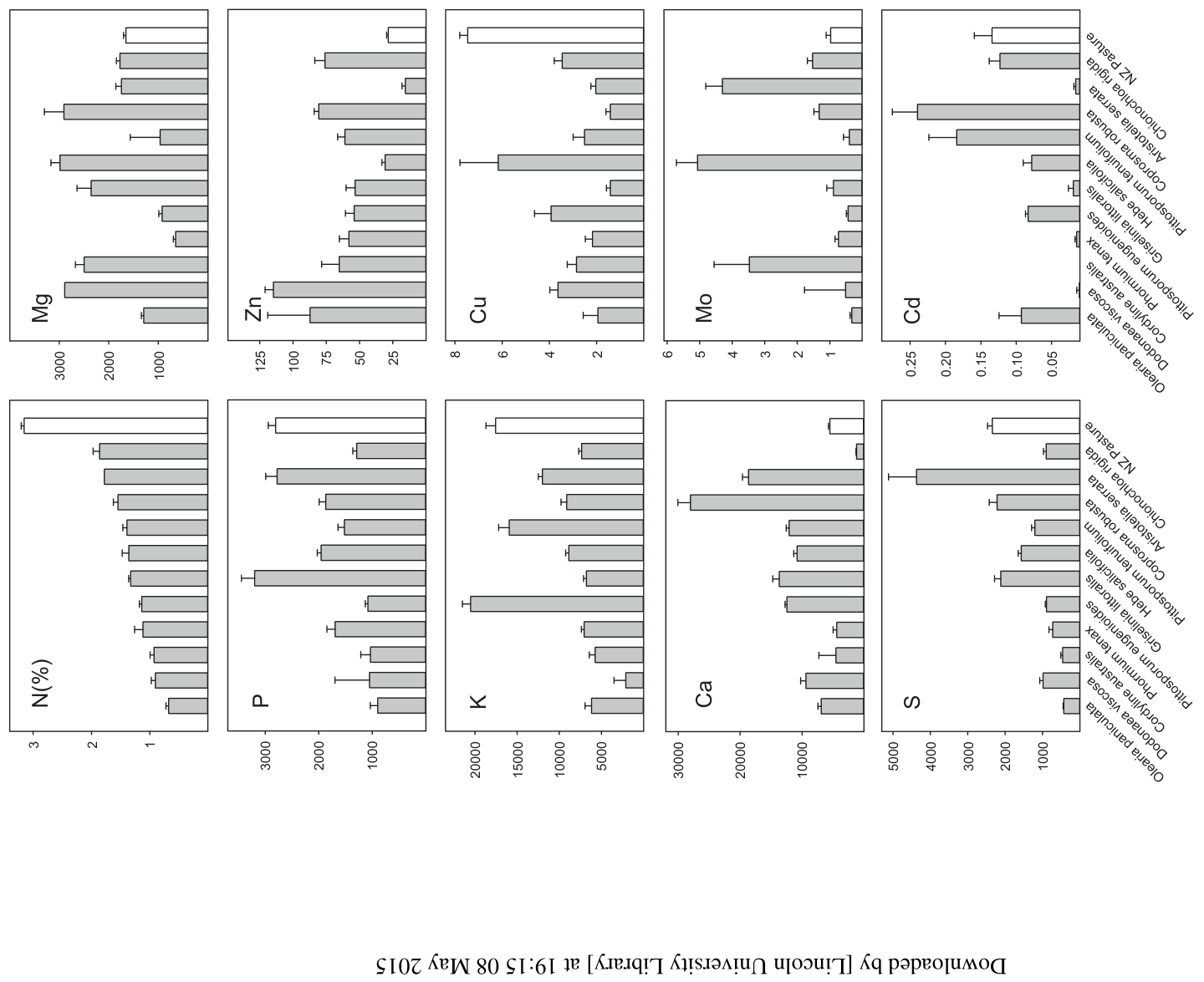
The earlier study also recorded high Mo in flax (Phormium tenax) which is not supported by the present data, although high Mo was recorded in three natives (Cordyline, Hebe and Aristotelia). This element catalyzes certain enzymatic reactions and plays an important role in the nitrogen cycle, although domestic ruminants are particularly sensitive to Mo, and herbage contents approaching toxicity are known (Picco et al. 2012). As little as 1 mg Mo kg−1 may be hazardous to stock if Cu content is <5 mg kg−1, and Cu:Mo ratios of <2:1 can be toxic (Khan et al. 2012). In the present study Cu was largely below 5 mg kg−1 in native species, and it should be noted that Cu concentrations were much higher in the potting mix than in the field sites soils (Table 2). A lower than 2:1 Cu:Mo ratio was recorded in four of the 11 native species [Cordyline, Griselinia, Hebe, Aristotelia] (cf. 8:1 in ryegrass). The lowest ratio (0.4:1) was in Hebe salicifolia, even though this species contained particularly high concentrations of both elements, as well as Mg. As a browse crop this species potentially could confer both benefits [all three elements are frequently deficient] and problems [toxicity due to low Cu:Mo ratios]. However marginal browse crops, by definition, are likely to from only a minor part of stock diet and concerns about toxicity are unlikely to be realistic.
早期研究还记录到新西兰麻(Phormium tenax)中Mo含量较高,但本研究数据并不支持这一结果,不过在三种本土植物(Cordyline, Hebe和Aristotelia)中记录到较高的Mo。该元素催化某些酶促反应,并在氮循环中发挥重要作用,但家养反刍动物对Mo尤为敏感,已知牧草中Mo含量可接近中毒水平(Picco et al. 2012)。若Cu含量<5 mg kg−1,低至1 mg Mo kg−1即可能对家畜有害,且Cu:Mo比值<2:1时可产生毒性(Khan et al. 2012)。本研究中本土物种的Cu大多低于5 mg kg−1,且应注意盆栽基质中的Cu浓度远高于野外样地土壤(表2)。11种本土物种中有4种[Cordyline, Griselinia, Hebe, Aristotelia]的Cu:Mo比值低于2:1(黑麦草为8:1)。最低比值(0.4:1)出现在Hebe salicifolia中,尽管该物种两种元素以及Mg的浓度均特别高。作为嫩枝饲料作物,该物种可能同时带来益处[这三种元素常常缺乏]和问题[Cu:Mo比值低导致的毒性]。然而,边缘嫩枝饲料作物按其定义很可能只占家畜日粮的一小部分,因此对毒性的担忧不太可能成为现实。
Field-Sampled Foliage野外采集叶片
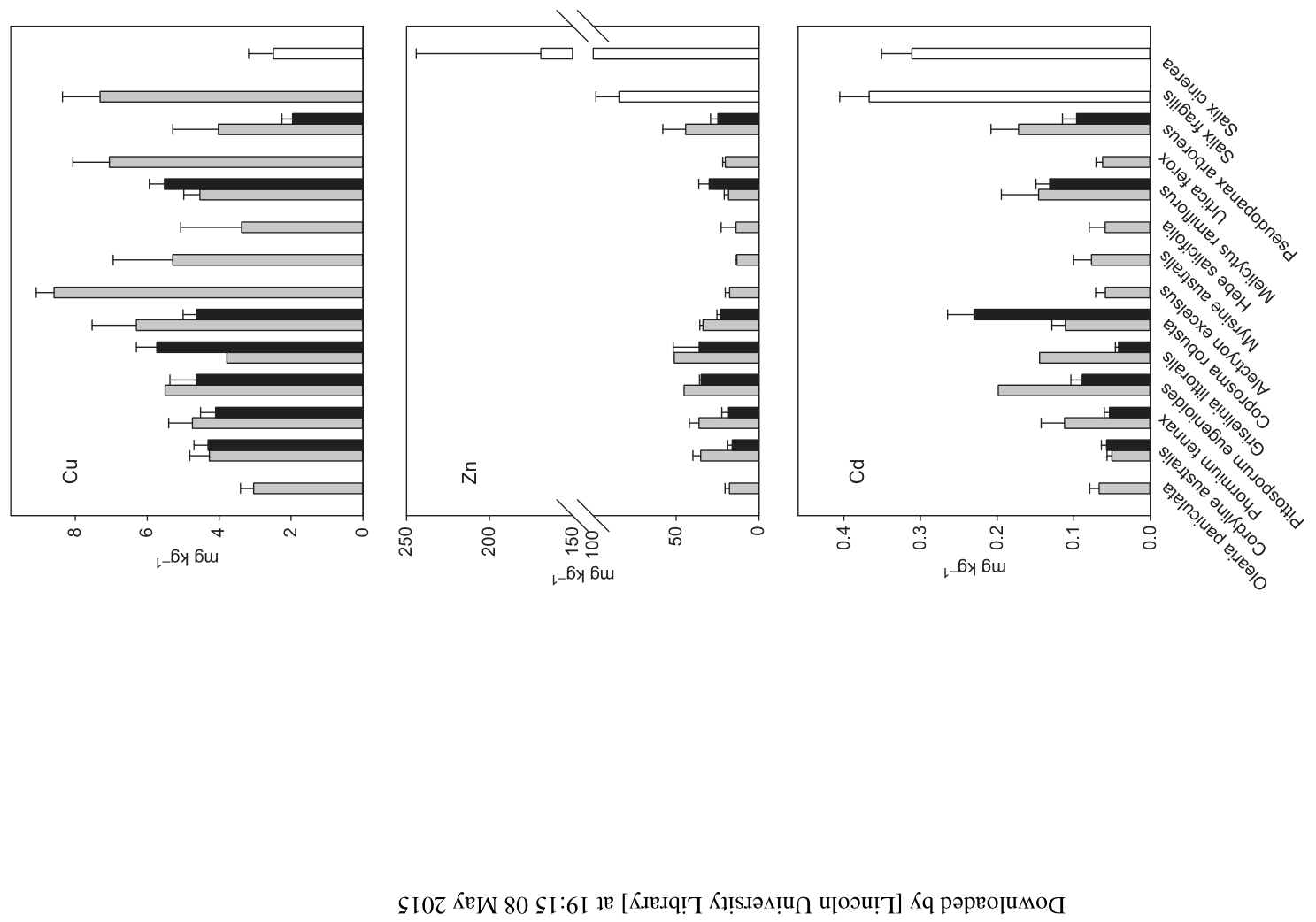
Sulfur concentrations were particularly high in the Tai Tapu organic wetland soil (Table 2). Foliage S concentrations were high in two species, Melicytus ramiflorus and Pseudopanax arboreus sampled at both field sites (Figure 2), as also found in Aristotelia serrata grown in potting compost (cf. Figure 1). Foliage P concentrations were lower in most species of native plants than in ryegrass (Figure 2), although Melicytus foliage at the Tai Tapu site contained phosphorus at similar concentration to paddock pasture grasses (2,805 mg P kg−1), even though soil P concentrations (c. 0.2%) were probably similar to the Kaituna field site. High foliage P in Griselinia when grown in nursery soil (as in Figure 1) was not reflected at Kaituna where soil had lower P status, probably reflecting luxury uptake, rather than generally better traits of P acquisition in this species. This contrasts with the situation for S in Melicytus, which may be more proficient at acquiring S from deficient soil. Leaf tissues of this species rapidly decompose interveinally following abscission, leaving a distinctive skeletal framework of leaf venation on the soil surface. It is possible this reflects the content and ecological value of key nutrients, particularly as this species has been found elsewhere to also contain variable but sometimes high foliar concentrations of N (Windley 2014).
Tai Tapu有机湿地土壤中的硫浓度特别高(表2)。在两个野外样地采集的Melicytus ramiflorus和Pseudopanax arboreus两个物种的叶片S浓度较高(图2),在盆栽堆肥中生长的Aristotelia serrata中也发现了同样的情况(参见图1)。大多数本土植物物种的叶片P浓度低于黑麦草(图2),但Tai Tapu样地的Melicytus叶片中磷浓度与围场牧草相近(2,805 mg P kg−1),尽管其土壤P浓度(约0.2%)可能与Kaituna野外样地相近。Griselinia在苗圃土壤中生长时叶片P较高(如图1所示),但在土壤P水平较低的Kaituna并未体现出来,这可能反映的是奢侈吸收,而非该物种普遍具有更好的P获取特性。这与Melicytus中S的情况形成对比,该物种可能更善于从缺S土壤中获取S。该物种叶片脱落后,叶脉间组织迅速分解,在土壤表面留下独特的叶脉骨架。这可能反映了关键养分的含量及其生态价值,尤其是其他研究还发现该物种叶片N浓度虽有变化,但有时较高(Windley 2014)。
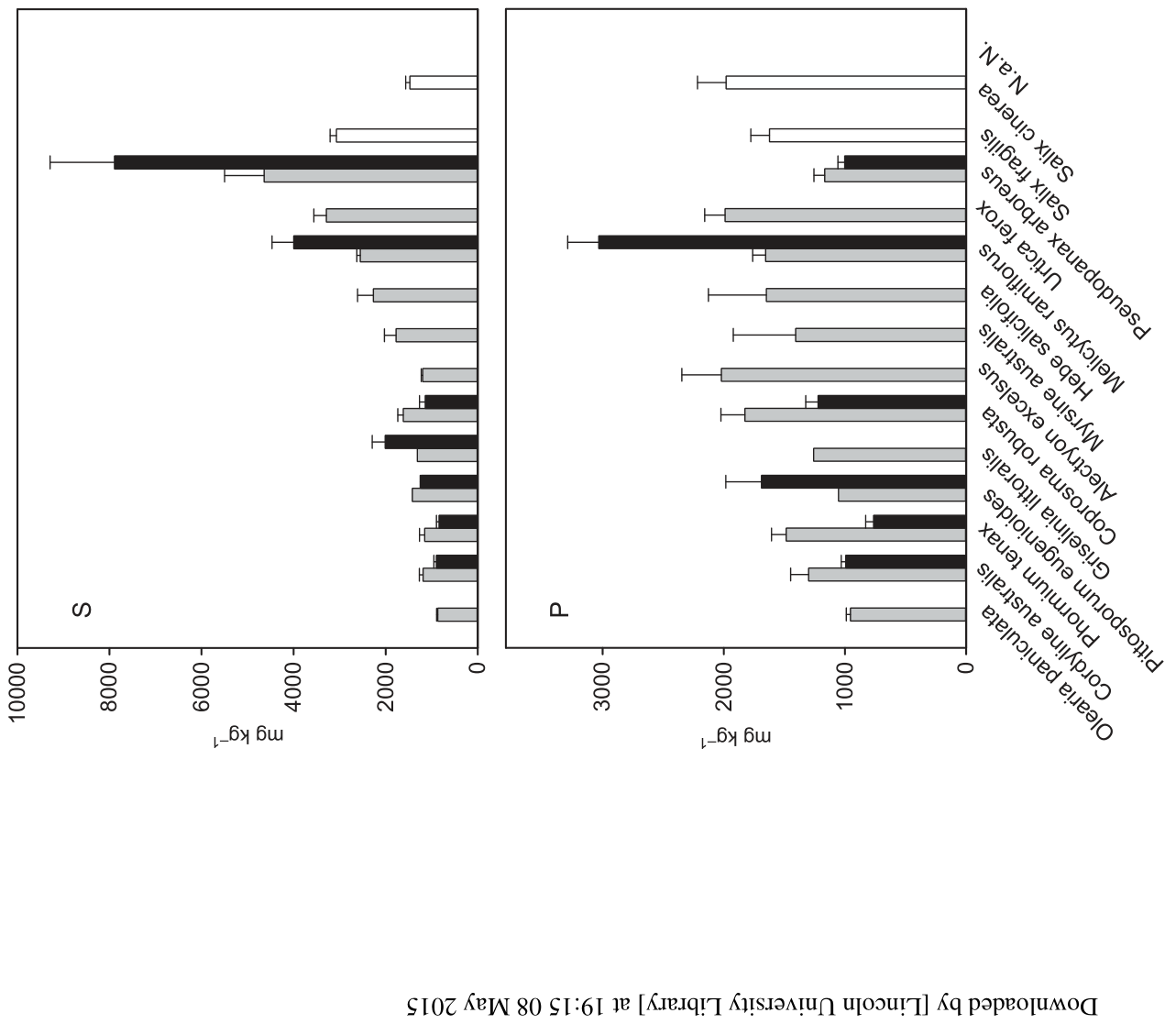
High Zn concentrations in native plant foliage compared to ryegrass (as above, Figure 1) are less impressive when viewed in perspective of exceptionally high Zn uptake in Salix (Figure 3) that is already well documented elsewhere (Robinson et al. 2000; Dickinson and Pulford 2005). However, Salix has the potential disadvantage of a simultaneously high uptake of Cd. Compared with this, Cd concentrations in the present study were much lower in the range of native species collected in the field. Copper concentrations in field-collected foliage of native species were similar to ryegrass (cf. Figure 1) but significantly higher than in nursery-collected foliage, despite much higher Cu concentrations in the nursery potting compost (Table 2).
与黑麦草相比,本土植物叶片中较高的Zn浓度(如上文图1所示),若与Salix异常高的Zn吸收(图3)相比则显得逊色,后者已在其他研究中有充分记载(Robinson et al. 2000; Dickinson and Pulford 2005)。然而,Salix的潜在缺点是同时大量吸收Cd。相比之下,本研究中野外采集的多种本土物种的Cd浓度要低得多。野外采集的本土物种叶片中Cu浓度与黑麦草相近(参见图1),但显著高于苗圃采集的叶片,尽管苗圃盆栽堆肥中的Cu浓度要高得多(表2)。
Biosolids and Biochar Amendments生物固体与生物炭改良
Addition of biosolids initially improved growth of ryegrass (Figure 4), although this fertilization effect diminished with time. A marginally beneficial growth response was found in only two of the five native species tested. The biochar amendment tended to reduce growth, unless applied in conjunction with biosolids. Plagianthus regius, a small tree which had not been sampled previously, had higher rates of P uptake than ryegrass with all treatments, and higher rates of S uptake than other native species (Figure 5). In this experiment, higher uptake of P and S in Griselinia found in the pot-grown nursery specimens (Figure 1) was not recorded (agreeing with data from field sites, Figure 2).
添加生物固体(污泥)最初促进了黑麦草的生长(图4),但这种施肥效应随时间减弱。在所测试的5种本土物种中,仅有2种表现出轻微的生长促进响应。生物炭改良往往会抑制生长,除非与生物固体配合施用。此前未采样的小乔木Plagianthus regius在所有处理中的P吸收速率均高于黑麦草,S吸收速率也高于其他本土物种(图5)。在本试验中,未观察到苗圃盆栽样本中Griselinia较高的P和S吸收(图1)(与野外样地数据一致,图2)。
There was a reduced growth response of Dodonaea viscosa with biochar (Figure 4) and these data do not support the earlier findings from nursery specimens of high Zn and low Cd in this species (Figure 1); both elements are generally elevated in biosolids, although there is little evidence for this in the present study (Table 2). This is contrary to earlier suggestions that Dodonaea may be a preferred browse crop due to lower uptake of Cd into foliage. Native plant foliage contained higher concentrations of tannins, which could be beneficial in terms of reducing both nitrogen content in urine and NH3 and CH4 emissions from stock, dairy barn floors and soil (Powell and Broderick 2011; Grainger et al. 2013); leaf browsing of Dodonaea and Kunzea may add value in this context. Kunzea was not otherwise included in the present study although, in earlier work, we found that this species had potential advantages in terms of influencing mobility of N, P, Zn, Cu, and Mn in soil (Hahner et al. 2014).
施用生物炭后Dodonaea viscosa的生长响应降低(图4),且这些数据并不支持此前苗圃样本中该物种高Zn低Cd的发现(图1);生物固体中这两种元素通常含量较高,但本研究中几乎没有这方面的证据(表2)。这与此前认为Dodonaea因叶片Cd吸收较低而可作为首选嫩枝饲料作物的观点相悖。本土植物叶片中单宁浓度较高,这可能有助于降低尿液中的氮含量,并减少家畜、奶牛舍地面和土壤的NH3和CH4排放(Powell and Broderick 2011; Grainger et al. 2013);在此方面,采食Dodonaea和Kunzea的叶片可能具有附加价值。本研究未包括Kunzea的其他数据,但在早期工作中,我们发现该物种在影响土壤中N、P、Zn、Cu和Mn的迁移性方面具有潜在优势(Hahner et al. 2014)。
Potential for Species Selection物种选择的潜力
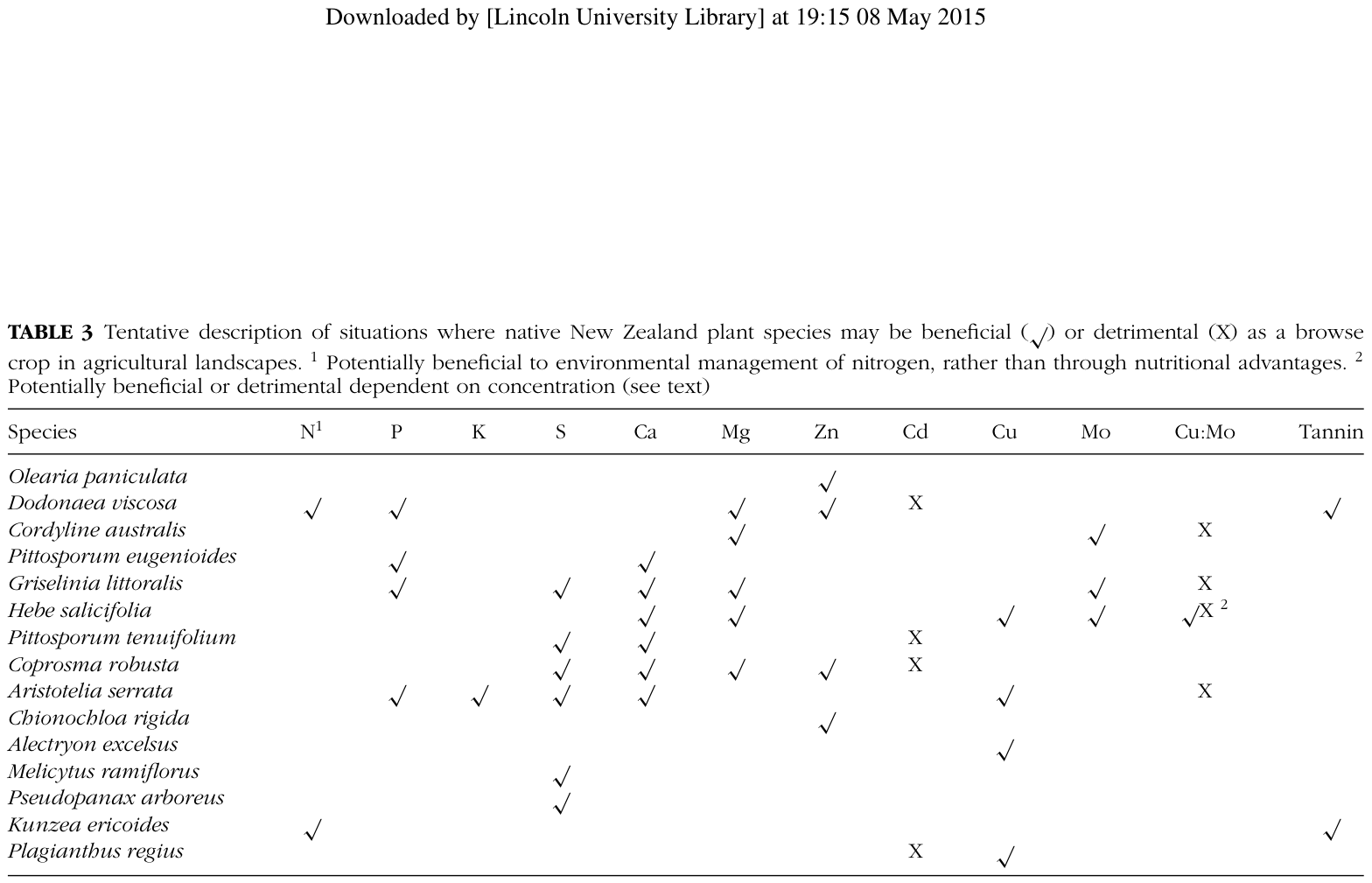
Physiological traits responsible for differential uptake of chemical elements in plants are both genetically and environmentally determined (Baker 1981), the former effectively providing scope for a range of foliar concentrations between taxa, individual plants and different leaves of the same plant (Bradshaw 1991). Thus phenotypic plasticity responds to environmental variables that include a multitude of physicochemical soil variables combined with the effects of associated biota (microorganisms, soil fauna), both above- and belowground (Bardgett and Wardle 2010). There were substantial differences in chemical element concentrations in the soils of the present study, and wide-ranging differences would likely occur on the margins of agricultural land. Clearly, reliable and confident prediction of the concentration range within any species is fraught with difficulty, except in extreme cases (e.g., in extreme soils [Martínez-Sánchez et al. 2012) and in hyperaccumulator species [Baker and Brooks 1989]) or where there is a substantial knowledge base. Such a body of evidence exists for ryegrass, as described above, but otherwise is unusual outside major crop species. Confidence intervals associated with means in the present study obviously relate solely to the material sampled. Consequently, any further interpretation of these data should be viewed cautiously; at best the outcomes may provide focus of which species are worthy of future research (Table 3).
植物对化学元素差异吸收的生理特性由遗传和环境共同决定(Baker 1981),前者实际上使不同分类群、不同植株以及同一植株不同叶片之间的叶片浓度存在一定范围的变化(Bradshaw 1991)。因此,表型可塑性会响应各种环境变量,包括众多土壤理化变量以及地上和地下相关生物(微生物、土壤动物)的综合作用(Bardgett and Wardle 2010)。本研究各土壤中化学元素浓度差异很大,而在农田边缘很可能存在更广泛的差异。显然,除极端情况外(如极端土壤中[Martínez-Sánchez et al. 2012)以及超富集植物中[Baker and Brooks 1989]),或在已有大量知识积累的情况下,要可靠而有把握地预测任一物种内的浓度范围困难重重。如上所述,黑麦草已有这样的大量证据,但在主要作物物种之外则较为少见。本研究中与均值相关的置信区间显然仅针对所采集的材料。因此,对这些数据的任何进一步解读均应谨慎;这些结果充其量可以指明哪些物种值得今后深入研究(表3)。
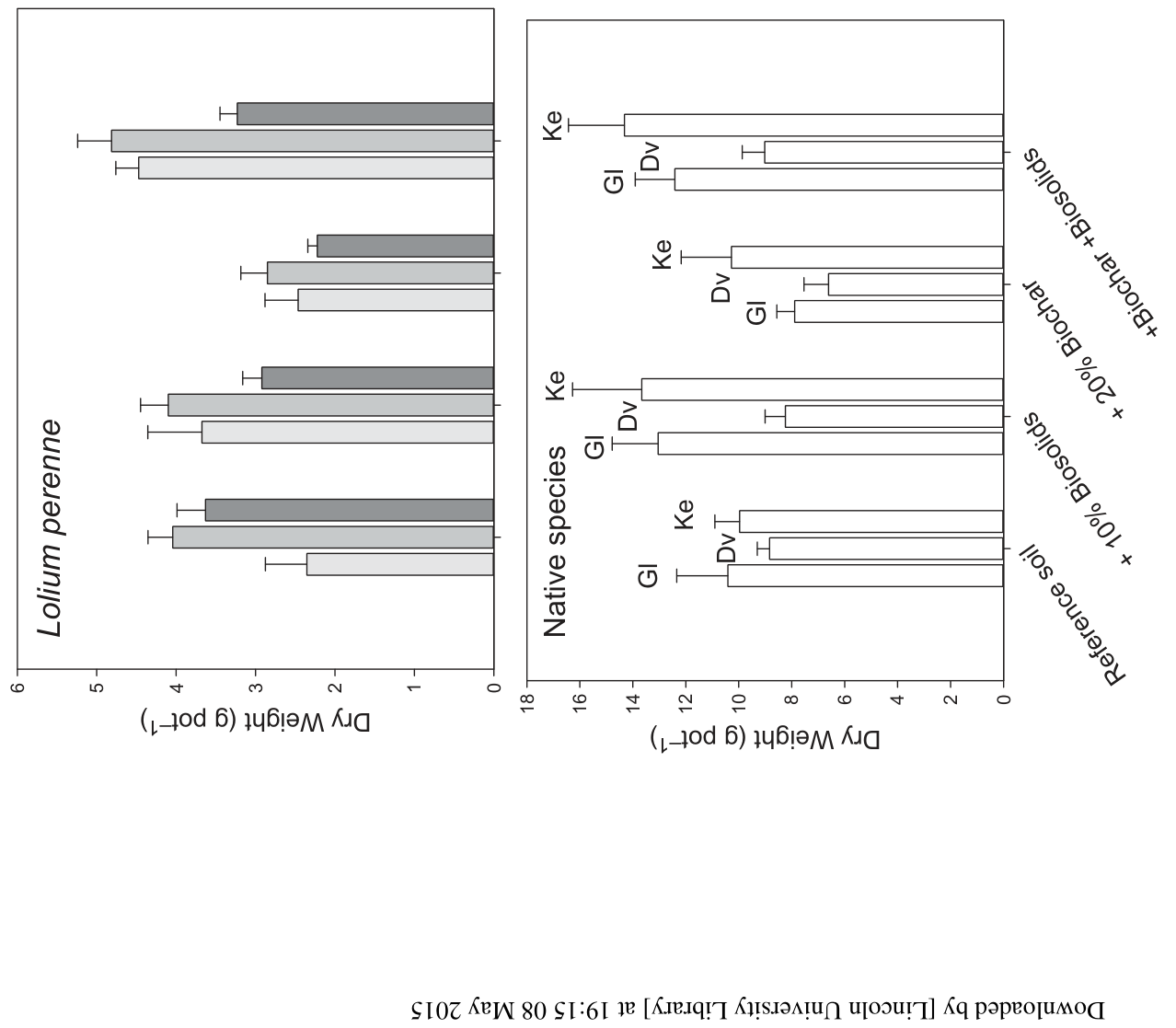
![FIGURE 4 Yields of ryegrass on three sequential sampling events over 4 months (upper figure), and of three native species (lower figure) [Griselinia littoralis (Gl), Dodonaea viscosa (Dv), and Kunzea ericoides (Ke)] afte](115/figure-06.png)
soil (open bars), soil with 10% biosoilid amendment (lightest gray bar), soil with 20% biochar amendment (medium gray bars) and both amendments (dark gray bars),after 4 months growth in the pot experiment.土壤(空心柱)、添加10%生物固体的土壤(最浅灰色柱)、添加20%生物炭的土壤(中灰色柱)以及同时添加两种改良剂的土壤(深灰色柱),盆栽试验生长4个月后。
Benefits in terms of potentially providing a trace element feed supplement through stock browsing would rely on foliar trace element concentrations substantially higher than in ryegrass. The total amount of the trace element delivered to the animal is a balance of the total amount of biomass eaten and the concentrations of the trace elements in biomass; it may be assumed that a chemical concentration in native foliage must be, say, a factor of 10 or 100 times higher than ryegrass. In fact, concentrations differences measured in the present study seldom varied by a factor of more than 5, with a substantially higher concentration differential only recorded for tannins. Six native species provided simultaneously beneficial concentrations of at least four chemical elements, with substantially elevated tannins in only two other species.
要通过家畜采食提供微量元素饲料补充的益处,需要叶片微量元素浓度远高于黑麦草。输送给动物的微量元素总量取决于所采食生物量的总量与生物量中微量元素浓度之间的平衡;可以假设本土植物叶片中的化学元素浓度须比黑麦草高出比如10倍或100倍。实际上,本研究测得的浓度差异很少超过5倍,只有单宁的浓度差异明显更大。有6种本土物种同时具有至少4种化学元素的有益浓度,另有2种物种的单宁含量显著升高。
5CONCLUSIONS结论
The findings of the present study show that concentration of major nutrients (N,P, K, Ca) in the foliage of native plants were frequently substantially higher than in soil, reflecting selective acquisition of these resources. A tentative overview of the findings (Table 3) suggests there is potential to use 15 of the 17 species to influence the management of chemical elements that are important in the context of stock grazing. Two species could provide benefits of tannins reducing nitrogen in the urine of stock. In view of the lesser amounts of native plants that would be likely to be consumed by stock, in proportion to consumption of ryegrass, any benefits in terms of potentially providing a trace element feed supplement are probably negligible. Biosolid and biochar soil amendments had negligible effects on growth, nutrient, and trace element content of foliage of native plants. Planting of native species in production landscapes has only limited potential to add value to agroecology and sustainable food systems through providing a trace element supplement.
本研究结果表明,本土植物叶片中主要养分(N、P、K、Ca)的浓度常常明显高于土壤,反映了对这些资源的选择性获取。对研究结果的初步概括(表3)表明,17个物种中有15个具有影响家畜放牧相关重要化学元素管理的潜力。有两个物种可凭借单宁降低家畜尿液中的氮而带来益处。鉴于家畜可能采食的本土植物数量相对于黑麦草较少,其在提供微量元素饲料补充方面的任何益处可能都可以忽略不计。生物固体和生物炭土壤改良对本土植物的生长以及叶片养分和微量元素含量的影响可忽略不计。在生产性景观中种植本土物种,通过提供微量元素补充来为农业生态学和可持续食物系统增添价值的潜力有限。
6FUNDING基金资助
We acknowledge with thanks for funding support from the Brian Mason Scientific and Technical Trust.
感谢Brian Mason Scientific and Technical Trust的资助。
7REFERENCES参考文献
Anderson, C. W. N., B. H. Robinson, D. M. West, L. Clucas, and D. Portmann. 2012. Zinc-enriched and zinc-biofortified feed as a possible animal remedy in pastoral agriculture: Animal health and environmental benefits. Journal of Geochemical Exploration 121:30–35.
Baker, A. J. M. 1981. Accumulators and excluders - strategies in the response of plants to heavy metals. Journal of Plant Nutrition 3:643–654.
Baker, A. J. M., and R. R. Brooks. 1989. Terrestrial higher plants which hyperaccumulate metallic elements—A review of their distribution, ecology and phytochemistry. Biorecovery 1:81–126.
Bardgett, R. D., and D. A. Wardle. 2010. Aboveground-belowground linkages: Biotic interactions, ecosystem processes, and global change. Oxford, UK: Oxford University Press.
Bee, J. N., A. J. Tanentzap, W. G. Lee, R. B. Lavers, A. F. Mark, J. A. Mills, and D. A. Coomes. 2011. Influence of foliar traits on forage selection by introduced red deer in New Zealand. Basic and Appied Ecology 12:56–63.
Bee, J. N., G. Kunstler, and D. A. Coomes. 2007. Resistance and resilience of New Zealand tree species to browsing. Journal of Ecology 95:1014–1026.
Bradshaw, A. D. 1991. The Croonian lecture, 1991. Genostasis and the limits to evolution. Philosophical Transactions of the Royal Society of London Series B 333:289–305.
Clough, T. J., J. E. Bertram, J. L. Ray, L. M. Condron, M. O’Callaghan, R. R. Sherlock, and N. S. Wells. 2010. Unweathered wood biochar impact on nitrous oxide emissions from a bovine-urine-amended pasture soil. Soil Science Society of America Journal 74:852–860.
Cobert, F., A. D. Schmitt, P. Bourgeade, F. Labolle, P. M. Badot, F. Chabaux, and P. Stille. 2011. Experimental identification of Ca isotopic fractionations in higher plants. Geochimica Et Cosmochimica Acta 75:5467–5482.
Condron, L. M., K. C. Cameron, H. D. Di, T. J. Clough, E. A. Forbesa, R. G. McLaren, and R. G. Silva. 2000. A comparison of soil and environmental quality under organic and conventional farming systems in New Zealand. New Zealand Journal of Agricultural Research 43:443–466.
Condron, L. M., S. Sinaj, R. W. McDowell, J. Dudler-Guela, J. T. Scott, and A. K. Metherell. 2006. Influence of long-term irrigation on the distribution and availability of soil phosphorus under permanent pasture. Australian Journal of Soil Research 44:127–133.
Di, H. J., and K. C. Cameron. 2000. Calculating nitrogen leaching losses and critical nitrogen application rates in dairy pasture systems using a semi-empirical model. New Zealand Journal of Agricultural Research 43:139–147.
Di, H. J., and K. C. Cameron. 2007. Nitrate leaching losses and pasture yields as affected by different rates of animal urine nitrogen returns and application of a nitrification inhibitor—A lysimeter study. Nutrient Cycling in Agroecosystems 79:281–290.
Dickinson, N. M., and I. D. Pulford. 2005. Cadmium phytoextraction using short-rotation coppice Salix: The evidence trail. Environment International 31:609–613.
Dynes, R. A., V. T. Burggraaf, C. G. Goulteri, and D. E. Dalley. 2010. Canterbury farming: Production, processing and farming systems. Proceedings of the New Zealand Grassland Association 72:I–8.
Gartler, J., B. H. Robinson, K. Burton, and L. Clucas. 2013. Carbonaceous soil amendments to biofortify crop plants with zinc. Science of the Total Environment 447:515–524.
Gislum, R., E. Micklander, and J. P. Nielsen. 2004. Quantification of nitrogen concentration in perennial ryegrass and red fescue using near-infrared reflectance spectroscopy (NIRS) and chemometrics. Field Crops Research 88:269–277.
Grace, N. D. 1992. Prevention of trace element deficiencies in grazing ruminants: an evaluation of methods. Proceedings of the New Zealand Grassland Association 54:31–34.
Grainger, G., T. Clarke, M. J. Auldist, K. A. Beauchemin, S. M. McGinn, G. C. Waghorn, and R. J. Eckard. 2013. Potential use of Acacia mearnsii condensed tannins to reduce methane emissions and nitrogen excretion from grazing dairy cows. Canadian Journal of Animal Science 89:241–251.
Hahner, J. L., B.H. Robinson, H-T. Zhong, and N. M. Dickinson. 2014. The phytoremediation potential of native plants on New Zealand dairy farms. International Journal of Phytoremediation 16:719–734.
Houba, V. J. G., J. Uittenbogaard, P. Pellen, and A. Brader. 1998. Wageningen evaulating programmes for analytical laboratories. Wageningen: Department of Environmental Sciences, Wageningen Agricultural University.
Khan, R. U., C. W. N. Anderson, P. Loganathan, J. Xue, and P. W. Clinton. 2012. Response of Pinus radiata D. Don to boron fertilization in a glasshouse study. Communications in Soil Science and Plant Analysis 43:1412–1426.
Knowles, O. A., B. H. Robinson, A. Contangelo, and L. Clucas. 2011. Biochar for the mitigation of nitrate leaching from soil amended with biosolids. Science of the Total Environment 409:3206–3210.
Lambert, M. G., G. A. Jung, H. W. Harpster, and J. Lee. 1989. Forage shrubs in North Island hill country 4. Chemical composition and conclusions. New Zealand Journal of Agricultural Research 32:499–506.
Leishman, M. R. V., P. Thomson, and J. Cooke. 2010. Native and exotic invasive plants have fundamentally similar carbon capture strategies. Journal of Ecology 98:28–42.
Marmiroli, M., B. H. Robinson, B. E. Clothier, N. S. Bolan, N. Marmiroli, and R. Schulin. 2012. Effect of dairy effluent on the biomass, transpiration, and elemental composition of Salix kinuyanagi Kimura. Biomass and Bioenergy 37:282–288.
Martínez-Sánchez, M. J., M. L. García-Lorenzo, C. Pérez-Sirvent, and J. Bech. 2012. Trace element accumulation in plants from an aridic area affected by mining activities. Journal of Geochemical Exploration 123:8–12.
McDowell, R., and C. Smith. 2012. The Winchmore trials. New Zealand Journal of Agricultural Research 55:89–91.
Meurk, C. D. 2008. Vegetation of the Canterbury plains and downlands. In The Natural History of Canterbury, eds. N. Winterbourn, G. Knox, C. Burrows, and I. Marsden, 195–250. Christchurch, UK: Canterbury University Press.
Meurk, C. D., and S. R. Swaffield. 2000. A landscape ecological framework for indigenous regeneration in rural New Zealand-Aotearoa. Landscape and Urban Planning 50:129–144.
Moir, J. L., G. R. Edwards, and L. N. Berry. 2012. Nitrogen uptake and leaching loss of thirteen temperate grass species under high N loading. Grass and Forage Science 68:313–325.
Moir, J. L., B. J. Malcolm, K. C. Cameron, and H. J. Di. 2012. The effect of dicyandiamide on pasture nitrate concentration, yield and N offtake under high N loading in winter and spring. Grass and Forage Science 67:391–402.
Picco, S. M., V. Ponzzinibio, G. Mattioli, D. Rosa, L. Minatel, L. Fazzio, and A. Seoane. 2012. Physiological and genotoxic effects of molybdenum-induced copper deficiency in cattle. Agrociencia 46:107–117.
Powell, J. M., and G. A. Broderick. 2011. Transdisciplinary soil science research: Impacts of dairy nutrition on manure chemistry and the environment. Soil Science Society of America Journal 75:2071–2078.
Robinson, B. H., T. M. Mills, D. Petit, L. E. Fung, S. R. Green, and B. E. Clothier. 2000. Natural and induced Cd-accumulation in poplar and willow: implications for phytoremediation. Plant and Soil 227:301–306.
Rothbaum, H. P., R. L. Goguel, A. E. Johnston, and G. E. G. Mattingly. 1986. Cadmium accumulation in soils from long-continued applications of superphosphate. Journal of Soil Science 37:99–107.
Sandhu, H. S., S. D. Wratten, R. Cullen, and B. Case. 2008. The future of farming: the value of ecosystem services in conventional and organic arable land. An experimental approach. Ecological Economics 64:835–848.
Stevenson, B. A. 2004. Changes in phosphorus availability and nutrient status of indigenous forest fragments in pastoral New Zealand Hill country. Plant and Soil 262:317–325.
Taghizadeh-Toosi, A., T. J. Clough, L. M. Condron, R. R. Sherlock, C. R. Anderson, and R. A. Cragie. 2011. Biochar incorporation into pasture soil suppresses in situ N2O emissions from ruminant urine patches. Journal of Environmental Quality 40:468–476.
Trewick, S. A., A. M. Paterson, and H. J. Campbell. 2007. Hello New Zealand. Journal of Biogeography 34:1–6.
Trotter, C., K. Tate, N. Scott, J. Townsend, H. Wilde, S. Lambie, M. Marden, and T. Pinkney, T. 2005. Afforestation/reforestation of New Zealand marginal pasture lands by indigenous shrublands: The potential for Kyoto forest sinks. Annals of Forest Science 62:865–871.
Wilcock, R. J., K. Betteridge, D. Shearman, C. R. Fowles, M. R. Scarsbrook, B. S. Thorrold, and D. Costall. 2009. Riparian protection and on-farm best management practices for restoration of a lowland stream in an intensive dairy farming catchment: a case study. New Zealand Journal of Marine and Freshwater Research 43:803–818.
Will, G. M. 1990. Influence of trace-element deficiencies on plantation forestry in New Zealand. Forest Ecology and Management 37:1–6.
Windley, H. 2013. Does foliar nutrition explain the success of possums in New Zealand? EcoTas13. 5th Joint Conference of New Zealand Ecological Society and Ecological Society of Australia Aotea Centre, Auckland, November 24–29 [Conference Handbook], 168–169.
Winterbourne, M., G. Know, C. Burrows, and I. Marsden. 2008. The natural history of Canterbury. Christchurch, UK: Canterbury University Press.
Wright, D. M., G. J. Jordan, W. G. Lee, R. P. Duncan, D. M. Forsyth, and D. A. Coomes. 2010. Do leaves of plants on phosphorus-impoverished soils contain high concentrations of phenolic defence compounds? Functional Ecology 24:52–61.