The distribution and fate of arsenic in the Waikato
Brett Robinson1, Heather Outred1, Robert Brooks? and John Kirkman?
1 Department of Plant Biology and Biotechnology, Massey University, Palmerston North, New Zealand ¿Department of Soil Science, Massey University, Palmerston North, New Zealand
1ABSTRACT摘要
Arsenic levels were determined in waters, sediments, aquatic macrophytes and other organisms taken from the Waikato River system, North Island, New Zealand. All water samples contained elevated levels of arsenic relative to 0.0017 ug g-1, the background level for arsenic in aquatic systems. Most water samples taken between Lakes Aratiatia and Whakamaru had arsenic levels above the World Health Organization (WHO) limit for arsenic in drinking water (0.01 ug mL-1). Arsenic levels in the water of the river decreased downstream from the Wairakei and Ohaaki geothermal power stations, indicating that these are major sources of arsenic to the river. The arsenic concentration of the sediments was typically around 30 ug g-1, though there was a large variation. Sediments appear to be a sink for arsenic. Some aquatic macrophytes (Ceratophyllum demersum and Egeria densa) had arsenic concentrations up to 1,000 ug g-1, (0.1%) in dried tissue. These plants may be used as bioindicators of arsenic pollution in aquatic systems. Water cress taken near Broadlands (Ohaaki) contained around 300 ug g-1, (dry weight) arsenic, and should not be consumed. Shellfish taken from the mouth of the Waikato river had significantly higher arsenic concentrations than the same species taken further down the coast at Raglan.
测定了新西兰北岛怀卡托河(Waikato River)水系中水体、沉积物、水生大型植物及其他生物体的砷含量。所有水样的砷含量均高于水生系统砷背景值0.0017 ug g-1。在Aratiatia湖与Whakamaru湖之间采集的大部分水样,其砷含量超过世界卫生组织(WHO)饮用水砷限值(0.01 ug mL-1)。河水砷含量自Wairakei和Ohaaki地热电站向下游递减,表明这两座电站是河流砷的主要来源。沉积物砷浓度一般约为30 ug g-1,但变幅较大。沉积物似乎是砷的汇。部分水生大型植物(Ceratophyllum demersum和Egeria densa)干组织中砷浓度高达1,000 ug g-1(0.1%)。这些植物可用作水生系统砷污染的生物指示物。在Broadlands(Ohaaki)附近采集的豆瓣菜砷含量约为300 ug g-1(干重),不宜食用。怀卡托河河口采集的贝类砷浓度显著高于沿海岸往南Raglan处采集的同种贝类。
Keywords: Arsenic in aquatics systems, New Zealand.
关键词:水生系统中的砷;新西兰。
2INTRODUCTION引言
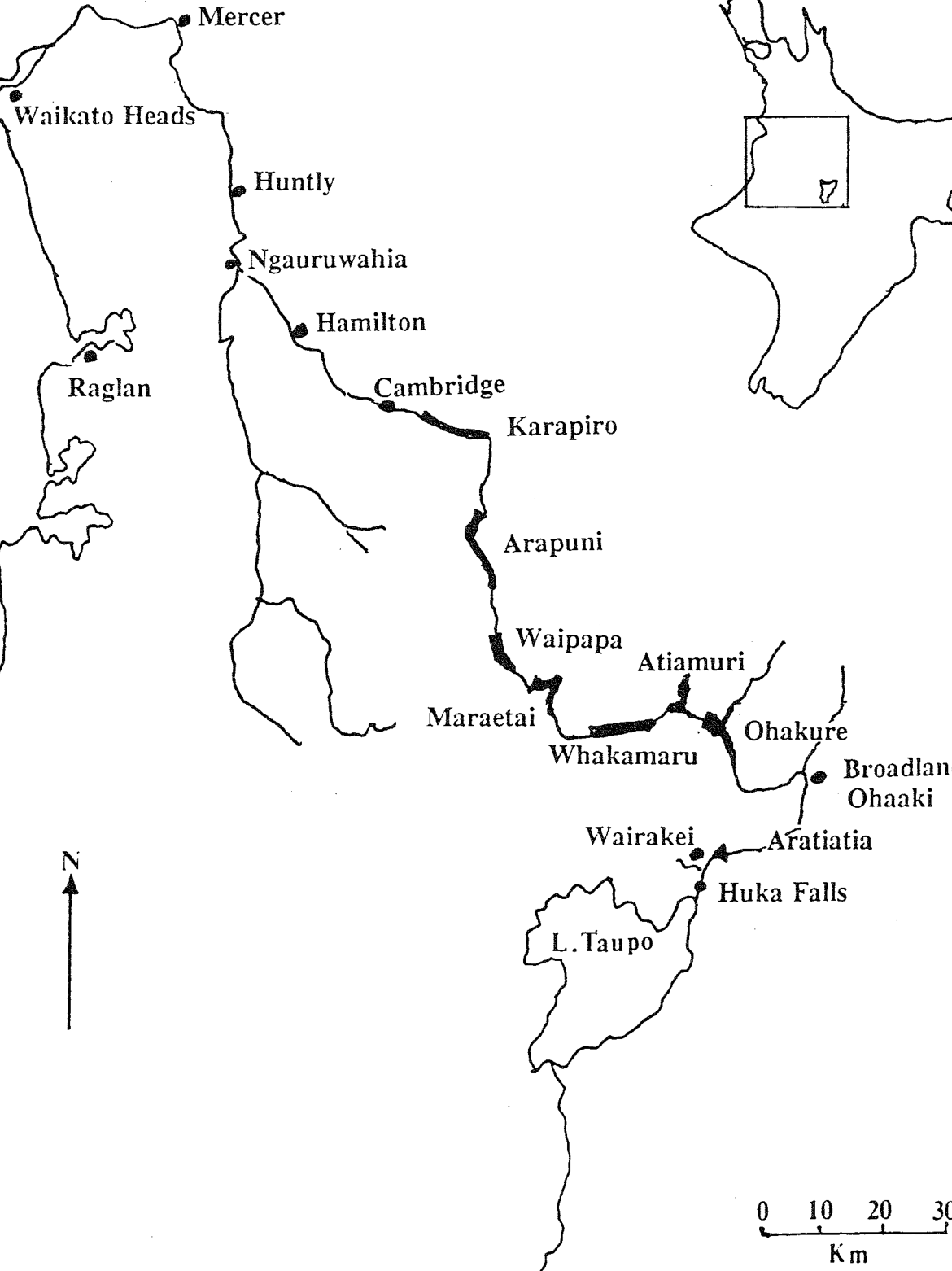
The Waikato River (Figure 1), at 425 km, is the longest river in New Zealand. It drains the largest lake in the country, Lake Taupo, from which the river flows in a northwesterly direction through an incised channel near Tokoroa, and on to the flat, often swampy lowlands from Cambridge to Mercer. Northward from Mercer, the river narrows and finally discharges into the Tasman Sea at Port Waikato via a large estuary. The Waikato drains a total catchment area of 14,000 km2 (Liddle 1982). The 366-metre fall of the river from Lake Taupo to the sea, has been exploited by the strategic emplacement of eight hydroelectric power stations. These occur in narrow valleys through the plateau lands near Tokoroa.
怀卡托河(图1)全长425 km,是新西兰最长的河流。该河发源于全国最大的湖泊陶波湖(Lake Taupo),自湖中流出后向西北方向经Tokoroa附近的下切河道,流入Cambridge至Mercer之间地势平坦、多沼泽的低地。自Mercer向北,河道收窄,最终经一个大型河口在Port Waikato注入塔斯曼海。怀卡托河总集水面积为14,000 km2(Liddle 1982)。河流自陶波湖至入海口落差达366 m,沿程战略性地修建了8座水电站加以利用。这些水电站均位于Tokoroa附近高原地带的狭窄河谷中。
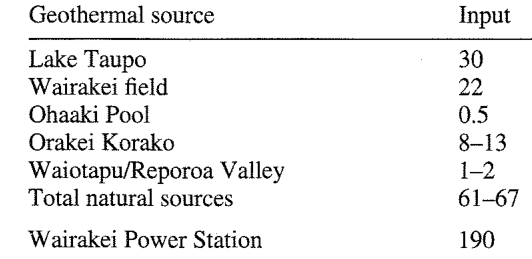
In its upper reaches, the Waikato River flows through four geothermal fields, Wairakei, Broadlands, Orakei Korako and Atiamuri. Also, there are several geothermal fields in the catchment area of the river at Tokaanu, Waihi, Rotokawa, Mokai, and Te Kopia. Both the Wairakei and Ohaaki geothermal power stations release geothermal effluent into the Waikato River, though some of the waste water from the Ohaaki power station is re-injected. It is well documented (Ritchie, 1961; Aggett and Aspell, 1978; Liddle, 1982) that hydrothermal waters discharged from the power stations and some geothermal areas contain relatively large amounts of the toxic element arsenic. It might thus be expected that the Waikato River contains elevated levels of arsenic. Reay (1973) has given an estimate of the amounts of arsenic entering the Walkato River from various geothermal sources
在上游河段,怀卡托河流经Wairakei、Broadlands、Orakei Korako和Atiamuri 4个地热田。此外,该河集水区内的Tokaanu、Waihi、Rotokawa、Mokai和Te Kopia还分布有若干地热田。Wairakei和Ohaaki地热电站均向怀卡托河排放地热废水,但Ohaaki电站的部分废水被回注。已有大量文献(Ritchie, 1961; Aggett and Aspell, 1978; Liddle, 1982)证明,电站及部分地热区排放的热液水中含有相对大量的有毒元素砷。因此可以预期怀卡托河中砷含量偏高。Reay(1973)估算了各地热源进入怀卡托河的砷量。
Arsenic may also be entering the Waikato river from industrial sources. Liddle (1982) reported that the Kinleith pulp and paper mill releases effluent containing 0.05 ug mL - 1
砷也可能通过工业源进入怀卡托河。Liddle(1982)报道,Kinleith纸浆造纸厂排放的废水含砷0.05 ug mL-1。
Aggett and Aspell (1978) determined the levels of arsenic in water samples taken at various points on the Walkato River at different times of the year in 1976. Values tended to be slightly higher in summer though there was fluctuation throughout the year. Typically, the arsenic concentrations increased from 0.011 ug mL-1 at Tuakau to 0.062 ug mL-1 at Lake Aratiatia then decreased to 0.008 ug ml.- at Lake Taupo. Over 90% of the measured arsenic was as As(V). Liddle (1982) reported similar results. Freeman (1985) reported that in the spring and summer months the more toxic AsIII) species was the predominant form of the arsenic in the water of the Waikato. This was attributed to the action of the cyanobacterium Anabaena oscillaroides. It was demonstrated that this bacterium could take up As(V) and reduce it to As(I) at a rate of 12 ng As per 10° cells per day. Most of the waters in the Waikato River had greater than 0.01 ug mL- arsenic, the WHO limit for drinking water. However, much of this is not used as a drinking water supply and does not include Aratiatia in which the arsenic level exceeds 0.05 ug mL-.
Aggett and Aspell(1978)于1976年在一年中不同时间于怀卡托河多个位点采集水样并测定了砷含量。砷含量在夏季略高,但全年均有波动。通常,砷浓度从Tuakau的0.011 ug mL-1升高至Aratiatia湖的0.062 ug mL-1,随后在陶波湖降至0.008 ug mL-1。所测砷中90%以上以As(V)形态存在。Liddle(1982)报道了类似结果。Freeman(1985)报道,在春夏季,毒性更强的As(III)是怀卡托河水中砷的主要形态,这归因于蓝藻Anabaena oscillaroides的作用。研究证明,该菌能吸收As(V)并将其还原为As(III),速率为每10⁹个细胞每天12 ng As。怀卡托河大部分水体的砷含量高于WHO饮用水限值0.01 ug mL-1。不过,其中大部分水体并不用作饮用水源,也不包括砷含量超过0.05 ug mL-1的Aratiatia湖。
Arsenic concentrations have been determined in some sediments in the Waikato River by Aggett and Aspell (1978), Aggett and O'Brien (1985) and Aggett and Kriegman (1987). In general, these reports find that deep water sediments have higher arsenic concentrations than shallow water sediments, there is a large variation in the arsenic concentrations of sediments from the same lake, and that sediments may contain up to 400 ug g-1 As.
Aggett and Aspell(1978)、Aggett and O'Brien(1985)及Aggett and Kriegman(1987)测定了怀卡托河部分沉积物中的砷浓度。总体而言,这些报道发现:深水沉积物砷浓度高于浅水沉积物;同一湖泊不同沉积物的砷浓度差异很大;沉积物中砷含量可高达400 ug g-1。
Some of the biota of the Waikato River, such as aquatic macrophytes, have been reported to contain high concentrations of arsenic. Reay (1971) found up to 650 ug g-' (dry weight [dw]) of this element in Ceratophyllum demersum among aquatic macrophytes in this river. He estimated that these aquatic plants may account for 3% of the total arsenic in the river system at any one time.
据报道,怀卡托河的部分生物(如水生大型植物)含有高浓度砷。Reay(1971)发现该河水生大型植物中的Ceratophyllum demersum砷含量高达650 ug g-1(干重[dw])。他估算,在任一时刻这些水生植物所含砷可占河流系统总砷量的3%。
Aggett and Aspell (1978) and Liddle (1982) have also reported high levels of arsenic in some aquatic macrophytes in the Waikato River. Lancaster et al. (1971) tested the suitability of some of these aquatic plants as stock feed, since this might have provided an incentive for the weed to be removed from the river. It was found that sheep, after three weeks eating the lake weed, had a muscle arsenic concentration of 1.13 ug g-1. The arsenic in the muscle virtually disappeared four weeks after stopping consumption of the weed. There were no health problems reported in the sheep.
Aggett and Aspell(1978)和Liddle(1982)也报道了怀卡托河部分水生大型植物中砷含量较高。Lancaster et al.(1971)检验了其中一些水生植物作为牲畜饲料的适用性,因为这可能为从河中清除水草提供动力。结果发现,绵羊采食湖草3周后,肌肉砷浓度为1.13 ug g-1。停止采食4周后,肌肉中的砷几乎完全消失。未见绵羊出现健康问题的报道。
The aims of this study were as follows: (1) to investigate the concentration of arsenic in the waters, sediments, aquatic macrophytes and other organisms in or near the Waikato River system; and (2) to investigate the arsenic concentrations of shellfish and mullet taken from the mouth of the Waikato in order to establish the degree of uptake and to evaluate any potential health hazard associated with human consumption of these seafoods.
本研究的目的是:(1)调查怀卡托河水系内或其附近水体、沉积物、水生大型植物及其他生物体中的砷浓度;(2)调查怀卡托河河口采集的贝类和鲻鱼的砷浓度,以确定其吸收程度,并评估人类食用这些海产品可能带来的健康风险。
3MATERIALS AND METHODS材料与方法
Sampling procedures采样方法
Samples were collected from numerous sites along the Waikato River on three separate occasions. Water, weed and sediment samples as well as shellfish and mullet were collected between 29th October and 1st November 1993 Second sets of samples of water, weed and sediments were collected between the 1st and 5th of February 1994. Water cress (Lepidium sativum), Nasturtium sp., willow (Salix sp.), Potomogeton sp., Spirodela sp. and snails were collected in April 1994. The sampling sites stretched from Lake Taupo to Port Waikato (Figure 1).
分3次在怀卡托河沿岸多个位点采集样品。1993年10月29日至11月1日采集了水样、水草和沉积物样品以及贝类和鲻鱼。1994年2月1日至5日采集了第二批水样、水草和沉积物样品。1994年4月采集了豆瓣菜(Lepidium sativum)、Nasturtium sp.、柳树(Salix sp.)、Potomogeton sp.、Spirodela sp.及螺类。采样点从陶波湖延伸至Port Waikato(图1)。
Water samples were collected in 750 mL polythene bottles in situ, and refrigerated. The waters were not filtered as to have done so would have given a false impression of the actual situation in which unfiltered water is drunk by local people or is accumulated by organisms. In any case, the natural water is remarkably free of suspended particulate matter.
水样现场采集于750 mL聚乙烯瓶中并冷藏保存。水样未经过滤,因为过滤会与实际情况不符——当地居民饮用的及被生物体积累的均为未过滤的水。而且,天然水体中悬浮颗粒物极少。
Analyses were carried out no later than two weeks after collection. Sediments were collected with a sediment collector which consisted of a steel box (~150 × 150 × 150 mm) with a rope attached. This was thrown into the water and sediment collected by dredging. Samples were stored in sealed polyethylene bags for transport to the laboratory.
所有分析均在采样后两周内完成。沉积物使用沉积物采样器采集,该采样器为系有绳索的钢盒(约150 × 150 × 150 mm)。将其抛入水中,通过拖拽采集沉积物。样品装入密封聚乙烯袋中运回实验室。
Shellfish (Paphies australis [pipi], Austrovenus stutchburyi [cockle], Crassostrea gigas [Pacific oyster], Mytilus canaliculus [mussel] and Potomopergus sp.) were collected by hand and kept moist and cool (in a refrigerator) until they were prepared for analysis. The shellfish remained alive.
贝类(Paphies australis[pipi]、Austrovenus stutchburyi[鸟蛤]、Crassostrea gigas[太平洋牡蛎]、Mytilus canaliculus[贻贝]及Potomopergus sp.)为人工采集,在冰箱中保湿、低温保存直至制备分析样品。贝类在此期间保持存活。
Plant samples (Ceratophyllum demersum, Egeria densa and Lagarosiphon major) that occurred in the river were collected by throwing in a grapple hook and snagging the plants, or by wading in and removing them. Terrestrial and subaquatic plants (Salix sp., Kunzia ericoides, Leptospermum scoparium, Leucopogon fasiculatum, Cyathodes sp., Pteridium esculentum, Dracophyllum subulatum, Lepidium sativum (watercress), Nasturtium sp. and Cytisus scoparius) were collected by hand.
河中生长的植物样品(Ceratophyllum demersum、Egeria densa和Lagarosiphon major)通过抛掷抓钩钩取或涉水摘取采集。陆生及半水生植物(Salix sp.、Kunzia ericoides、Leptospermum scoparium、Leucopogon fasiculatum、Cyathodes sp.、Pteridium esculentum、Dracophyllum subulatum、Lepidium sativum(豆瓣菜)、Nasturtium sp.和Cytisus scoparius)为人工采集。
Sample preparation样品制备
Sediment samples were placed on blotting paper and left to dry for at least three weeks, lightly crushed, and then sieved through a -120 mesh nylon sieve. Approximately 0.5 g samples were weighed into 50 mL polypropylene containers. 10 mL of conc. 1:1 HF/HNO, was added to each sample and two reagent blanks were prepared. The containers were placed in a bath of boiling water until all the acid had evaporated. 12 mL of 2M HCI were added to each container and the samples allowed to dissolve. When the volume of each sample had reached ~10 mL it was measured and recorded before storage of the samples in 25 mL polythene containers.
沉积物样品置于吸水纸上风干至少3周,轻轻压碎后过-120目尼龙筛。称取约0.5 g样品于50 mL聚丙烯容器中。每个样品加入10 mL浓HF/HNO3(1:1),并制备两个试剂空白。将容器置于沸水浴中直至酸全部蒸发。向每个容器中加入12 mL 2 M HCl使样品溶解。当每个样品体积达到约10 mL时,量取并记录体积,然后转入25 mL聚乙烯容器中保存。
Shellfish were removed from their shells (except Potomopergus sp. which is too small for this to be practical), rinsed in distilled water, weighed (typically the whole animal weighed less than 2g fresh weight) and placed in a boiling tube. 5 mL of 70% HN, was added to each sample and heating was carried out in heating blocks set at ca 100°C until dissolution was complete. The solutions were transferred to measuring cylinders and made up to exactly 10 mL with distilled water. Samples were stored in 25 mL polythene sample containers.
将贝类从壳中取出(Potomopergus sp.因个体过小而无法去壳),用蒸馏水冲洗,称重(整个个体鲜重一般小于2 g),然后置于硬质试管中。每个样品加入5 mL 70% HNO3,在设定为约100°C的加热模块上加热直至完全消解。将溶液转入量筒,用蒸馏水准确定容至10 mL。样品保存于25 mL聚乙烯样品容器中。
All plant samples were thoroughly washed first in running tap water and then in distilled water. The excess water was allowed to drain off and the samples were stored in a drying cupboard set at 40°C until a constant weight was reached Each plant was then ground in a mill and the powder stored in polyethylene bags. Approximately 0.2 g of plant material was weighed into a boiling tube and prepared in the same manner as for the shellfish.
所有植物样品先用自来水流水彻底冲洗,再用蒸馏水冲洗。沥干多余水分后,将样品置于40°C干燥箱中烘至恒重。随后将每个植物样品用粉碎机磨碎,粉末装入聚乙烯袋中保存。称取约0.2 g植物样品于硬质试管中,按与贝类相同的方法处理。
Two reagent blanks were prepared for each batch of shellfish, plants and sediments.
每批贝类、植物和沉积物样品均制备两个试剂空白。
Determination of arsenic using hydride generation氢化物发生
atomic absorption spectrometry原子吸收光谱法测定砷
Arsenic was determined on a GBC 900 spectrophotometer using a purpose-built hydride generation apparatus. The limit of detection was about 0.01 ug g- for solid samples and 0.001 ug mL - for natural waters.
砷采用GBC 900分光光度计配合自制氢化物发生装置测定。固体样品检出限约为0.01 ug g-1,天然水样检出限约为0.001 ug mL-1。
4RESULTS AND DISCUSSION结果与讨论
Arsenic in the water of the Waikato River
怀卡托河水体中的砷
The arsenic concentrations in water samples collected in November 1993 increased from 0.003 ug mL - 1 at Ngaurawahia (Lower Waikato) to 0.121 ug mL- at Lake Aratiatia (just below the geothermal station at Wairakei - see Figure 1 for locations). The concentration of arsenic in water taken from Huka falls (just above Wairakei) was 0.006 ug mL -1. We have measured the arsenic content of the main drain at Wairakei as being 3.8 ug mL-!. This is the major source of arsenic contributing to the 0.12 ug mL - at Lake Aratiatia. Water samples collected in February 1994 (Figure 2) had arsenic concentrations with a median of 0.044 ug mL- and range of 0.019-0.067 ug mL-, nearly 50% higher than samples collected in November 1993 where the median was 0.03 ug mL - 1 and the range was 0.003-0.121 ug mL. -1. There was a different distribution pattern with the 1994 collections showing a maximum arsenic concentration at Broadlands rather than at Lake Aratiatia. This shows that the arsenic concentration in the water changes over time.
1993年11月采集的水样中,砷浓度从Ngaurawahia(怀卡托河下游)的0.003 ug mL-1升高至Aratiatia湖(紧邻Wairakei地热电站下游,位置见图1)的0.121 ug mL-1。Huka瀑布(紧邻Wairakei上游)水样的砷浓度为0.006 ug mL-1。我们测得Wairakei主排水渠的砷含量为3.8 ug mL-1,这是造成Aratiatia湖砷含量达0.12 ug mL-1的主要来源。1994年2月采集的水样(图2)砷浓度中位数为0.044 ug mL-1,范围为0.019–0.067 ug mL-1,比1993年11月采集的水样(中位数0.03 ug mL-1,范围0.003–0.121 ug mL-1)高出近50%。两次采样的分布格局也不同:1994年样品的砷浓度最大值出现在Broadlands而非Aratiatia湖。这表明水体砷浓度随时间变化。
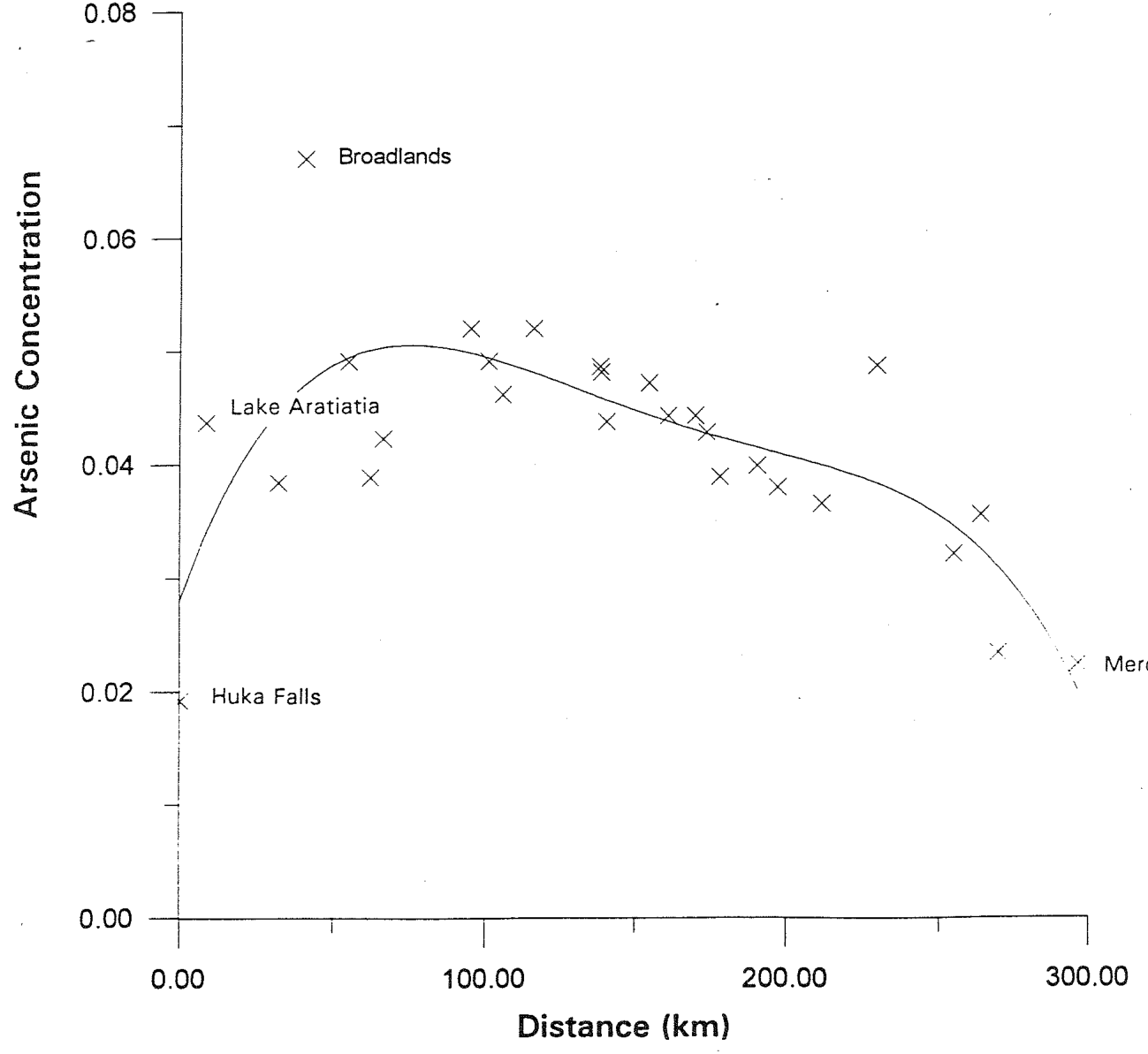
Most of the water samples taken upstream from Lake Atiamuri had arsenic concentrations in excess of the WHO limit for arsenic in drinking water (0.01 ug mL-).
Atiamuri湖上游采集的大部分水样,其砷浓度超过WHO饮用水砷限值(0.01 ug mL-1)。
The concentration of arsenic in the water of the Waikato River is well above the world background level of arsenic (0.0017 ug mL) in aquatic systems (Boyle and Jonasson, 1973). These higher values are indicative of additional arsenic entering the aquatic system. Based on previous reports (Sarbutt, 1964; Reay, 1973; Axtmann, 1975; Aggett and Aspell, 1978; Liddle, 1982), it is reasonable to assume that the majority of the arsenic in the river is of geothermal origin, either naturally occurring, or effluent from power stations.
怀卡托河水体砷浓度远高于水生系统砷的世界背景值(0.0017 ug mL-1)(Boyle and Jonasson, 1973)。这些较高的数值表明有额外的砷进入该水生系统。根据以往报道(Sarbutt, 1964; Reay, 1973; Axtmann, 1975; Aggett and Aspell, 1978; Liddle, 1982),可合理推断河中大部分砷来源于地热,或为天然来源,或为电站排放的废水。
The arsenic concentrations of the water samples in this study were slightly higher than those reported by Aggett and Aspell (1978) and Liddle (1982) at similar times of the year. This may be the result of: (1) differences in rainfall or natural geothermal activity between the time of this study and the time of the aforementioned studies; (2) an increase in the amount of arsenic entering the river; and (3) increased desorption from sediments.
本研究水样的砷浓度略高于Aggett and Aspell(1978)和Liddle(1982)在一年中相近时期报道的结果。这可能源于:(1)本研究与上述研究期间降雨量或天然地热活动的差异;(2)进入河流的砷量增加;(3)沉积物解吸作用增强。
The recently commissioned (1989) geothermal power station at Ohaaki may be responsible for some of the increase.
新近投运(1989年)的Ohaaki地热电站可能是部分增量的来源。
The increase in water arsenic concentrations between the samples taken in late October and those taken in February is probably accounted for by one or more of the temporal factors mentioned above. For example, a decrease in rainfall would cause less dilution of the geothermal waters entering the river, thus increasing the arsenic concentration in the river water.
10月下旬与2月采集的样品之间水体砷浓度的升高,可能由上述一种或多种时间因素所致。例如,降雨减少会使进入河流的地热水稀释程度降低,从而提高河水砷浓度。
Between Lakes Whakamaru and Aratiatia, there were water samples with arsenic concentrations greater than 0.05 kg mL -1. From Whakamaru to Finley, there were samples with arsenic concentrations between 0.04 and 0.05 mg mL-. The arsenic concentration in the water of all places north of Lake Aratiatia will probably decrease in winter. The arsenic concentration of the water should be taken into consideration when using river water for drinking water at the above areas.
在Whakamaru湖与Aratiatia湖之间,有水样砷浓度大于0.05 ug mL-1。从Whakamaru至Finley,有水样砷浓度介于0.04与0.05 ug mL-1之间。Aratiatia湖以北各处水体的砷浓度在冬季可能会下降。上述地区以河水作为饮用水时,应考虑水体砷浓度。
The arsenic concentration in the water increases upstream from the Tasman Sea to the Ohaaki/Lake Aratiatia region, then drops to a lower level from Lakes Aratiatia to Taupo. This is consistent with other evidence suggesting that the two power stations and geothermal springs around the Wairakei and Braodlands geothermal fields are responsible for most of the arsenic in the river. The decrease in water arsenic concentration downstream from this area may be caused by: (1) dilution of the arsenic by rain and low arsenic tributaries to the Waikato; (2) precipitation of the arsenic into the sediments of the dams and river bed; and (3) removal of arsenic by biological mechanisms e.g. arsenic uptake by aquatic macro- The fate of arsenic bound in aquatic macrophytes may be one of the following: (1) return to the river upon the decomposition of the plant; (2) deposition in the sediment upon decomposition of the plant; (3) transfer to another organism in the river system such as a herbivore or decomposer; and (4) removal from the river system. Weeds may be removed from the river system by floating into the sea, being deposited on to the land by floods or humans, or consumed by terrestrial herbivores such as cattle.
水体砷浓度从塔斯曼海向上游至Ohaaki/Aratiatia湖区域逐渐升高,随后从Aratiatia湖至陶波湖降至较低水平。这与其他证据一致,即两座电站以及Wairakei和Broadlands地热田周边的地热泉是河中大部分砷的来源。该区域下游水体砷浓度的下降可能源于:(1)降雨和怀卡托河低砷支流对砷的稀释;(2)砷沉淀进入水坝和河床沉积物;(3)生物作用对砷的去除,如水生大型植物对砷的吸收。水生大型植物所结合的砷的归宿可能为以下之一:(1)植物分解后返回河流;(2)植物分解后沉积于沉积物中;(3)转移至河流系统中的其他生物,如植食者或分解者;(4)从河流系统中移出。水草可通过漂流入海、被洪水或人类转移至陆地、或被牛等陆生植食动物采食而从河流系统中移出。
Arsenic in the sediments of the Waikato River怀卡托河沉积物中的砷
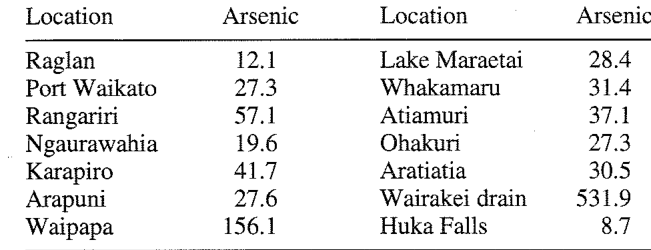
The sediments taken from various parts of the Waikato River had arsenic concentrations ranging from 9 ug g- at Huka falls to 156 ug g-' at Lake Maraetai (Table 2). There was no significant difference (p = 0.12) in the arsenic concentration of sediments taken from the lakes along the river, and those taken from the river bed. The average concentration was 35 ug g-1. Sediment from the Wairakei main drain had an arsenic concentration of 532 ug g-1. This drain is a significant source of arsenic input into the Waikato River and the high concentration of this element in sediments reflects its high abundance (3.8 ug mL-) in the ambient water. Although the arsenic content of the water of this drain was high before development of the site for geothermal power, this development has exacerbated arsenic discharge rates.
怀卡托河各河段沉积物的砷浓度范围为9 ug g-1(Huka瀑布)至156 ug g-1(Maraetai湖)(表2)。沿河各湖泊沉积物与河床沉积物的砷浓度无显著差异(p = 0.12)。平均浓度为35 ug g-1。Wairakei主排水渠沉积物砷浓度为532 ug g-1。该排水渠是怀卡托河砷输入的重要来源,其沉积物中高浓度的砷反映了周围水体中砷的高丰度(3.8 ug mL-1)。尽管在该地开发地热发电之前排水渠水体砷含量就已较高,但地热开发加剧了砷的排放速率。
There was no significant correlation (-0.19 [NS]) between the arsenic concentration of the sediments and distance downstream or the arsenic concentration in the water from which they were taken. The results were an order of magnitude higher than the arsenic concentrations reported by Aggett and Aspell (1978) for the shallow water sediments of Lake Karapiro (3.6 and 10.3 ug g) and Lake Aratiatia (4.7 ug g-). This finding may not be significant as there was large variation in the arsenic content of the sediments and no correlation with the water arsenic level or distance downstream where the samples were taken.
沉积物砷浓度与下游距离或采样处水体砷浓度之间均无显著相关性(-0.19 [NS])。本研究结果比Aggett and Aspell(1978)报道的Karapiro湖(3.6和10.3 ug g-1)和Aratiatia湖(4.7 ug g-1)浅水沉积物砷浓度高一个数量级。但由于沉积物砷含量变异很大,且与水体砷含量或采样点下游距离均无相关性,这一发现可能并无实际意义。
The arsenic concentration of the sediments increases with increasing water depth (Aggett and Kriegman, 1987). As the sediments collected in this study were collected at water depths <2.5 m, the amount of arsenic in the samples will be less than the average arsenic content of sediments in the entire lake. The arsenic concentration of the sediments fluctuates over time, with arsenic being released when the levels of oxygen in the water are low (Aggett and O'Brien, 1985). Despite the large variations in the arsenic concentration of the sediments, it appears that the sediments are a major sink for arsenic in the Waikato River.
沉积物砷浓度随水深增加而升高(Aggett and Kriegman, 1987)。由于本研究沉积物采集于水深<2.5 m处,样品砷含量将低于整个湖泊沉积物的平均砷含量。沉积物砷浓度随时间波动,当水中氧含量较低时砷会被释放(Aggett and O'Brien, 1985)。尽管沉积物砷浓度变异很大,沉积物似乎仍是怀卡托河中砷的主要汇。
Arsenic in some aquatic macrophytes from the Waikato怀卡托河部分水生大型植物中的砷
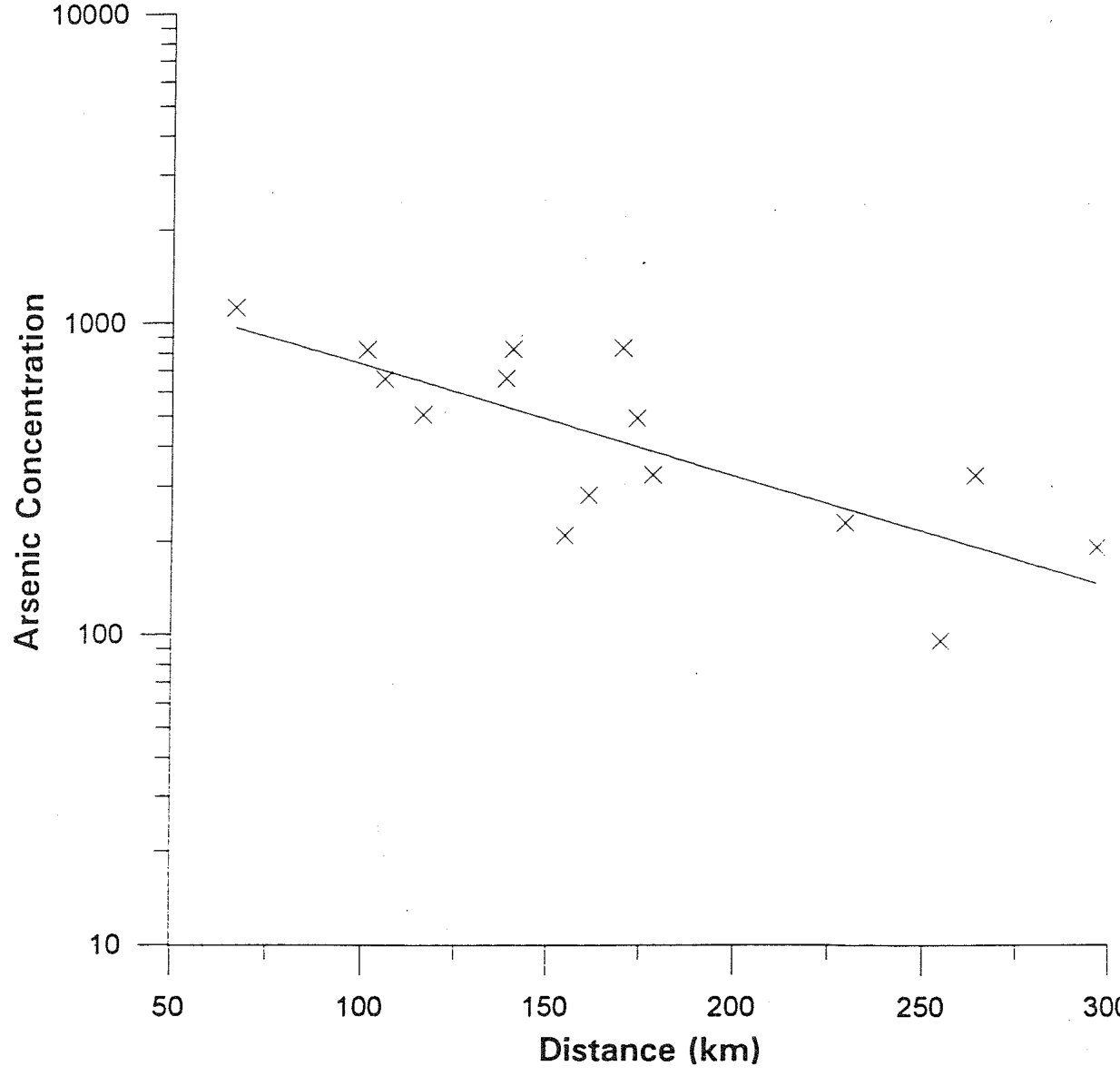
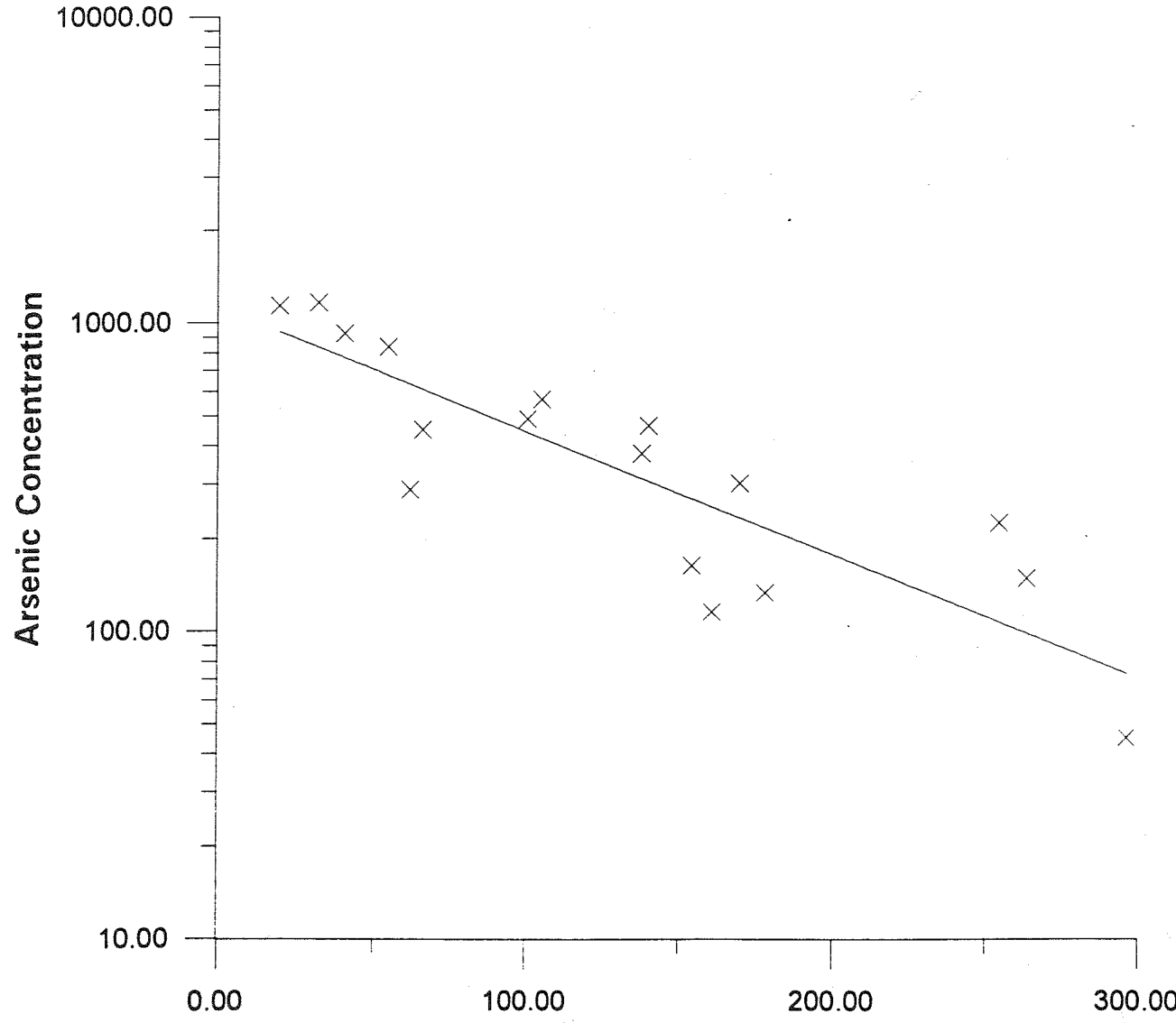
Three species of aquatic macrophyte (Egeria densa, Ceratophyllum demersum and Lagarosiphon major) from the river were analysed for arsenic. Means and ranges (ug g-1 dry weight) were as follows: Ceratophyllum demersum 378 and 44-1160; and Egeria densa 488 and 94-1120. Lagarosiphon major from the Huka Falls contained 11 ug g-' arsenic, whereas the same species from Lake Aratiatia had 300 ug g-1 of this element. Ceratophyllum demersum occurred from Lake Aratiatia northwards. Lagarosiphon major occurred between Lake Taupo and Broadlands where it was replaced by E densa. All species had arsenic concentrations of up to 1,200 ug g-' (0.12%) dry weight. Egeria densa and C. demersum had arsenic concentrations that had a highly significant inverse correlation (-0.86[S**] and -0.76[S**] respectively) with the distance of the plant downstream (Figures 3 and 4). These results show that the above aquatic macrophytes actively extract arsenic from the water in which they grow.
对河中3种水生大型植物(Egeria densa、Ceratophyllum demersum和Lagarosiphon major)进行了砷分析。均值与范围(ug g-1干重)如下:Ceratophyllum demersum为378和44–1160;Egeria densa为488和94–1120。Huka瀑布的Lagarosiphon major含砷11 ug g-1,而Aratiatia湖的同种植物含砷300 ug g-1。Ceratophyllum demersum分布于Aratiatia湖以北。Lagarosiphon major分布于陶波湖与Broadlands之间,在Broadlands被E. densa取代。所有物种的砷浓度最高可达1,200 ug g-1(0.12%)干重。Egeria densa和C. demersum的砷浓度与植物所处位置的下游距离呈极显著负相关(分别为-0.86[S**]和-0.76[S**])(图3和图4)。这些结果表明,上述水生大型植物能主动从其生长的水体中吸取砷。
The arsenic concentration of C. demersum showed a highly significant (0.65[S*]) correlation with the arsenic content of the water from which the plant was taken. The arsenic concentration in this plant was 10,000 = 2,000 times the arsenic concentration in the surrounding water. The arsenic concentration in E. densa showed no significant correlation (0.41[NS]) with that of the water from which it was taken. These results indicate that the aquatic macrophytes act as a sink for arsenic in the Waikato River. High concentrations of arsenic in aquatic macrophytes may have the effect of deterring grazing animals from consuming the plant.
C. demersum的砷浓度与其采集处水体砷含量呈极显著相关(0.65[S*])。该植物中的砷浓度为周围水体砷浓度的10,000 ± 2,000倍。E. densa的砷浓度与其采集处水体砷含量无显著相关性(0.41[NS])。这些结果表明,水生大型植物是怀卡托河中砷的汇。水生大型植物中的高浓度砷可能具有阻止食草动物采食的作用。
The high concentrations of arsenic in the weeds may be the result of the element being taken up by the same process as the uptake of an essential element. Arsenic has some chemical similarities with phosphorus, which is an essential plant macro nutrient. Accumulation of arsenic may be incidental to phosphorus uptake. This possibility is supported by the observation that nearly all the plants tested that grow in waters with elevated arsenic levels, accumulate arsenic to some
水草中砷浓度高,可能是由于该元素通过与某种必需元素相同的吸收过程被吸收。砷与磷在化学性质上有一定相似性,而磷是植物必需的大量营养元素。砷的积累可能伴随磷的吸收而附带发生。以下观察结果支持这一可能性:几乎所有受试的、生长于砷含量较高水体中的植物,均在一定程度上积累砷
The concentration of phosphorus in the water may affect the amount of arsenic accumulated by the plant. This may in turn affect the amount of arsenic in the river water. Benson (1953) showed that increasing levels of phosphorus decreases the toxicity of arsenic to barley plants by possibly competing for the binding sites that would otherwise have been occupied by this phytotoxic element. It is normal farming practice to apply 400 kg ha- phosphate fertiliser to pumice soils (Hill, 1975) and some of the phosphorus leaches into the waterways of the area. The amount of phosphorus applied to farms around the Waikato River system may directly affect the amount of arsenic accumulated by plants, which will affect the arsenic concentration in the waters of the Waikato River.
水体中磷的浓度可能影响植物积累砷的量,进而可能影响河水中的砷含量。Benson(1953)表明,提高磷水平可降低砷对大麦的毒性,其原因可能是磷与砷竞争原本会被这一植物毒性元素占据的结合位点。在浮石土壤上施用400 kg ha-1磷肥是常规农业做法(Hill, 1975),部分磷会淋溶进入该地区的水道。怀卡托河水系周边农场的施磷量可能直接影响植物积累砷的量,进而影响怀卡托河水体的砷浓度。
Weed eradication programmes that involve the use of herbicides need to take into account the amount of arsenic released into the water as the weeds decay. Obviously arsenic herbicides will be ineffective in combating the waterweeds The performance of carp and other herbivorous fish introduced in an attempt to control the weeds will be affected by arsenic in weeds may be toxic and/or unpalatable to the fish.
使用除草剂的水草清除计划需要考虑水草腐烂时释放到水中的砷量。显然,砷类除草剂对防治水草无效。为控制水草而引入的鲤鱼及其他植食性鱼类的效果将受到影响,因为水草中的砷可能对鱼类有毒和/或使鱼类不愿采食。
The concentration of arsenic in the water plants may give a good indication of the average concentration of arsenic in the water, and thus may be used as a bioindicator for the arsenic pollution in an area. The weeds may also have a use as detoxification agents in waterways with high levels of arsenic. Arsenic may be removed from a body of water by growing and periodically removing the macrophytes in a particular area. Lakes such as Lake Rotoroa, which still contains large amounts of arsenic from a weed eradication programme 25 years ago, may be detoxified in this manner.
水生植物中的砷浓度可较好地指示水体平均砷浓度,因而可用作某一地区砷污染的生物指示物。这些水草还可用作高砷水道的解毒剂。通过在特定区域种植并定期收割大型植物,可从水体中去除砷。像Rotoroa湖这样因25年前的水草清除计划至今仍含有大量砷的湖泊,可采用这种方式进行解毒。
Arsenic in some other organisms from the Waikato River Water cress collected in late February 1994 from Broadlands was found to contain 306 ug gI dry weight arsenic. Two more samples from the same site collected in April 1994 contained respectively 273 and 659 ug g-1 d.w. arsenic. A sample collected from Lake hakuri contained 30 ug g- 1 d.w. arsenic. The amount of arsenic in the water cress from the Waikato River is well in excess of the WHO limit for arsenic in food stuffs (2 ug g- fresh weight). A sample taken as a control from the Tiritea stream near Massey University had less than 0.001 ug g- d.w. arsenic.
怀卡托河其他生物中的砷 1994年2月下旬在Broadlands采集的豆瓣菜含砷306 ug g-1干重。1994年4月在同一地点采集的另外两个样品分别含砷273和659 ug g-1干重。在Ohakuri湖采集的一个样品含砷30 ug g-1干重。怀卡托河豆瓣菜的砷含量远超WHO食品砷限值(2 ug g-1鲜重)。在梅西大学附近Tiritea溪采集的对照样品砷含量低于0.001 ug g-1干重。
Water cress in the Waikato River is usually harvested about a month after when our samples had been collected, and the arsenic content of the plant may change as the plant matures. The plants taken from Broadlands are near to the recently opened Ohaaki power station. It is possible that this power station is responsible for the increase in the arsenic concentration of the river in the area, resulting in increased levels of this element in the water cress.
怀卡托河的豆瓣菜通常在我们采样后约一个月收获,植物成熟过程中砷含量可能发生变化。Broadlands采集的植物靠近新近投运的Ohaaki电站。该电站可能导致了该区域河水砷浓度的升高,从而使豆瓣菜中该元素含量升高。
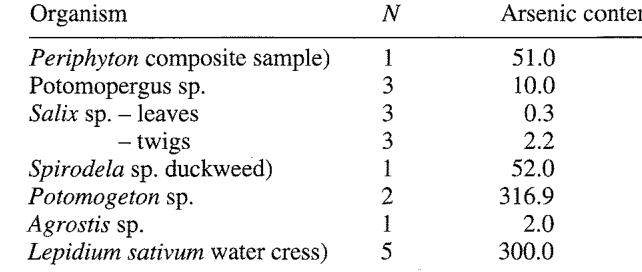
Table 3 presents data for arsenic in other organisms from the Waikato Kiver system. Although numbers of samples were too small for meaningful statistical treatment, it is clear that all of the taxa studied had significant levels of arsenic.表3列出了怀卡托河水系其他生物中的砷数据。虽然样品数量过少,无法进行有意义的统计分析,但显然所研究的所有类群均含有相当水平的砷。
Periphyton (Table 3) is one of the most important primary producers in the New Zealand aquatic ecosystem (Marples, 1962). Presumably the high arsenic concentration of the Periphyton will affect most of the heterotrophic life forms in the water. Potomopergus snails, which graze on periphyton, also has high arsenic concentrations. Arsenic, although apparently biophilic, does not seem to accumulate in the food chain the way other heavy metals do. Organisms at the top of the food chain, e.g. trout and eels have arsenic concentrations similar to the water in which they live (Robinson et al., 1995). In an aquatic system such as the Waikato River, arsenic appears to be accumulated in the aquatic plants and algae, then excreted by animal life as it travels up the tood chain.
周丛生物(表3)是新西兰水生生态系统中最重要的初级生产者之一(Marples, 1962)。据推测,周丛生物中的高浓度砷将影响水中大多数异养生物。以周丛生物为食的Potomopergus螺类砷浓度也较高。砷虽然看似具有亲生物性,但似乎并不像其他重金属那样沿食物链积累。处于食物链顶端的生物(如鳟鱼和鳗鱼)的砷浓度与其生活水体相近(Robinson et al., 1995)。在怀卡托河这样的水生系统中,砷似乎在水生植物和藻类中积累,随后在沿食物链向上传递的过程中被动物排出。
Distance (km)距离(km)
Arsenic in some shellfish and mullet taken from the mouth of the Waikato River compared with a background area (Kagian)
怀卡托河河口贝类和鲻鱼中的砷及其与背景区(Raglan)的比较
Shellfish and mullet taken from the estuary at the mouth of the Waikato River were analysed for arsenic. The results were compared with concentrations of this element in shellfish taken from an estuary near Raglan, some 40 km to the south (Table 4). Statistical differences between the two populations were determined by t-tests.
对怀卡托河河口采集的贝类和鲻鱼进行了砷分析,并与南面约40 km处Raglan附近河口采集的贝类砷浓度进行了比较(表4)。两个种群间的统计差异采用t检验确定。
No pipis or spirals could be found at Raglan. Of the comparable species (oysters, cockles and mussels), those collected from the mouth of the Waikato River had higher arsenic concentrations than those collected from Raglan, but only oysters (p = 0.00006) and mussels (p = 0.0006) were significantly higher. This indicates that arsenic entering the Waikato River in the Taupo Volcanic Zone, persists the entire length of the river and affects some marine life. None of the animals tested had flesh arsenic concentrations above 2 ug g-, the WHO limit for arsenic in foodstuffs.
在Raglan未找到pipi和螺类。在可比较的物种(牡蛎、鸟蛤和贻贝)中,怀卡托河河口采集的样品砷浓度均高于Raglan采集的样品,但仅牡蛎(p = 0.00006)和贻贝(p = 0.0006)显著较高。这表明在陶波火山带进入怀卡托河的砷贯穿整条河流,并影响部分海洋生物。所测动物的肉质砷浓度均未超过WHO食品砷限值2 ug g-1。
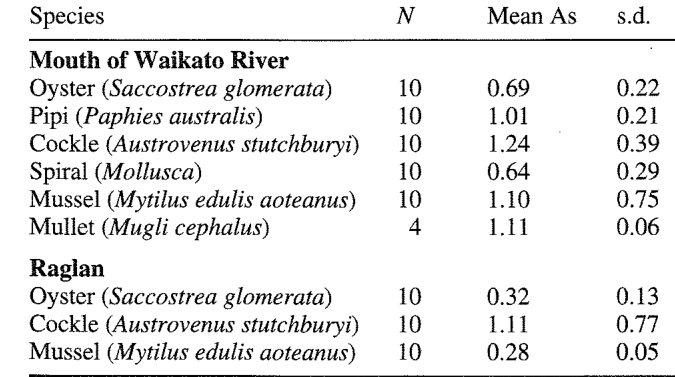
The molluscs at the mouth of the Waikato river and along its length may be a good indicator of the metals in the aquatic environment. Kennedy (1986) discussed the use of marine molluscs for monitoring trace metals in the marine environment. Mud from the estuary where the shellfish were taken contained 27 ug g-' arsenic compared to the 12 ug g- arsenic in mud from Raglan. Mullet from the mouth of the Waikato River, although herbivorous, contained arsenic levels below 0.04 Mg g-.
怀卡托河河口及沿河的软体动物可能是水生环境中金属的良好指示物。Kennedy(1986)探讨了利用海洋软体动物监测海洋环境中的微量金属。采集贝类的河口淤泥含砷27 ug g-1,而Raglan淤泥含砷12 ug g-1。怀卡托河河口的鲻鱼虽为植食性,其砷含量低于0.04 ug g-1。
5ACKNOWLEDGEMENTS致谢
The authors are indebted to the New Zealand Department of Health for financial support.
感谢新西兰卫生部的资助。
6REFERENCES参考文献
Aggett, J. and Aspell, A.C. 1978. Release of Arsenic from Geothermal Sources. N.Z. Res. Dev. Comm. #35.
Aggett, J. and Aspell, A.C. 1980. Arsenic from geothermal sources in the Waikato catchment. N.Z.J. Sci., 23, 77-82.
7CONCLUSIONS结论
Arsenic is a ubiquitous pollutant in the aquatic environment of the Waikato River. During the summer months most parts of the upper Waikato River have arsenic concentrations in the water greater than the WHO limit for drinking water. A large part of the river has arsenic concentrations in the water slightly below the WHO limit. Any new developments that release arsenic into the Waikato River may make most of the river unusable as drinking water in the summer months. This is very important in view of the proposal to pipe water to Auckland City from the Waikato River in order to relieve periodic droughts. This water would come from the Mercer area where the arsenic level is 0.02 ug mL-!. We forsee no real problem with this proposal because the WHO limit is extremely conservative and in any case the piped water would only represent about 10% of the city supply and would be diluted with 90% rain catchment with negligible arsenic levels.
砷是怀卡托河水生环境中普遍存在的污染物。夏季,怀卡托河上游大部分河段水体砷浓度高于WHO饮用水限值。河流很大一部分河段水体砷浓度略低于WHO限值。任何向怀卡托河排放砷的新开发项目都可能使夏季大部分河水无法用作饮用水。鉴于目前有从怀卡托河向奥克兰市输水以缓解周期性干旱的提议,这一点非常重要。输水将取自Mercer地区,该处砷含量为0.02 ug mL-1。我们认为该提议不存在实际问题,因为WHO限值极为保守,而且输送的水仅占城市供水的约10%,并将被砷含量可忽略不计的90%雨水集水稀释。
Arsenic accumulates in the sediments and aquatic macrophytes of the river. Destruction of aquatic macrophytes may cause an increase in water arsenic levels as the plants decay. Some of the aquatic macrophytes may be used as detoxification agents for bodies of water containing arsenic.
砷在河流沉积物和水生大型植物中积累。清除水生大型植物可能因植物腐烂而导致水体砷含量升高。部分水生大型植物可用作含砷水体的解毒剂。
The water cress in the Waikato River appears to behave similarly to other aquatic or semi-aquatic macrophytes in that it accumulates arsenic. Water cress should not be consumed from the Waikato River until further studies have been carried out. These future studies should include arsenic determinations on samples taken along the whole length of the river and arsen·c uptake experiments.
怀卡托河中的豆瓣菜似乎与其他水生或半水生大型植物类似,会积累砷。在开展进一步研究之前,不应食用怀卡托河中的豆瓣菜。今后的研究应包括对沿整条河流采集的样品进行砷测定以及开展砷吸收试验。
Other organisms in the Waikato River also accumulate arsenic. These appear to be mainly aquatic plants and algae. Some animals lower in the food chain have high arsenic concentrations. It is thought that arsenic is accumulated by the autotrophic organisms in the ecosystem, then excreted as it moves up the food chain. Shellfish at the mouth of the Waikato River have elevated arsenic levels but are still below WHO limits. There appear to be no other elements, with the exception of mercury in trout, that will significantly affect the environment of the area or its value to humans.
怀卡托河中的其他生物也会积累砷,主要为水生植物和藻类。部分处于食物链较低位置的动物砷浓度较高。一般认为,砷被生态系统中的自养生物积累,随后在沿食物链向上传递的过程中被排出。怀卡托河河口的贝类砷含量偏高,但仍低于WHO限值。除鳟鱼中的汞以外,似乎没有其他元素会对该地区环境或其对人类的价值产生显著影响。
Aggett, J. and Kriegman, M. 1987. The extent of formation of arsenic
Aggett, J. and Kriegman, M. 1987. The extent of formation of arsenic
(III) in sediment interstitial waters and its release to hypolimnetic waters in Lake Ohakuri. Water Res., 22, 407-411.
(III) in sediment interstitial waters and its release to hypolimnetic waters in Lake Ohakuri. Water Res., 22, 407-411.
Aggett, J. and O'Brien, T. 1985. Detailed model for the mobility of
Aggett, J. and O'Brien, T. 1985. Detailed model for the mobility of
arsenic in lacustrine sediments based on measurements in Lake
arsenic in lacustrine sediments based on measurements in Lake
Ohakuri. Environ. Sci. Technol., 19, 231-238.
Ohakuri. Environ. Sci. Technol., 19, 231-238.
Axmann, R.C. 1975. Environmental impact of a geothermal power plant. Science, 187; 795-803.
Axmann, R.C. 1975. Environmental impact of a geothermal power plant. Science, 187; 795-803.
Benson, N.R. 1953. Effect of season, phosphate and acidity on plant growth in arsenic toxic soils. Soil Sci., 76, 215-24.
Benson, N.R. 1953. Effect of season, phosphate and acidity on plant growth in arsenic toxic soils. Soil Sci., 76, 215-24.
Boyle, R.W. and Jonasson, I.R. 1973. The geochemistry of arsenic
Boyle, R.W. and Jonasson, I.R. 1973. The geochemistry of arsenic
and its use as an indicator element in geochemical prospecting J. Geochem. Explor., 2, 251-296
and its use as an indicator element in geochemical prospecting J. Geochem. Explor., 2, 251-296
Freeman, M.C. 1985. The reduction of arsenate to arsenite by an Anabaena bacteria assemblage isolated from the Waikato River. N.Z.J. Mar. Freshw. Res., 19, 277-282
Freeman, M.C. 1985. The reduction of arsenate to arsenite by an Anabaena bacteria assemblage isolated from the Waikato River. N.Z.J. Mar. Freshw. Res., 19, 277-282
Hill, C.F. 1975. Impounded Lakes of the Waikato River. In: Jolly, V.H. and Brown, J.M.A. (eds) New Zealand Lakes. Auckland University Press
Hill, C.F. 1975. Impounded Lakes of the Waikato River. In: Jolly, V.H. and Brown, J.M.A. (eds) New Zealand Lakes. Auckland University Press
Kennedy, P.C. 1986. The use of molluscs for monitoring trace elements in the marine environment in New Zealand. N.Z.J. Mar. Freshw. Res., 20, 627-640.
Kennedy, P.C. 1986. The use of molluscs for monitoring trace elements in the marine environment in New Zealand. N.Z.J. Mar. Freshw. Res., 20, 627-640.
Lancaster, R.J., Coup, M.R. and Hughes, J.W. 1971. Toxicity of arsenic present in lakeweed. N.Z. Vet. J., 19, 141-145.
Lancaster, R.J., Coup, M.R. and Hughes, J.W. 1971. Toxicity of arsenic present in lakeweed. N.Z. Vet. J., 19, 141-145.
Liddle, J.R. 1982. Arsenic and Other Elements of Geothermal Origin in the Taupo Volcanic Zone. PhD Thesis, Massey University,
Liddle, J.R. 1982. Arsenic and Other Elements of Geothermal Origin in the Taupo Volcanic Zone. PhD Thesis, Massey University,
Marples, B.J. 1962. An Introduction to Freshwater Life in New Zealand. Whitcombe and Tooms, Christchurch.
Marples, B.J. 1962. An Introduction to Freshwater Life in New Zealand. Whitcombe and Tooms, Christchurch.
Reay, P.F. 1971. The accumulation of arsenic from arsenic-rich natural waters by aquatic plants. J. Appl. Ecol., 9, 557-565.
Reay, P.F. 1971. The accumulation of arsenic from arsenic-rich natural waters by aquatic plants. J. Appl. Ecol., 9, 557-565.
Reay, P.F. 1973. Arsenic in the Waikato River System. Proc. Pollut Res. Conf., Wairakei, New Zealand, pp. 365-76.
Reay, P.F. 1973. Arsenic in the Waikato River System. Proc. Pollut Res. Conf., Wairakei, New Zealand, pp. 365-76.
Ritchie, J.A. 1961. Arsenic and antimony in some New Zealand thermal waters. N.Z.J. Sci., 4, 218-229
Ritchie, J.A. 1961. Arsenic and antimony in some New Zealand thermal waters. N.Z.J. Sci., 4, 218-229
Robinson, B.H., Brooks, R.R., Outred, H.A. and Kirkman, J.H. 1995. Mercury and arsenic in trout from the Taupo Volcanic Zone, North Island, New Zealand. Chem. Spec. Bioavail.
Robinson, B.H., Brooks, R.R., Outred, H.A. and Kirkman, J.H. 1995. Mercury and arsenic in trout from the Taupo Volcanic Zone, North Island, New Zealand. Chem. Spec. Bioavail.
Sarbutt, J.V. 1964. A chemical survey of the hot spring and drillhole waters of the Taupo borough. N.Z.J. Sci., 7, 491-505.
Sarbutt, J.V. 1964. A chemical survey of the hot spring and drillhole waters of the Taupo borough. N.Z.J. Sci., 7, 491-505.
Paper received: July 1995.
收稿日期:1995年7月。