Contents lists available at ScienceDirect journal homepage: www.elsevier.com/locate/scitotenv
Yuhan Zhang a, Jibao Jia b, Shuhe Wei c,*, Jie Zhan d, Guannan Kong a, Baoyu Wang c, Brett H. Robinson e, Lidia Skuza f, Jianming Xue g, Huiping Dai a,*
a School of Biological Science & Engineering, Shaanxi University of Technology, Hanzhong 723001, China
b Yunnan Key Laboratory for Plateau Mountain Ecology and Restoration of Degraded Environments, School of Ecology and Environmental Science, Yunnan University, Kunming 650500, China
c Key Laboratory of Pollution Ecology and Environment Engineering, Institute of Applied Ecology, Chinese Academy of Sciences, Shenyang 110016, China d Liaoning vocational college of medicine, Shenyang 110101, China
e School of Physical and Chemical Sciences, University of Canterbury, Christchurch 8041, New Zealand
f Institute of Biology, Centre for Molecular Biology and Biotechnology, University of Szczecin, Szczecin 71-415, Poland
g New Zealand Forest Research Institute (Scion), POB 29237, Christchurch 8440, New Zealand
H I G H L I G H T S
G R A P H I C A L A B S T R A C T
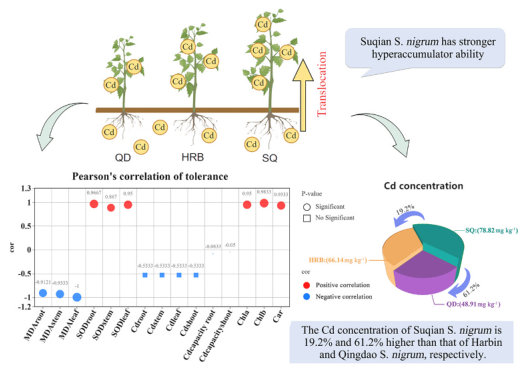
- Three ecotype Solanum nigrum L. showed Cd hyperaccumulation三种生态型Solanum nigrum L.均表现出Cd超富集特征
- Suqian ecotype S. nigrum showed the strongest Cd enrichment capacity宿迁生态型S. nigrum的Cd富集能力最强
- Biomass of Suqian ecotype was the highest either and with stronger tolerance宿迁生态型的生物量同样最高,且耐性更强
- Strong tolerance positively correlated to some physiological traits.较强的耐性与部分生理性状呈正相关。
A R T I C L E I N F O
Editor: Baoliang Chen
Keywords: Solanum nigrum L. Ecotype Cadmium Hyperaccumulation Physiological characteristic
关键词:Solanum nigrum L.;生态型;镉;超富集;生理特性
A B S T R A C T
Solanum nigrum L. has attracted scientific interest due to its capacity to accumulate exceptionally high cadmium (Cd) concentrations. Previous studies, which utilized different S. nigrum ecotypes reported varying levels of phytoremediation potentials for Cd pollution. However, due to differing experimental conditions, identifying the ecotype with the highest remediation potential has been challenging. The present article describes experiment involving nutrient solutions with two Cd concentrations [0.2 mg L− 1Cd (T1), and 5 mg L− 1Cd (T2)] to compare Cd accumulation differences in three S. nigrum ecotypes. The results showed that Cd accumulation was highest in the Suqian (SQ) ecotype, followed by Harbin (HRB) and Qingdao (QD) ecotypes. Cd concentrations in the roots, stems, leaves, and shoots of SQ were significantly increased by 31.0 %, 61.4 %, 29.1 %, and 43.1 %, respectively, in T1, and by 54.8 %, 57.6 %, 59.2 %, and 61.2 %, respectively, in T2 compared to QD. Correspondingly, Cd
Solanum nigrum L.(龙葵)因能够积累极高浓度的镉(Cd)而受到科学界关注。以往研究采用不同的S. nigrum生态型,报道了其对Cd污染具有不同程度的植物修复潜力。然而,由于试验条件各异,难以确定修复潜力最高的生态型。本文采用两个Cd浓度的营养液[0.2 mg L− 1 Cd(T1)和5 mg L− 1 Cd(T2)]开展试验,比较三种S. nigrum生态型的Cd积累差异。结果表明,宿迁(SQ)生态型的Cd积累量最高,其次为哈尔滨(HRB)和青岛(QD)生态型。与QD相比,SQ根、茎、叶及地上部的Cd浓度在T1处理下分别显著提高31.0 %、61.4 %、29.1 %和43.1 %,在T2处理下分别显著提高54.8 %、57.6 %、59.2 %和61.2 %。相应地,Cd
* Corresponding authors.
E-mail addresses: shuhewei@iae.ac.cn (S. Wei), daihp72@snut.edu.cn (H. Dai).
https://doi.org/10.1016/j.scitotenv.2025.179885
Received 19 March 2025; Received in revised form 8 June 2025; Accepted 9 June 2025
Available online 11 June 2025 0048-9697/© 2025 Elsevier B.V. All rights are reserved, including those for text and data mining, AI training, and similar technologies.
Y. Zhang et al. Scienceof the Total Environment accumulation capacity (μg plant− 1) in SQ shoots were also the highest, and increased significantly by 95.2 % compared to QD under T2 conditions, respectively, indicating its very high phytoremediation potential. Notably, the biomass of the SQ ecotype was also the highest in all treatments. Moreover, this ecotype demonstrated higher chlorophyll a and b, carotenoid contents, net photosynthetic rate, transpiration rate, stomatal conductance, SOD activity, and the lowest MDA content. These physiological characteristics may have contributed to the higher stress tolerance of the SQ ecotype. The present findings provide valuable insights for identifying and screening S. nigrum ecotypes with hyperaccumulate Cd accumulation potential worldwide.
Y. Zhang et al. Scienceof the Total Environment SQ地上部的积累量(μg plant− 1)同样最高,在T2条件下较QD显著提高95.2 %,表明其具有很高的植物修复潜力。值得注意的是,SQ生态型的生物量在所有处理中均最高。此外,该生态型具有较高的叶绿素a和b、类胡萝卜素含量、净光合速率、蒸腾速率、气孔导度和SOD活性,且MDA含量最低。这些生理特性可能是SQ生态型具有较强胁迫耐性的原因。本研究结果为在全球范围内鉴定和筛选具有Cd超富集潜力的S. nigrum生态型提供了有价值的参考。
1Introduction引言
Heavy metals have long been a major contributor to soil contamination, posing serious threats to food safety and human health (Zhou et al., 2020). This issue has emerged as a critical environmental concern affecting China's social and economic development. Cadmium (Cd), a non-essential and toxic element for plants and animals, is of particular concern (Chen et al., 2014). According to the National Soil Pollution Survey Bulletin released by the Ministry of Environmental Protection and the Ministry of Land and Resources of China in 2014, the overall soil contamination rate in the country was 16.1 %, with inorganic pollutants being the main contaminants. Among them, Cd reached a point exceedance rate of 7.0 %, making it one of the most common soil pollutants. Consequently, the treatment and reclamation of Cd-contaminated soil is an urgent issue. Land resources are essential to various human activities, and the deterioration of soil quality due to heavy metal contamination can have far-reaching implications for human development (Ma et al., 2020; Liu et al., 2023). Compared to physical and chemical methods of remediating heavy metal-contaminated soil, phytoremediation, primarily utilizing hyperaccumulators, offers several advantages. These include lower remediation costs, minimal environmental disturbance, and suitability for large-scale remediation of heavy metal-contaminated sites (Yang et al., 2019a, 2019b). However, despite these advantages, current phytoremediation methods remain insufficient to achieve optimal results. Therefore, it is necessary to identify hyperaccumulators with enhanced remediation efficiency and higher environmental adaptability.
长期以来,重金属一直是土壤污染的主要来源,对食品安全和人体健康构成严重威胁(Zhou et al., 2020)。这一问题已成为影响中国社会经济发展的重大环境问题。镉(Cd)是对动植物非必需且有毒的元素,尤其值得关注(Chen et al., 2014)。根据中国环境保护部和国土资源部2014年发布的《全国土壤污染状况调查公报》,全国土壤总超标率为16.1 %,以无机污染物为主。其中,Cd的点位超标率达7.0 %,是最常见的土壤污染物之一。因此,Cd污染土壤的治理与复垦是亟待解决的问题。土地资源是人类各类活动的基础,重金属污染导致的土壤质量退化可能对人类发展产生深远影响(Ma et al., 2020; Liu et al., 2023)。与修复重金属污染土壤的物理和化学方法相比,以超富集植物为主的植物修复具有多方面优势,包括修复成本较低、对环境扰动小、适用于大面积重金属污染场地修复等(Yang et al., 2019a, 2019b)。然而,尽管具有上述优势,现有植物修复方法仍不足以取得理想效果。因此,有必要筛选修复效率更高、环境适应性更强的超富集植物。
Solanum nigrum L. is a Cd hyperaccumulator, first identified and described by Wei et al. (2005) in the Shenyang area of China. The most important feature of hyperaccumulators is their accumulation threshold of specific elements, which for Cd is 100 mg kg− 1(Reeves et al., 2000). Other defining characteristics include the enrichment factor (EF, the ratio of Cd concentration in shoots compared to soil) and translocation factor (TF, the ratio of Cd concentration in shoots compared to roots) values higher than 1. At the same time, the biomass of a hyperaccumulator should remain unaffected by heavy metal contamination compared to control without Cd pollution (Wei et al., 2005).
Solanum nigrum L.是一种Cd超富集植物,由Wei et al.(2005)在中国沈阳地区首次发现并描述。超富集植物最重要的特征是其对特定元素的积累阈值,Cd的阈值为100 mg kg− 1(Reeves et al., 2000)。其他判定特征还包括富集系数(EF,地上部与土壤中Cd浓度之比)和转运系数(TF,地上部与根中Cd浓度之比)大于1。同时,与无Cd污染的对照相比,超富集植物的生物量不应受到重金属污染的影响(Wei et al., 2005)。
Cd extraction capacities of S. nigrum ecotypes distributed in different regions worldwide have been determined in many studies. For instance, Fidalgo et al. (2011) conducted a Cd pot experiment using S. nigrum seeds collected from the vicinity of the University of Porto campus in Portugal. At Cd concentration in the nutrient solution of 0.84–3.36 mg kg− 1, Cd content in S. nigrum shoots was approximately 100–370 mg kg− 1, with EF values ranging from 101.1 to 220.2. Du and Wang (2012) conducted experiments on S. nigrum collected from mountainous areas in Linhai City, Zhejiang Province, China. When Cd was added to the soil at concentrations of 25–100 mg kg− 1, the levels of this heavy metal in the roots and shoots of S. nigrum under natural light ranged from 8.93 to 28.57 mg kg− 1and 18.28 to 58.15 mg kg− 1, respectively; the EF and TF values were in the range of 0.58–0.76 and 1.97–2.09, respectively (Du and Wang, 2012). Liu et al. (2013) conducted a pot experiment using S. nigrum transplanted from Nanshanlizhi Park in Shenzhen city, Guangdong province to promote Cd enrichment by Proteobacteria. At a Cd soil concentration of 50 mg kg− 1, its root and shoot levels amounted to 122.7 and 82.6 mg kg− 1, respectively, with EF and TF values of 2.45 and 0.67, respectively. Khan et al. (2014) evaluated the Cd enrichment potential of a Korean ecotype of S. nigrum collected from Daegu, South Korea. When Cd concentrations of 10–80 mg kg− 1were applied by these authors to the soil, Cd root, stem and leaf contents in S. nigrum plants were from 120.49 to 3162.83 mg kg1. The EF values ranged from 347 to 1883, while the TF values varied between 0.49 and 0.92 (Khan et al., 2014). Obviously, there were very huge differences among different S. nigrum ecotypes accumulating Cd under different experimental situations.
已有许多研究测定了分布于世界不同地区的S. nigrum生态型的Cd提取能力。例如,Fidalgo et al.(2011)采用采自葡萄牙波尔图大学校园附近的S. nigrum种子开展了Cd盆栽试验。当营养液中Cd浓度为0.84–3.36 mg kg− 1时,S. nigrum地上部Cd含量约为100–370 mg kg− 1,EF值为101.1–220.2。Du and Wang(2012)以采自中国浙江省临海市山区的S. nigrum为材料开展试验。当向土壤中添加25–100 mg kg− 1的Cd时,自然光照条件下S. nigrum根和地上部中该重金属含量分别为8.93–28.57 mg kg− 1和18.28–58.15 mg kg− 1;EF和TF值分别为0.58–0.76和1.97–2.09(Du and Wang, 2012)。Liu et al.(2013)以移栽自广东省深圳市南山荔枝公园的S. nigrum开展盆栽试验,研究变形菌门细菌对Cd富集的促进作用。在土壤Cd浓度为50 mg kg− 1时,其根和地上部Cd含量分别为122.7和82.6 mg kg− 1,EF和TF值分别为2.45和0.67。Khan et al.(2014)评估了采自韩国大邱的韩国生态型S. nigrum的Cd富集潜力。当向土壤施加10–80 mg kg− 1的Cd时,S. nigrum植株根、茎和叶中Cd含量为120.49–3162.83 mg kg1,EF值为347–1883,TF值为0.49–0.92(Khan et al., 2014)。显然,在不同试验条件下,不同S. nigrum生态型的Cd积累存在巨大差异。
It is expected that different S. nigrum ecotypes from various regions will show similar characteristics in terms of Cd enrichment. However, due to variations in Cd concentrations in individual contaminated media, the differences in Cd accumulation among these ecotypes can vary significantly, sometimes by several or even tens of orders of magnitude. Thus, it is very important to compare the Cd accumulation capacity of different S. nigrum ecotypes under the same pollution conditions. This experiment was designed to compare differences in Cd accumulation and corresponding physiological characteristics of three different S. nigrum ecotypes collected from different areas of China. We hypothesized that there may be significant differences in Cd accumulation and some physiological indices among three S. nigrum ecotypes under consistent experimental situations.
可以预期,来自不同地区的S. nigrum生态型在Cd富集方面会表现出相似的特征。然而,由于各污染介质中Cd浓度不同,这些生态型之间的Cd积累差异可能相当显著,有时相差数倍甚至数十倍。因此,在相同污染条件下比较不同S. nigrum生态型的Cd积累能力十分重要。本试验旨在比较采自中国不同地区的三种S. nigrum生态型在Cd积累及相应生理特性方面的差异。我们假设,在一致的试验条件下,三种S. nigrum生态型的Cd积累及部分生理指标可能存在显著差异。
2Materials and methods材料与方法
2.1. Hydroponic experiment2.1. 水培试验
The seeds of S. nigrum ecotypes used in this experiment were collected from the wild in areas located in northern, central, and southern China, i.e., Harbin (HRB) in Heilongjiang province, Qingdao (QD) in Shandong province and Suqian (SQ) in Jiangsu province. The three ecotypes were selected because of roughly representing the wide geographical situations of China from north to south.
本试验所用S. nigrum生态型的种子采自中国北部、中部和南部地区的野外,即黑龙江省哈尔滨(HRB)、山东省青岛(QD)和江苏省宿迁(SQ)。选择这三种生态型是因为它们大致代表了中国由北至南广泛的地理条件。
A total of 9 treatments (3 Cd treatments x 3 ecotypes) were established. Each pot was filled with 2.5 l of Hoagland nutrient solution, and three different Cd concentration treatments were tested in triplicate the experiment: a control without Cd addition (CK), 0.2 mg L− 1Cd (T1), and 5 mg L− 1Cd (T2). T1, the addition of 0.2 mg L− 1Cd aimed to show normal growth of S. nigrum, especially without decreased biomass. T2, the addition of 5 mg L− 1Cd aimed to show inhibited growth of S. nigrum, especially with decreased biomass (Dai et al., 2022a). Cd was added in the form of the Guaranteed reagent (G.R.), i.e. CdCl2 2.5 H2O. Large, pest-free S. nigrum seeds were selected and disinfected with 0.1 % HgCl2 for 10 min. The plants were cultivated under greenhouse conditions. After 15 days of sprouting, 12 evenly growing seedlings were retained in each pot. Following 14 days of hydroponic cultivation, Cd treatments were applied, and all plant samples were collected after additional 14 days of exposure. During this period, the nutrient solution in each pot was changed every two days and continuously aerated. Conditions in the greenhouse were maintained at temperatures of 20–30 ◦C, relative humidity of 50–70 %, a 10-h photoperiod, and an illumination intensity of 20,000 Lux.
试验共设9个处理(3个Cd处理 × 3个生态型)。每盆装入2.5 l Hoagland营养液,设置3个Cd浓度处理,每个处理3次重复:不添加Cd的对照(CK)、0.2 mg L− 1 Cd(T1)和5 mg L− 1 Cd(T2)。T1处理添加0.2 mg L− 1 Cd,旨在体现S. nigrum的正常生长,尤其是生物量不下降;T2处理添加5 mg L− 1 Cd,旨在体现S. nigrum生长受抑制,尤其是生物量下降(Dai et al., 2022a)。Cd以优级纯(G.R.)试剂CdCl2 2.5 H2O的形式添加。挑选籽粒饱满、无病虫害的S. nigrum种子,用0.1 % HgCl2消毒10 min。植株在温室条件下培养。萌发15天后,每盆保留12株长势均匀的幼苗。水培14天后施加Cd处理,再暴露14天后采集全部植物样品。在此期间,每盆营养液每两天更换一次,并持续通气。温室条件保持温度20–30 ◦C、相对湿度50–70 %、光周期10 h、光照强度20,000 Lux。
2.2. Hoagland nutrient solution2.2. Hoagland营养液
The hydroponic experiment was conducted using a modified Hoagland nutrient solution with the following composition (per liter of working solution):
水培试验采用改良Hoagland营养液,其组成如下(每升工作液):
Macronutrients: Ca(NO₃)₂⋅4H₂O: 2 mM, KNO₃: 1 mM, NH₄H₂PO₄: 0.5 mM, MgSO₄⋅7H₂O: 1 mM.
大量元素:Ca(NO₃)₂⋅4H₂O:2 mM,KNO₃:1 mM,NH₄H₂PO₄:0.5 mM,MgSO₄⋅7H₂O:1 mM。
Micronutrients: H₃BO₃: 2.86 mg L− 1, MnCl₂⋅4H₂O: 1.81 mg L− 1, ZnSO₄⋅7H₂O: 0.22 mg L− 1, CuSO₄⋅5H₂O: 0.08 mg L− 1, Na₂MoO₄⋅2H₂O: 0.09 mg L− 1.
微量元素:H₃BO₃:2.86 mg L− 1,MnCl₂⋅4H₂O:1.81 mg L− 1,ZnSO₄⋅7H₂O:0.22 mg L− 1,CuSO₄⋅5H₂O:0.08 mg L− 1,Na₂MoO₄⋅2H₂O:0.09 mg L− 1。
Iron Chelate: Fe-EDTA: 74.5 mg L− 1.
螯合铁:Fe-EDTA:74.5 mg L− 1。
The pH of the nutrient solution was adjusted to 5.8 using 0.1 M NaOH or 0.1 M HCl. All chemicals were of analytical grade, and deionized water was used for preparation.
用0.1 M NaOH或0.1 M HCl将营养液pH调至5.8。所有化学试剂均为分析纯,并用去离子水配制。
leaves were mixed to determine shoot Cd concentration (Dai et al., 2022b).
叶混合,用于测定地上部Cd浓度(Dai et al., 2022b)。
The concentration of Cd in the roots, stems, leaves and shoots of S. nigrum was determined using an atomic absorption spectrophotometer (Hitachi 180–80). For quality assurance and quality control (QA/ QC), the standard reference material GBW07405 (GSS-5) was used to verify the measured values. The EF was calculated as the ratio of Cd concentration in the shoot to that in the solution, while the TF was the ratio of Cd concentration in the shoot to that in the root (Dai et al., 2021).
采用原子吸收分光光度计(Hitachi 180–80)测定S. nigrum根、茎、叶及地上部的Cd浓度。为进行质量保证与质量控制(QA/ QC),采用标准参考物质GBW07405(GSS-5)验证测定值。EF按地上部Cd浓度与溶液中Cd浓度之比计算,TF为地上部Cd浓度与根中Cd浓度之比(Dai et al., 2021)。
2.3. Biomass and Cd concentration measurements2.3. 生物量与Cd浓度测定
2.4. Determination of physiological indices2.4. 生理指标测定
Samples of S. nigrum were collected and rinsed repeatedly with deionized water, then blotted dry with filter paper. The roots, stems and leaves were separated and initially heated in a drying oven at 105 ◦C for 5 min. The samples were then dried at 80 ◦C until constant weight was achieved. The dry weight of the roots and shoots (stems and leaves) was determined using a 0.001 g precision balance. About half stems and
采集S. nigrum样品,用去离子水反复冲洗后以滤纸吸干。将根、茎、叶分开,先于105 ◦C烘箱中杀青5 min,再于80 ◦C烘干至恒重。用精度为0.001 g的天平测定根和地上部(茎和叶)干重。约一半的茎和
The contents of Chl a, Chl b and Car in the 5th fully unfolded leaf of S. nigrum were determined using the methods described by Niu et al. (2015).
采用Niu et al.(2015)所述方法测定S. nigrum第5片完全展开叶中Chl a、Chl b和Car的含量。
The net photosynthetic rate, transpiration rate and stomatal conductance were measured in the 5th fully unfolded S. nigrum leaves using a CI-340 portable photosynthetic instrument (CID, USA).
采用CI-340便携式光合仪(CID,USA)测定S. nigrum第5片完全展开叶的净光合速率、蒸腾速率和气孔导度。
Measurements were conducted from 8:00 to 10:00 am, following the method described by Krause and Winter (2015).
测定于上午8:00–10:00进行,按照Krause and Winter(2015)所述方法。
Superoxide dismutase (SOD) determination was performed according to the method of Gao et al. (Niu et al., 2015).
超氧化物歧化酶(SOD)活性按照Gao等的方法测定(Niu et al., 2015)。
MDA content determination was carried out according to the methods provided by Dai et al. (2017).
MDA含量按照Dai et al.(2017)提供的方法测定。
2.5. Data processing and statistical analysis2.5. 数据处理与统计分析
Microsoft Excel 2021 and SPSS 12.0 were used to process the data and analyze the significance of differences, and SPSS 12.0 and Origin 2021 were used to analyze the data for correlation. Origin 2021 was used for Pearson correlation analysis to assess the relationship between Cd accumulation and physiological indices (Qiu et al., 2025). Means of different treatments were compared using one-way ANOVA. For post hoc test, Duncan's multiple comparison was performed and the significance level was P < 0.05 based on the assumption of normal distribution and homogeneity of variance (Ma, 1990; Yang et al., 2019a, 2019b).
采用Microsoft Excel 2021和SPSS 12.0处理数据并进行差异显著性分析,采用SPSS 12.0和Origin 2021进行相关性分析。利用Origin 2021进行Pearson相关分析,以评估Cd积累与生理指标之间的关系(Qiu et al., 2025)。不同处理均值采用单因素ANOVA进行比较。在满足正态分布和方差齐性假设的基础上,采用Duncan多重比较进行事后检验,显著性水平为P < 0.05(Ma, 1990; Yang et al., 2019a, 2019b)。
3Results结果
3.1. Differences in Cd accumulation characteristics of three S. nigrum3.1. 三种S. nigrum
ecotypes生态型Cd积累特征的差异
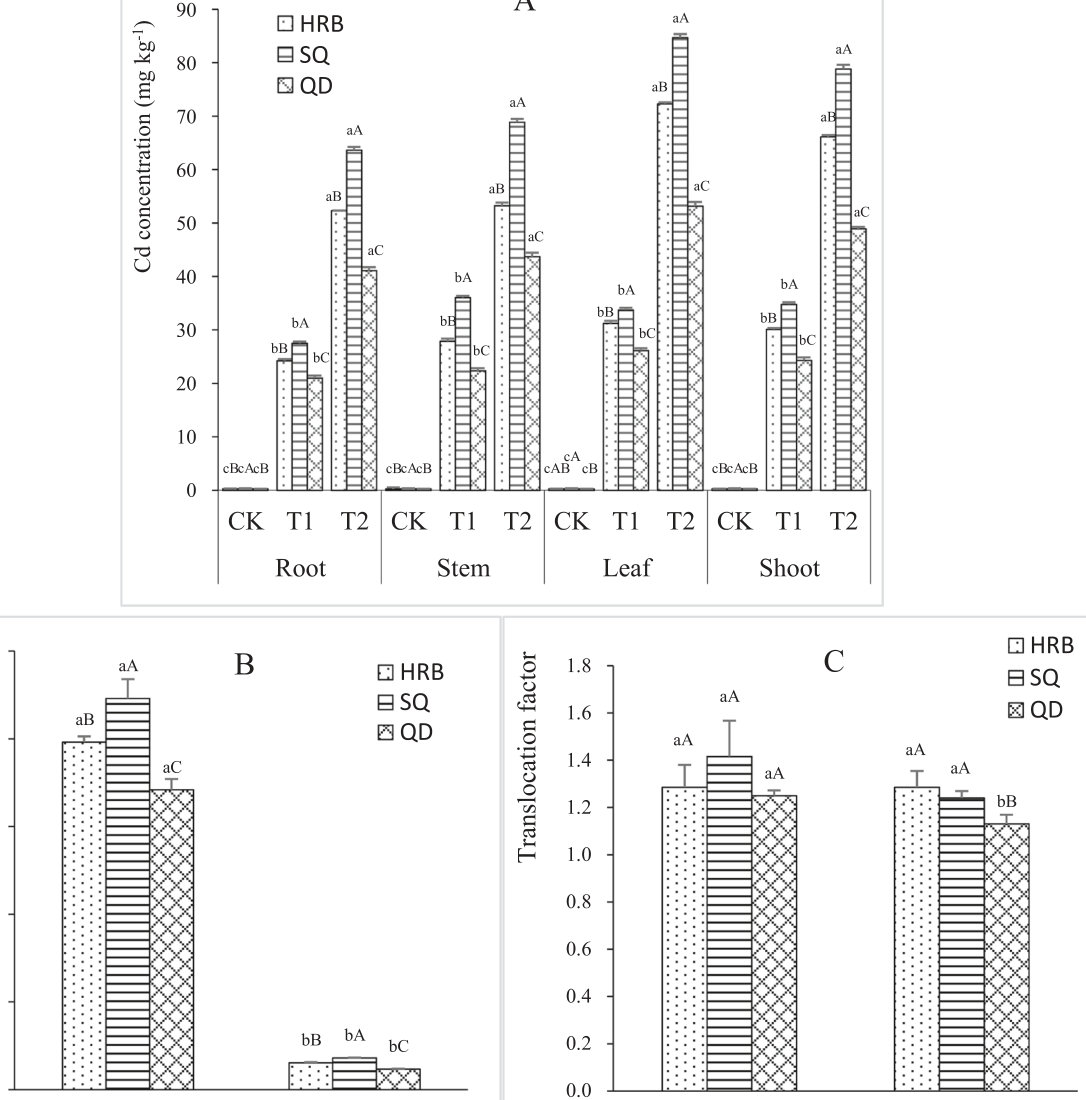
As shown in Fig. 1A, Cd concentrations ranged from 21.00 mg kg− 1 to 84.64 mg kg− 1in the roots and leaves under T1 and T2 conditions. Overall, Cd contents in the roots, stems, leaves and shoots were highest in the SQ ecotype, followed by HRB, with QD showing the lowest concentrations. In treatment T1, Cd concentrations in the roots, stems, leaves and shoots of SQ were significantly higher by 13.5 % and 31.0 %, 29.4 % and 61.4 %, 8.0 % and 29.1 %, 15.6 %, and 43.1 %, respectively, compared to HRB and QD (P < 0.05). In treatment T2, Cd concentrations in the roots, stems, leaves and shoots of SQ increased significantly by 21.7 % and 54.8 %, 29.4 % and 57.6 %, 17.1 % and 59.2 %, and 19.2 % and 61.2 %, respectively (P < 0.05). Generally, the differences in Cd concentrations were more pronounced with higher Cd concentrations in nutrient solutions (T1, T2).
如图1A所示,T1和T2条件下根和叶中Cd浓度为21.00 mg kg− 1至84.64 mg kg− 1。总体而言,根、茎、叶及地上部Cd含量以SQ生态型最高,HRB次之,QD最低。T1处理下,与HRB和QD相比,SQ根、茎、叶及地上部Cd浓度分别显著提高13.5 %和31.0 %、29.4 %和61.4 %、8.0 %和29.1 %、15.6 %和43.1 %(P < 0.05)。T2处理下,SQ根、茎、叶及地上部Cd浓度分别显著提高21.7 %和54.8 %、29.4 %和57.6 %、17.1 %和59.2 %、19.2 %和61.2 %(P < 0.05)。总体上,营养液Cd浓度越高(T1、T2),Cd浓度差异越明显。
Fig. 1B illustrates the EF values of the three ecotypes. The trends were similar to those observed for Cd concentrations in the shoots, with the EF values ranging from 170.1 to 223.0 in T1, and 11.7 to 18.1 in T2. As for the TF values of the three ecotypes, although all of them were >1 and no significant differences were observed among them in T1 treatment, the TF of QD S. nigrum was significantly lower than that of HRB图1B为三种生态型的EF值。其变化趋势与地上部Cd浓度相似,T1处理下EF值为170.1–223.0,T2处理下为11.7–18.1。三种生态型的TF值虽均>1,且在T1处理下相互间无显著差异,但在T2处理下,QD S. nigrum的TF显著低于HRB
and SQ ecotypes in T2 treatment (Fig. 1C).
和SQ生态型(图1C)。
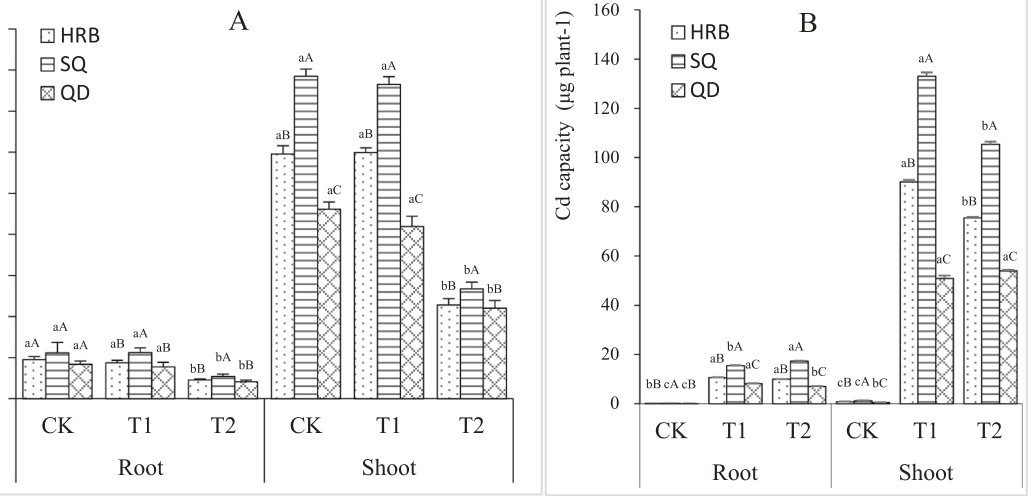
Fig. 2A presents the biomass of the three ecotypes. Compared to the CKs, root and shoot biomasses in treatment T1 were not significantly reduced (P < 0.05), while significant decreases were recorded in treatment T2 (P < 0.05). Among the three ecotypes, the biomass of SQ was the highest, followed by HRB and QD.图2A为三种生态型的生物量。与CK相比,T1处理下根和地上部生物量未显著降低(P < 0.05),而T2处理下显著降低(P < 0.05)。三种生态型中,SQ生物量最高,HRB和QD次之。
Fig. 2B shows the Cd accumulation capacity of the three ecotypes, which were calculated as the product of Cd concentration and biomass. In treatment T1, Cd accumulation capacity was the highest for SQ shoots, significantly increasing by 47.7 % and 161.2 % compared to HRB and QD, respectively (P < 0.05). In treatment T2, Cd content in SQ shoots was also the highest, and increased significantly by 39.5 % and 95.2 % compared to HRB and QD, respectively (P < 0.05). Overall, similar trends in root Cd accumulation capacity were observed under both treatments T1 and T2.图2B为三种生态型的Cd积累量,按Cd浓度与生物量的乘积计算。T1处理下,SQ地上部Cd积累量最高,较HRB和QD分别显著提高47.7 %和161.2 %(P < 0.05)。T2处理下,SQ地上部Cd积累量同样最高,较HRB和QD分别显著提高39.5 %和95.2 %(P < 0.05)。总体而言,T1和T2处理下根部Cd积累量呈相似趋势。
3.2. Differences in physiological indices between three ecotypes3.2. 三种生态型生理指标的差异
Table 1 shows the chlorophyll content in the leaves of individual S. nigrum ecotypes. Generally, compared to the CKs, Chl a, Chl b and Car contents in the three ecotypes were not markedly reduced under treatment T1, but were significantly reduced in treatment T2 (P < 0.05). Among the different ecotypes, SQ showed the highest chlorophyll concentrations. Under T1 treatment conditions, SQ had 13.2 % and 14.2 %表1为各S. nigrum生态型叶片的叶绿素含量。总体而言,与CK相比,三种生态型的Chl a、Chl b和Car含量在T1处理下未明显降低,但在T2处理下显著降低(P < 0.05)。不同生态型中,SQ的叶绿素浓度最高。T1处理条件下,SQ的
Chlorophyll contents in the leaves of individual S. nigrum ecotypes.
各S. nigrum生态型叶片的叶绿素含量。
| Treatment处理 | HRB | SQ | QD | |
|---|---|---|---|---|
| CK | 1.30±0.02aAB | 1.41±0.12aA | 1.26± 0.02aB | |
| Chlorophyll | T1 | 1.21±0.04aB | 1.37±0.06aA | 1.20± 0.05aB |
| a | ||||
| (mg kg−1) | T2 | 0.99±0.08bB | 1.14±0.03bA | 0.77± 0.05bC |
| CK | 1.60±0.14aB | 1.91±0.06aA | 1.36± 0.08aC | |
| Chlorophyll b | T1 | 1.45±0.04aB | 1.75±0.16aA | 1.10± 0.05bC |
| (mg kg−1) | T2 | 0.84±0.08bB | 1.05±0.04bA | 0.62± 0.11cC |
| CK | 3.41±0.14aB | 3.73±0.07aA | 3.50± 0.03aB | |
| Carotenoid | T1 | 3.23±0.07aAB | 3.53±0.03aA | 2.93± 0.27bB |
| (mg kg−1) | T2 | 2.37±0.13bA | 2.73±0.41bA | 1.70± 0.26cB |
Note:HRB:Harbin, SQ: SuQian, QD: QingDao, CK = control, T1 = 0.2 mg L− 1, T2 = 5 mg L− 1. Capital letters indicated significant differences (P < 0.05) between different ecotypes of S. nigrum in same treatment and small letters indicated significant differences (P < 0.05) between different treatments of same ecotype.
注:HRB:哈尔滨,SQ:宿迁,QD:青岛,CK = 对照,T1 = 0.2 mg L− 1,T2 = 5 mg L− 1。大写字母表示同一处理下S. nigrum不同生态型之间差异显著(P < 0.05),小写字母表示同一生态型不同处理之间差异显著(P < 0.05)。
higher Chl a content, 20.7 % and 51.9 % higher Chl b content, and 9.3 % and 20.5 % higher Car content than HRB and QD, respectively. The advantage of SQ was further extended under T2 treatment conditions: its Chl a content was 15.2 % and 48.1 % higher than that of HRB and QD, respectively, and its Chl b content was elevated by 25.0 % and 69.4 %, while a significant increase of 15.2 % and 60.6 % in the Car content was also realized.
Chl a含量分别比HRB和QD高13.2 %和14.2 %,Chl b含量分别高20.7 %和51.9 %,Car含量分别高9.3 %和20.5 %。在T2处理条件下,SQ的优势进一步扩大:其Chl a含量分别比HRB和QD高15.2 %和48.1 %,Chl b含量分别提高25.0 %和69.4 %,Car含量也分别显著提高15.2 %和60.6 %。
Table 2 summarizes the photosynthetic performance, including net photosynthetic rate (NR), transpiration rate (TR) and stomatal conductance (SC) in the leaves of the three ecotypes. Compared to the CKs, the NR, TR and SC of the three ecotypes were not significantly decreased as a result of treatment T1, but were significantly reduced under T2 conditions (P < 0.05). Among the ecotypes, SQ had the highest NR, TR, and SC, followed by HRB and QD.表2汇总了三种生态型叶片的光合性能,包括净光合速率(NR)、蒸腾速率(TR)和气孔导度(SC)。与CK相比,三种生态型的NR、TR和SC在T1处理下未显著降低,但在T2条件下显著降低(P < 0.05)。各生态型中,SQ的NR、TR和SC最高,HRB和QD次之。
Table 3 shows SOD antioxidant activity of in the leaves of the three ecotypes. Overall, SOD activity of the three ecotypes was not significantly decreased in treatment T1 but was markedly reduced in treatment T2 (P < 0.05) compared to the CKs. The highest levels were observed in the SQ ecotype, while the lowest were recorded for QD, with HRB displaying intermediate values.表3为三种生态型叶片的SOD抗氧化活性。总体而言,与CK相比,三种生态型的SOD活性在T1处理下未显著降低,但在T2处理下明显降低(P < 0.05)。SQ生态型的SOD活性最高,QD最低,HRB居中。
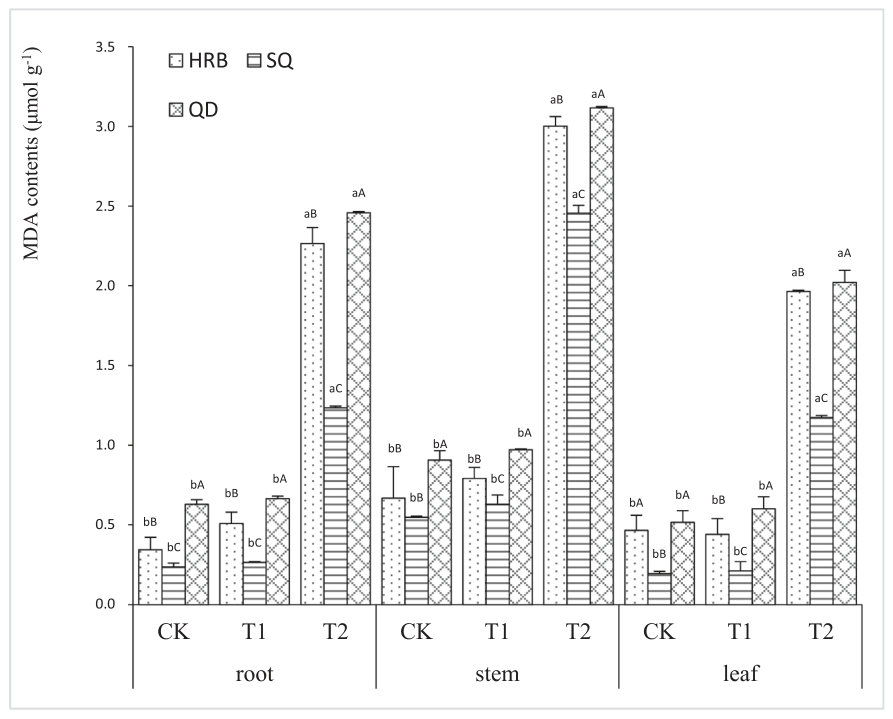
The MDA content in the stems and leaves of the three S. nigrum ecotypes is presented in Fig. 3. Compared to the CKs, the MDA content of all three ecotypes did not significantly decrease in treatment T1, while it was significantly elevated under T2 conditions (P < 0.05). Generally, SQ had the lowest MDA content, QD the highest, and HRB showed intermediate levels.
三种S. nigrum生态型茎和叶中的MDA含量见图3。与CK相比,三种生态型的MDA含量在T1处理下均未显著降低,而在T2条件下显著升高(P < 0.05)。总体而言,SQ的MDA含量最低,QD最高,HRB居中。
3.3. Correlation analysis between Cd accumulation, biomass and physiological indices3.3. Cd积累、生物量与生理指标的相关性分析
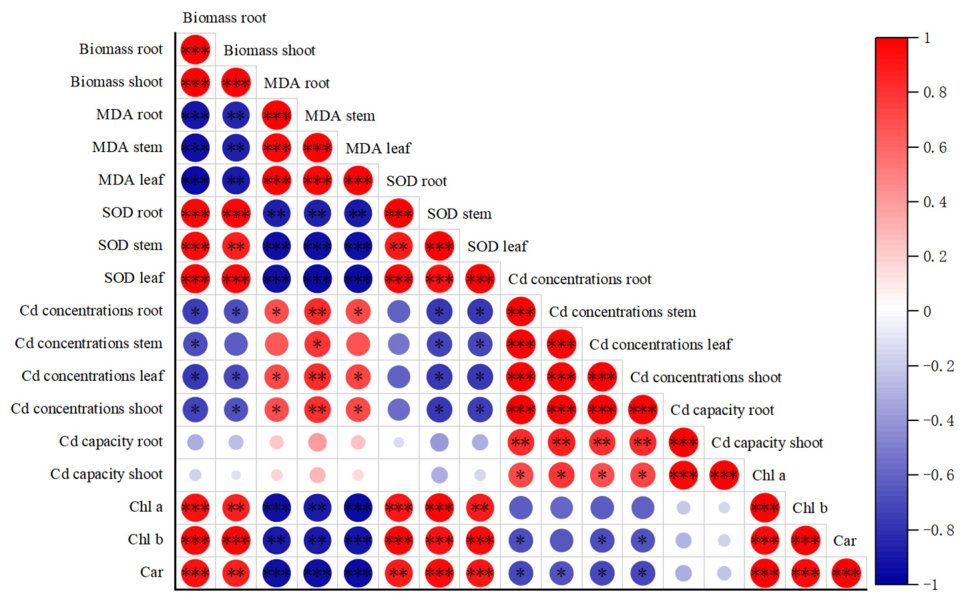
In generally, the results of Pearson's correlation analysis (Fig. 4) revealed that Cd concentrations in the roots, stems, leaves and shoots were significantly and negatively correlated with biomass and SOD activity (P < 0.05), while showing significantly positive correlations with MDA content (P < 0.05 and P < 0.01, respectively). Cd accumulation capacity showed a significantly positive correlation with Cd concentrations (P < 0.05 and P < 0.001). Biomass was significantly and positively correlated with SOD activity, Chl a, b and Car contents, as well as net photosynthetic rate, transpiration rate and stomatal conductance (P < 0.01 or P < 0.001), while it showed a significantly negative correlation with MDA contents (P < 0.01 or P < 0.001).
总体而言,Pearson相关分析结果(图4)表明,根、茎、叶及地上部Cd浓度与生物量和SOD活性呈显著负相关(P < 0.05),而与MDA含量呈显著正相关(分别为P < 0.05和P < 0.01)。Cd积累量与Cd浓度呈显著正相关(P < 0.05和P < 0.001)。生物量与SOD活性、Chl a、b和Car含量以及净光合速率、蒸腾速率和气孔导度呈显著正相关(P < 0.01或P < 0.001),而与MDA含量呈显著负相关(P < 0.01或P < 0.001)。
4Discussion讨论
In this experiment, Cd concentrations in the stems, leaves and shoots of the HRB, QD and SQ ecotypes under T1 and T2 conditions did not exceed 100 mg kg− 1, the threshold value for Cd hyperaccumulators (Fig. 1A). This was primarily due to the relatively low Cd concentrations in the nutrient solutions, which were set at 0.2 and 5 mg L− 1. These findings are consistent with results reported for S. nigrum ecotypes from Shenyang and Hanzhong in China, Australia and Japan under different
本试验中,T1和T2条件下HRB、QD和SQ生态型茎、叶及地上部的Cd浓度均未超过Cd超富集植物的阈值100 mg kg− 1(图1A)。这主要是由于营养液中Cd浓度相对较低,分别设为0.2和5 mg L− 1。这些结果与中国沈阳和汉中、澳大利亚及日本的S. nigrum生态型在不同
Table 3表3
SOD activity in the leaves of individual S. nigrum ecotypes (U mg− 1).
各S. nigrum生态型叶片的SOD活性(U mg− 1)。
Organ Treatment HRB SQ QD Root CK 4.60 ± 0.02aB 5.13 ± 0.02aA 3.58 ± 0.02aC T1 4.40 ± 0.57aB 5.61 ± 0.27aA 3.51 ± 0.64aB T2 2.66 ± 0.28bB 2.98 ± 0.02bA 1.94 ± 0.02bC Stem CK 4.35 ± 0.54aAB 4.64 ± 0.06aA 3.97 ± 0.01aB T1 3.42 ± 0.01aAB 4.35 ± 0.59aA 3.82 ± 0.17aB T2 2.71 ± 0.01bB 2.91 ± 0.01bA 1.94 ± 0.01bC Leaf CK 5.73 ± 0.02aA 5.85 ± 0.07aA 4.70 ± 0.16aB T1 5.38 ± 0.58aAB 6.10 ± 0.27aA 4.77 ± 0.01aB T2 2.99 ± 0.01bB 3.22 ± 0.06bA 2.74 ± 0.10bC Note:HRB:Harbin, SQ: SuQian, QD: QingDao, CK = control, T1 = 0.2 mg L− 1, T2 = 5 mg L− 1. Capital letters indicated significant differences (P < 0.05) between different ecotypes of S. nigrum in same treatment and small letters indicated significant differences (P < 0.05) between different treatments of same ecotype. Cd concentration gradients in contaminated soils (Wei et al., 2013; Dai et al., 2022b). Although aboveground partial Cd levels did not reach the hyperaccumulator plant threshold for all three ecotypes, EF values >1 were found for the HRB, QD and SQ ecotypes (Fig. 1B) (Wei et al., 2013; Dai et al., 2022b). The TF values obtained for the HRB, QD and SQ ecotypes were also all higher than 1 (Fig. 1C), suggests that it still has some Cd transport capacity. In treatment T1, the root and shoot biomass of the HRB, QD and SQ ecotypes were not significantly reduced compared to the CKs (Fig. 2A), indicating strong Cd tolerance under these conditions. All three ecotypes showed the fundamental characteristics of Cd hyperaccumulators (Wei et al., 2005; Wei et al., 2013; Dai et al., 2022b). In particular, its higher EF value indicated that the SQ ecotype was able to effectively absorb Cd from the soil, while the TF value >1 indicated that it was able to transport Cd from the roots to the aboveground part. Therefore, the SQ ecotype still has some potential for application in the remediation of Cd pollution. As shown in Fig. 2B, Cd accumulation capacity in the shoots of the SQ ecotype were the highest and increased by 161.2 % in T1 and 95.2 % in T2 compared to the lowest values observed in the QD ecotype. This demonstrated that the phytoremediation potential of the SQ ecotype was higher, indicating the necessity of expanding the screening for ecotypes with even greater Cd accumulation potential in China. Previous studies have demonstrated significant differences in Cd accumulation among Chinese ecotypes, such as those from Shenyang and Hanzhong, as well as ecotypes from Australia and Japan (Wei et al., 2013; Dai et al., 2022b). Therefore, identifying S. nigrum ecotypes with higher Cd accumulation capacity on a global scale seems feasible.
器官 处理 HRB SQ QD 根 CK 4.60 ± 0.02aB 5.13 ± 0.02aA 3.58 ± 0.02aC T1 4.40 ± 0.57aB 5.61 ± 0.27aA 3.51 ± 0.64aB T2 2.66 ± 0.28bB 2.98 ± 0.02bA 1.94 ± 0.02bC 茎 CK 4.35 ± 0.54aAB 4.64 ± 0.06aA 3.97 ± 0.01aB T1 3.42 ± 0.01aAB 4.35 ± 0.59aA 3.82 ± 0.17aB T2 2.71 ± 0.01bB 2.91 ± 0.01bA 1.94 ± 0.01bC 叶 CK 5.73 ± 0.02aA 5.85 ± 0.07aA 4.70 ± 0.16aB T1 5.38 ± 0.58aAB 6.10 ± 0.27aA 4.77 ± 0.01aB T2 2.99 ± 0.01bB 3.22 ± 0.06bA 2.74 ± 0.10bC 注:HRB:哈尔滨,SQ:宿迁,QD:青岛,CK = 对照,T1 = 0.2 mg L− 1,T2 = 5 mg L− 1。大写字母表示同一处理下S. nigrum不同生态型之间差异显著(P < 0.05),小写字母表示同一生态型不同处理之间差异显著(P < 0.05)。污染土壤Cd浓度梯度下所报道的结果一致(Wei et al., 2013; Dai et al., 2022b)。尽管三种生态型地上部Cd含量均未达到超富集植物阈值,但HRB、QD和SQ生态型的EF值均>1(图1B)(Wei et al., 2013; Dai et al., 2022b)。HRB、QD和SQ生态型的TF值也均大于1(图1C),表明其仍具有一定的Cd转运能力。T1处理下,HRB、QD和SQ生态型的根和地上部生物量与CK相比未显著降低(图2A),表明其在该条件下具有较强的Cd耐性。三种生态型均表现出Cd超富集植物的基本特征(Wei et al., 2005; Wei et al., 2013; Dai et al., 2022b)。特别是,SQ生态型较高的EF值表明其能够有效地从土壤中吸收Cd,而TF值>1表明其能够将Cd从根部转运至地上部。因此,SQ生态型在Cd污染修复中仍具有一定的应用潜力。如图2B所示,SQ生态型地上部Cd积累量最高,与最低的QD生态型相比,T1处理下提高161.2 %,T2处理下提高95.2 %。这表明SQ生态型的植物修复潜力更高,也说明有必要在中国扩大筛选范围,以寻找Cd积累潜力更大的生态型。以往研究已证明,中国不同生态型(如沈阳和汉中生态型)以及澳大利亚和日本生态型之间的Cd积累存在显著差异(Wei et al., 2013; Dai et al., 2022b)。因此,在全球范围内鉴定Cd积累能力更高的S. nigrum生态型似乎是可行的。
Photosynthesis is an important metabolic process in plants, in which chlorophyll a and chlorophyll b are responsible for the absorption, transfer and conversion of light energy, and their content indicates the intensity of photosynthetic activity. Carotenoids, present in photosynthetic tissues, absorb excess light energy to protect chlorophyll and maintain photosynthesis. Pankovi´c et al. (2000) showed that chlorophyll content of sunflower leaves decreased significantly under high Cd stress, whereas lower Cd levels did not cause a significant reduction, indicating some level of tolerance. The changes in chlorophyll content in this study were similar, and the SQ ecotype contained relatively the highest content of chlorophyll pigments (Table 1). The effect of heavy metals on photosynthesis was also reflected in such parameters as net photosynthetic rate, which was reduced, possibly due to RuBP carboxylation, photochemical activity, or inorganic phosphorus deficiency. He et al. (2016) showed that under different Cd concentrations, the net photosynthetic rate, transpiration rate and stomatal conductance of tobacco leaves remained unchanged at low Cd concentrations but were significantly lower than the control under high Cd stress. Similar trends were observed in this study, with the SQ ecotype showing the highest values for these parameters (Table 2). In general, heavy metal stress induces the production of reactive oxygen species (ROS) in plant cells, and excessive ROS accumulation can result in protein denaturation, enzyme inactivation, membrane lipid peroxidation, and even cell death. The antioxidant enzyme system in plant cells, especially SOD, may play a role in scavenging ROS, thereby mitigating the toxic effects of heavy metals on plants (AbdElgawad et al., 2019). The SQ ecotype of S. nigrum may mitigate Cd toxicity by enhancing antioxidant enzyme activity (SOD). It has been shown that hyperaccumulating plants are able to alleviate heavy metal stress by enhancing antioxidant capacity. It has been shown that hyperaccumulated plants are able to mitigate heavy metal stress by improving antioxidant capacity, and Cd toxicity induces excessive production of ROS, including H2O2, and leads to oxidative stress in plants, which is a common phenomenon under Cd stress (Sterckeman and Thomine, 2020). Cellular antioxidant enzymes are usually stimulated to help plants resist oxidative damage by eliminating ROS (Fasih et al., 2021). At the same time, their gene expression levels and patterns are changed. Wang et al. (2024) found significant alterations in 20 DEGs related to antioxidant enzyme genes, including SOD, CAT and POD, by studying antioxidant enzyme activities and corresponding genes in Lobelia under Cd stress.
光合作用是植物重要的代谢过程,其中叶绿素a和叶绿素b负责光能的吸收、传递和转化,其含量反映光合活动的强度。类胡萝卜素存在于光合组织中,可吸收过剩光能以保护叶绿素a并维持光合作用。Pankovi´c et al.(2000)研究表明,高Cd胁迫下向日葵叶片叶绿素含量显著下降,而较低Cd水平未导致显著降低,表明其具有一定耐性。本研究中叶绿素含量的变化与之相似,SQ生态型的叶绿素色素含量相对最高(表1)。重金属对光合作用的影响还体现在净光合速率等参数上,净光合速率降低可能与RuBP羧化、光化学活性或无机磷缺乏有关。He et al.(2016)研究表明,在不同Cd浓度下,烟草叶片的净光合速率、蒸腾速率和气孔导度在低Cd浓度下保持不变,而在高Cd胁迫下显著低于对照。本研究观察到类似趋势,SQ生态型的上述参数值最高(表2)。一般而言,重金属胁迫会诱导植物细胞产生活性氧(ROS),ROS过量积累可导致蛋白质变性、酶失活、膜脂过氧化,甚至细胞死亡。植物细胞中的抗氧化酶系统,特别是SOD,可能在清除ROS中发挥作用,从而减轻重金属对植物的毒害(AbdElgawad et al., 2019)。S. nigrum的SQ生态型可能通过提高抗氧化酶(SOD)活性来缓解Cd毒性。已有研究表明,超富集植物能够通过增强抗氧化能力来缓解重金属胁迫。已有研究表明,超富集植物能够通过提高抗氧化能力来减轻重金属胁迫,而Cd毒性会诱导包括H2O2在内的ROS过量产生,导致植物发生氧化胁迫,这是Cd胁迫下的普遍现象(Sterckeman and Thomine, 2020)。细胞抗氧化酶通常会被激活,通过清除ROS帮助植物抵御氧化损伤(Fasih et al., 2021)。同时,其基因表达水平和模式也会发生改变。Wang et al.(2024)通过研究Cd胁迫下半边莲(Lobelia)的抗氧化酶活性及相应基因,发现与抗氧化酶基因(包括SOD、CAT和POD)相关的20个DEGs发生了显著变化。
Net photosynthetic rate, transpiration rate and stomatal conductance in S. nigrum leaves.
S. nigrum叶片的净光合速率、蒸腾速率和气孔导度。
| Treatment处理 | HRB | SQ | QD | |
|---|---|---|---|---|
| Net photosynthetic rate (μmol s−1 m−2) | CK | 4.01± 0.65aB | 8.01± 0.57aA | 3.22±0.16aB |
| T1 | 3.77± 0.24aB | 7.55± 0.43aA | 2.99±0.09 aC | |
| T2 | 2.49± 0.30bB | 4.03± 0.34bA | 1.78±0.66bC | |
| Transpiration rate (μmol s−1 m−2) | CK | 2.68± 0.07aB | 3.38± 0.14aA | 1.27±0.19aC |
| T1 | 2.49± 0.14aB | 3.04± 0.22aA | 1.13±0.05aC | |
| T2 | 1.27± 0.11bA | 1.44± 0.29bA | 0.77±0.05bC | |
| Stomatal conductance (μmol s−1 m−2) | CK | 32.37± 1.90aA | 33.55± 3.31aA | 27.46±1.64aB |
| T1 | 26.54± 1.05bB | 29.79± 0.91aA | 22.26±0.94bC | |
| T2 | 17.69± 2.63cA | 18.89± 0.95bA | 13.98±0.22cC |
Note:HRB:Harbin, SQ: SuQian, QD: QingDao, CK = control, T1 = 0.2 mg L− 1, T2 = 5 mg L− 1. Capital letters indicated significant differences (P < 0.05) between different ecotypes of S. nigrum in same treatment and small letters indicated significant differences (P < 0.05) between different treatments of same ecotype.
注:HRB:哈尔滨,SQ:宿迁,QD:青岛,CK = 对照,T1 = 0.2 mg L− 1,T2 = 5 mg L− 1。大写字母表示同一处理下S. nigrum不同生态型之间差异显著(P < 0.05),小写字母表示同一生态型不同处理之间差异显著(P < 0.05)。
In addition, heavy metal stress impairs cell membrane function and permeability, and the oxidation of unsaturated fatty acids can lead to MDA production (AbdElgawad et al., 2019). Cd exposure triggers the generation of highly reactive free radicals in plants, resulting in membrane lipid peroxidation. The extent of cellular damage and plant resistance can be determined by measuring SOD activity and MDA content. Peng (2019) reported that SOD activity of Amaranthus caudatus seedlings was significantly reduced, while MDA content significantly increased under high Cd conditions. Conversely, under low Cd levels, the opposite trends were observed. The observed changes in SOD activity and MDA content in the current study were consistent with previous findings, with the SQ ecotype showing the highest and lowest values of these indicators, respectively (Table 2). These physiological indicators appear to correlate with the plant's tolerance to Cd stress and may reflect its overall ability to withstand heavy metal toxicity. Thus, S. nigrum ecotypes with high Cd accumulation capacity may show enhanced values of these physiological indicators. However, as this study examined only three ecotypes of S. nigrum, further, more comprehensive research is required.
此外,重金属胁迫会损害细胞膜功能和通透性,不饱和脂肪酸的氧化可导致MDA生成(AbdElgawad et al., 2019)。Cd暴露会引发植物体内高活性自由基的产生,导致膜脂过氧化。通过测定SOD活性和MDA含量,可以判断细胞损伤程度和植物抗性。Peng(2019)报道,在高Cd条件下,Amaranthus caudatus幼苗的SOD活性显著降低,而MDA含量显著升高;相反,在低Cd水平下则呈现相反趋势。本研究中SOD活性和MDA含量的变化与前人结果一致,SQ生态型的上述指标分别为最高和最低(表2)。这些生理指标似乎与植物对Cd胁迫的耐性相关,并可能反映其耐受重金属毒害的整体能力。因此,Cd积累能力强的S. nigrum生态型可能表现出更高的生理指标值。然而,由于本研究仅考察了三种S. nigrum生态型,仍需开展更全面的深入研究。
The significant negative correlations were observed between Cd concentrations (in root, stem, leaf and shoot) and biomass and SOD activity (Fig. 4). The significant positive correlation was shown between Cd concentrations and MDA contents either (Fig. 4). However, there were seldom direct evidences in physiological or molecular mechanisms fully explaining these relationships. In particular, the SQ ecotype reached the highest biomass among the three ecotypes of S. nigrum (Fig. 2A), while also showing the highest Cd concentrations in roots, stems, leaves and shoots (Fig. 1A). These findings suggest that differences in Cd accumulation between individual S. nigrum ecotypes were not directly related to biomass. Instead, Cd tolerance appears to be associated with physiological indicators such as Chl a, b and Car contents, net photosynthetic rate, transpiration rate, stomatal conductance, SOD activity and MDA content, which collectively reflect the plants' tolerance to Cd stress just like the discussions above. In another word, these indicators together reflected the tolerance differences of three ecotypes to Cd stress.
Cd浓度(根、茎、叶及地上部)与生物量和SOD活性之间呈显著负相关(图4),Cd浓度与MDA含量之间则呈显著正相关(图4)。然而,目前鲜有生理或分子机制方面的直接证据能够充分解释这些关系。特别是,SQ生态型在三种S. nigrum生态型中生物量最高(图2A),同时其根、茎、叶及地上部Cd浓度也最高(图1A)。这些结果表明,各S. nigrum生态型之间Cd积累的差异与生物量并无直接关系。相反,如上文所讨论,Cd耐性似乎与Chl a、b和Car含量、净光合速率、蒸腾速率、气孔导度、SOD活性及MDA含量等生理指标相关,这些指标共同反映了植物对Cd胁迫的耐性。换言之,这些指标共同反映了三种生态型对Cd胁迫的耐性差异。
In soil pot experiment, plant enrichment of Cd is usually positively correlated with the extractable Cd content and negatively correlated with soil pH (Rehman et al., 2017). However, the present study used a nutrient incubation experiment in which the extractable Cd content and pH were basically maintained at consistent levels for all the experimental treatments. Differences in physiological characteristics of different S. nigrum ecotypes may originate from plant evolution and adaptation to the environment resulting from their long-term growth in heterogeneous habitats. In fact, the concept of ecotype mainly refers to individuals or populations of the same plant species that have long-term growth in different growth environments and have ecological differences due to divergent adaptation (Luo, 2001). S. nigrum grown in different regions have significant differences in environmental conditions such as climate, soil and light just like in Haerbin, Qingdao and Suqian cities, and thus named different S. nigrum ecotypes (HRB, QD and SQ ecotypes) in this experiment. Previous studies have shown that Cd is a phytotoxic metal contaminant that induces ROS release and inhibits plant growth. Plants may improve their tolerance through complex reactions involving antioxidant mechanisms, compartmentalization of Cd within the cell wall or vesicles, which might be part reasons of the Cd accumulation and physiological characteristics were different among HRB, QD and SQ ecotypes (Zhang et al., 2019; Sun et al., 2020). However, high expression of metal transporter proteins such as SaNRAMP6 and IRT1 were also concerned on Cd hyperaccumulation in different plants (Chen et al., 2017; Ye et al., 2020). Thus, the difference mechanisms of Cd enrichment among different S. nigrum ecotypes might be explored from molecular biology levels in the future.
在土壤盆栽试验中,植物对Cd的富集通常与可提取态Cd含量呈正相关,与土壤pH呈负相关(Rehman et al., 2017)。然而,本研究采用营养液培养试验,各试验处理的可提取态Cd含量和pH基本保持一致。不同S. nigrum生态型生理特性的差异可能源于其在异质生境中长期生长所形成的植物进化与环境适应。事实上,生态型的概念主要是指同一植物物种在不同生长环境中长期生长、因趋异适应而产生生态差异的个体或种群(Luo, 2001)。生长于不同地区的S. nigrum在气候、土壤和光照等环境条件上存在显著差异,如哈尔滨、青岛和宿迁三市,因此本试验将其命名为不同的S. nigrum生态型(HRB、QD和SQ生态型)。以往研究表明,Cd是一种具有植物毒性的金属污染物,可诱导ROS释放并抑制植物生长。植物可能通过涉及抗氧化机制、将Cd区隔化于细胞壁或液泡内等复杂反应来提高耐性,这可能是HRB、QD和SQ生态型Cd积累及生理特性存在差异的部分原因(Zhang et al., 2019; Sun et al., 2020)。然而,SaNRAMP6和IRT1等金属转运蛋白的高表达也与不同植物的Cd超富集相关(Chen et al., 2017; Ye et al., 2020)。因此,今后可从分子生物学层面探究不同S. nigrum生态型Cd富集差异的机制。
5Conclusions结论
The nutrient culture experiment revealed significant differences in Cd accumulation between the three S. nigrum ecotypes under uniform conditions. The SQ ecotype had the highest Cd concentrations in the roots, stems, leaves, and shoots, as well as the greatest Cd accumulation capacity in its roots and shoots. In addition, the root and shoot biomasses of the SQ ecotype were the highest. Significant positive and negative correlations were observed regarding S. nigrum tolerance to Cd. Overall, the SQ ecotype showed the highest levels of chlorophyll a, chlorophyll b, and carotenoid contents, net photosynthetic rate, transpiration rate, stomatal conductance, and SOD activity, while maintaining the lowest MDA content in all treatments. The present findings suggest that these physiological indicators may be key characteristics of its Cd tolerance.
营养液培养试验表明,在一致条件下三种S. nigrum生态型的Cd积累存在显著差异。SQ生态型根、茎、叶及地上部的Cd浓度最高,其根和地上部的Cd积累量也最大。此外,SQ生态型的根和地上部生物量均最高。在S. nigrum对Cd的耐性方面观察到显著的正相关和负相关关系。总体而言,在所有处理中,SQ生态型的叶绿素a、叶绿素b和类胡萝卜素含量、净光合速率、蒸腾速率、气孔导度及SOD活性均最高,而MDA含量最低。本研究结果表明,这些生理指标可能是其Cd耐性的关键特征。
CRediT authorship contribution statementCRediT作者贡献声明
Yuhan Zhang: Writing – original draft, Resources, Formal analysis. Jibao Jia: Writing – original draft, Resources, Formal analysis. Shuhe Wei: Writing – review & editing, Supervision, Methodology, Funding acquisition, Formal analysis. Jie Zhan: Writing – review & editing, Validation. Guannan Kong: Writing – review & editing, Validation. Baoyu Wang: Writing – review & editing, Validation. Brett H. Robinson: Writing – review & editing, Validation. Lidia Skuza: Writing – review & editing, Methodology. Jianming Xue: Writing – review & editing, Validation. Huiping Dai: Writing – review & editing, Validation, Supervision, Methodology.
Yuhan Zhang:撰写–初稿,资源,形式分析。Jibao Jia:撰写–初稿,资源,形式分析。Shuhe Wei:撰写–审阅与编辑,监督,方法学,获取资助,形式分析。Jie Zhan:撰写–审阅与编辑,验证。Guannan Kong:撰写–审阅与编辑,验证。Baoyu Wang:撰写–审阅与编辑,验证。Brett H. Robinson:撰写–审阅与编辑,验证。Lidia Skuza:撰写–审阅与编辑,方法学。Jianming Xue:撰写–审阅与编辑,验证。Huiping Dai:撰写–审阅与编辑,验证,监督,方法学。
Consent to participate参与同意
All authors have agreed for authorship, read and approved the manuscript.
全体作者均同意署名,并已阅读和批准本稿件。
Consent for publication发表同意
All authors have given consent for publishing this study.
全体作者均同意发表本研究。
Ethical approval伦理批准
Not applicable.
Declaration of competing interest利益冲突声明
The authors declare that they have no known competing financial interests or personal relationships that could have appeared to influence the work reported in this paper.
作者声明,不存在任何可能影响本文所报道工作的已知经济利益冲突或个人关系。
Acknowledgements致谢
This work was supported by Sanqin Talents, Shaanxi Provincial Firstclass Team– “ Contaminated Soil Remediation and Resource Utilization Innovation Team at Shaanxi University of Technology”, the National Natural Science Foundation of China (32471703), the project of Foreign Experts Burean of China (S20240182, 2024WZ-ZDXM-15), Shaanxi University of Technology Research Ability Enhancement Project (SLGNL202405), Qin Chuangyuan “Scientists + Engineers” Team Construction in Shaanxi Province (2024QCY-KXJ-104), Shaanxi Province
本研究得到以下项目资助:三秦人才、陕西省一流团队——“陕西理工大学污染土壤修复与资源化利用创新团队”,国家自然科学基金(32471703),国家外国专家局项目(S20240182, 2024WZ-ZDXM-15),陕西理工大学科研能力提升项目(SLGNL202405),陕西省秦创原“科学家+工程师”队伍建设项目(2024QCY-KXJ-104),陕西省
City-University co-construction Project (SXZJ-2301), Special Support Plan for High-Level Talents in Shaanxi Province, Qinba Bioremediation and Resource Development Research Innovation and Introduction Base (S2022-ZC-GXYZ-0029), Talent Start-up Funds of Shaanxi University of Technology (X20240015, X20240034), Key R&D Projects in Shaanxi Province (2024NC-ZDCYL-04-10, 2025NC-YBXM-255), the Qinba Bioremediation and Resource Development Research Innovation and Introduction Base (2025YZ-YIPT-41), the Youth Innovative Team of Shaanxi Universities [No. 2022.94], Shaanxi Province Innovation Team (2025RS-CXID-040) and the program financed by Poland Minister of Science under the “Regional Excellence Initiative” for 2024-2027.
市校共建项目(SXZJ-2301),陕西省高层次人才特殊支持计划,秦巴生物修复与资源开发研究创新引智基地(S2022-ZC-GXYZ-0029),陕西理工大学人才启动经费(X20240015, X20240034),陕西省重点研发计划项目(2024NC-ZDCYL-04-10, 2025NC-YBXM-255),秦巴生物修复与资源开发研究创新引智基地(2025YZ-YIPT-41),陕西高校青年创新团队[No. 2022.94],陕西省创新团队(2025RS-CXID-040),以及波兰科学部长“区域卓越计划”(2024-2027年)资助项目。
Data availability数据可用性
The datasets used or analyzed during the current study are available from the corresponding author on reasonable request.
本研究所使用或分析的数据集可在合理要求下向通讯作者索取。
References参考文献
AbdElgawad, H., Zinta, G., Hamed, B.A., Selim, S., Beemster, G., Hozzein, W.N., Wadaan, M.A.M., Asard, H., Abuelsoud, W., 2019. Maize roots and shoots show distinct profiles of oxidative stress and antioxidant defense under heavy metal toxicity. Environ. Pollut. 258, 113705.
Chen, B., Zhang, Y.B., Rafiq, M.T., Khan, K.Y., Pan, F.S., Yang, X.E., Feng, Y., 2014. Improvement of cadmium uptake and accumulation in Sedum alfredii by endophytic bacteria Sphingomonas SaMR12: effects on plant growth and root exudates. Chemosphere 117, 367–373.
Chen, S.S., Han, X.J., Fang, J., Lu, Z.C., Qiu, W.M., Liu, M.Y., Sang, J., Jiang, J., Zhuo, R. Y., 2017. Sedum alfredii SaNramp6 metal transporter contributes to cadmium accumulation in transgenic Arabidopsis thaliana. Sci. Rep. 7, 13318.
Dai, H.P., Wei, S.H., Twardowska, I., Han, R., Xu, L., 2017. Hyperaccumulating potential of Bidens pilosa L. for cd and elucidation of its translocation behavior based on cell membrane permeability. Environ. Sci. Pollut. Res. 24, 23161–23167.
Dai, H.P., Wei, S.H., Twardowska, I., Zhang, Q., 2021. In search of the exclusion/lowaccumulation mechanisms: cadmium uptake and accumulation from soil by cultivated (Solanum Melongena L) and wild eggplants (Solanum torvum L). J. Clean. Prod. 323, 129141.
Dai, H.P., Wei, S.H., Grzebelus, D., Skuza, L., Jia, J.B., Hou, N., 2022a. Mechanism exploration of Solanum nigrum L. hyperaccumulating cd compared to Zn from the perspective of metabolic pathways based on differentially expressed proteins using iTRAQ. J. Hazard. Mater. 440, 129717.
Dai, H.P., Wei, S.H., Twardowska, I., Hou, N., Zhang, Q., 2022b. Cosmopolitan cadmium hyperaccumulator Solanum nigrum: exploring cadmium uptake, transport and physiological mechanisms of accumulation in different ecotypes as a way of enhancing its hyperaccumulative capacity. J. Environ. Manage. 320, 115878.
Du, Z.k., Wang, J., 2012. The accumulation and physiological response of Solanum nigrum L. to cadmium under different light intensities. J. Plant Nutrit. 18, 1499–1506.
Fasih, U.H., Cai, L.Q., Jeffrey, A.C., Sardar, A.C., Jun, W., Zhang, R.Z., Ma, W.J., Muhammad, F., 2021. Cadmium toxicity in plants: impacts and remediation strategies. Ecotox Environ Saf 211, 111887.
Fidalgo, F., Freitas, R., Ferreira, R., Pessoa, A.M., Teixeira, J., 2011. Solanum nigrum L. antioxidant defence system isozymes are regulated transcriptionally and posttranslationally in cd-induced stress. Environ Expe Bot 72, 312–319.
He, G.Q., Liu, Q., Guo, Z.N., Fu, M.H., Li, H.L., Liu, L., Li, H.Q., Zhang, H.H., 2016. Effects of cadmium stress on photosynthetic and characteristics,chlorophyll fluorescence in leaves of flue-cured tobacco. Acta Agric. Boreali-Sin. 31, 388–393.
Khan, A.R., Ullah, I., Khan, A.L., Hong, S.J., Waqas, M., Park, G.S., Kwak, Y., Choi, J., Jung, B.K., Park, M., Lee, I.J., Shin, J.H., 2014. Phytostabilization and physicochemical responses of Korean ecotype Solanum nigrum L. to cadmium contamination. Water Air Soil Pollut. 225, 2147.
Krause, G.H., Winter, K., 2015. Photoinhibition of photosynthesis in plants growing in natural tropical forest gaps: a chlorophyll fluorescence study. Plant Biol. 109, 456–462.
Liu, L.H., Liu, S.J., Chen, F.M., Yang, X.L., Yang, C.P., Zhao, J.J., Wu, B.Q., 2013. The enhanced effect of two cadmium resistant Proteus mirabilis strains on the remediation of cadmium contaminated soil by Solanum nigrum L. J Environ Engin 7, 4109–4115.
Liu, Y.R., Huang, L.K., Wen, Z.Y., Fu, Y.Y., Liu, Q.Z., Xu, S.A., Li, Z.S., Liu, C.J., Yu, C., Feng, Y., 2023. Effects of intercropping on safe agricultural production and phytoremediation of heavy metal-contaminated soils. Sci. Total Environ. 875, 162700.
Luo, S.M., 2001. Agricultural ecology. Agricultural Press of China, Beijing.
Ma, Y.H., 1990. Field experiment and statistic methods. Agriculture Press, Beijing, China. Ma, L.Y., Wu, Y., Wang, Q., Feng, Y., 2020. The endophytic bacterium relieved healthy risk of pakchoi intercropped with hyperaccumulator in the cadmium polluted greenhouse vegetable field. Environ. Pollut. 264, 114796.
Niu, M.F., Wei, S.H., Bai, J.Y., Wang, S.Q., Ji, D.D., 2015. Remediation and safe production of cd contaminated soil via multiple cropping hyperaccumulator Solanum nigrum L. and low accumulation Chinese cabbage. Int J Phytoremediat 17, 657–661.
Pankovi´c, D., Plesniˇcar, M., Arsenijevi´c-Maksimovi´c, I., Petrovi´c, N., Sakaˇc, Z., Kastori, R., 2000. Effects of nitrogen nutrition on photosynthesis in cd-treated sunflower plants. Ann Bot-London 86, 841–847.
Peng, C.Q., 2019. Study on the Physiological and Biochemical Response of Amaranthus caudatus to Cadmium Stress and the Accumulation of Cadmium. Guizhou University. Qiu, Y., Wei, S.H., Zhan, J., Robinson, B.H., Skuza, L., Xue, J.M., Dai, H.P., Zhan, L., Tang, Z.Y., 2025. Physio-biochemical indexes as indicators of cadmium tolerance in Brassica napus L. Cultivars. Agriculture 15, 132.
Reeves, R.D., Baker, J., Raskin, I., Ensley, B., 2000. Phytoremediation of toxic metals: using plants to clean the environment. J Plant Biotechnol 1, 304.
Rehman, M.Z., Rizwan, M., Ali, S., 2017. Remediation of heavy metal contaminated soils by using Solanum nigrum: A review. Ecotoxicol. Environ. Saf. 143, 236–248.
Sterckeman, T., Thomine, S., 2020. Mechanisms of cadmium accumulation in plants. Critical Reviews in Plant Sci 39, 322–359.
Sun, Y.P., Lu, Q.Y., Cao, Q.S., Wang, M.H., Cheng, X.Y., Yan, Q., 2020. Comparative transcriptome analysis of the molecular mechanism of the hairy roots of Brassica campestris L. in response to cadmium stress. Int. J. Mol. Sci. 21, 180.
Wang, J.C., Chen, X.F., Chu, S.H., Hayat, K., Chi, Y.W., Liao, X.F., Zhang, H.L., Xie, Y.G., Zhou, P., Zhang, D., 2024. Conjoint analysis of physio-biochemical, transcriptomic, and metabolomic reveals the response characteristics of Solanum nigrum L. to cadmium stress. BMC Plant Biol. 24, 567.
Wei, S.H., Zhou, Q.X., Wang, X., Zhang, K.S., Guo, G.L., Ma, L., 2005. A newly-discovered cd-hyperaccumulator Solanum nigrum L. Chin. Sci. Bull. 50, 33–38.
Wei, S.H., Clark, G., Doronila, A.I., Jin, J., Monsant, A.C., 2013. Cd hyperaccumulative characteristics of Australia ecotype Solanum nigrum L. and its implication in screening hyperaccumulator. Int J Phytoremediat 15, 199–205.
Yang, W., Dai, H., Dou, X., Zhang, Q., Wei, S., 2019a. Effect and mechanism of commonly used four nitrogen fertilizers and three organic fertilizers on Solanum nigrum L. hyperaccumulating cd. Environ. Sci. Pollut. Res. 26, 12940–12947.
Yang, S., Zu, Y.Q., Li, B., Bi, Y.F., Jia, L., He, Y.M., Li, Y., 2019b. Response and intraspecific differences in nitrogen metabolism of alfalfa (Medicago Sativa L.) under cadmium stress. Chemosphere 220, 69-16.
Ye, P., Wang, M., Zhang, T., Liu, X., Jiang, H., Sun, Y., Cheng, X., Yan, Q., 2020. Enhanced cadmium accumulation and tolerance in transgenic hairy roots of Solanum nigrum L. expressing iron-regulated transporter gene IRT1. Life 10, 324.
Zhang, M., Wang, X.C., Yang, L., Chu, Y.Y., 2019. Research on progress in combined remediation technologies of heavy metal polluted sediment. Int. J. Environ. Res. Public Health 16, 5098.
Zhou, Q., Liu, Y., Li, T., Zhao, H., Alessi, D.S., Liu, W., Konhauser, K.O., 2020. Cadmium adsorption to clay-microbe aggregates: implications for marine heavy metals cycling. Geochim Cosmochim Ac 290, 124–136.