S. ROULIER, B. ROBINSON, E. KUSTER & R. SCHULIN
Institute of Terrestrial Ecosystems, ETH Zurich, Universita¨tstrasse 16, 8092 Zu¨rich, Switzerland
1Summary摘要
Lead (Pb) from the traffic accumulates in roadside soils, which are usually vegetated to control erosion. Plants release soluble organic substances that bind Pb. Root macropores also create preferential pathways through which water can flow. Both these processes may enhance Pb mobility. We used large lysimeters to investigate the transport of Pb in a contaminated (445 mg Pb kg�1) soil under vegetation (Phacelia tanacetifolia). Despite the high soil pH (7.2), Pb leached into the drainage water during the 5-month experiment. The fast response of the system to intense rainfall events indicated the presence of preferential flow. By comparing Pb concentrations in filtered and unfiltered leachates, we found that Pb was leaching primarily on suspended material. An increase in Pb concentration in the leachate at the end of the experiment indicated the remobilization of Pb, possibly by decaying vegetation. We parameterized the dual-porosity MACRO model using the experimental results. The simple parameterization of MACRO used to simulate the Pb concentrations in the drainage water produced an overall model efficiency of 0.81: MACRO simulated the Pb concentrations well, but it failed to predict the observed increase of Pb in the leachate at the end of the experiment. The model gave the best prediction of Pb concentrations with a small partition coefficient (kd = 150 cm3 g�1). Long-term simulations of Pb mobility showed that for our specific conditions preferential flow was the main process determining the fate of Pb.
来自交通的铅(Pb)在路边土壤中积累,而路边土壤通常种植植被以控制侵蚀。植物释放可与Pb结合的可溶性有机物质。根系大孔隙还会形成优先通道,使水分得以沿其流动。这两种过程均可能增强Pb的迁移性。本研究利用大型渗漏计,考察了种植植被(Phacelia tanacetifolia)的污染土壤(445 mg Pb kg−1)中Pb的迁移。尽管土壤pH较高(7.2),在为期5个月的试验中Pb仍淋溶进入排水。系统对强降雨事件的快速响应表明存在优先流。通过比较过滤与未过滤淋出液中的Pb浓度,发现Pb主要随悬浮物质淋溶。试验末期淋出液中Pb浓度的升高表明Pb发生了再活化,其原因可能是植被的腐解。利用试验结果对双孔隙度模型MACRO进行了参数化。采用简单参数化的MACRO模拟排水中的Pb浓度,总体模型效率为0.81:MACRO对Pb浓度的模拟效果良好,但未能预测试验末期观测到的淋出液中Pb的升高。当分配系数较小时(kd = 150 cm3 g−1),模型对Pb浓度的预测最佳。Pb迁移性的长期模拟表明,在本研究的特定条件下,优先流是决定Pb归趋的主要过程。
2Introduction引言
Soil adjacent to busy roads has exceptionally large concentrations of lead (Pb). Whereas it is commonly assumed that Pb is immobile in topsoil (McBride, 1994), several studies have shown downward migration of Pb. Cao et al. (2003) found Pb to be highly mobile in soil of shooting ranges that was rich in both lead and organic matter. Deiss et al. (2004) observed enhanced Pb mobility in an acidic, peat soil, and Lamy et al. (2006) reported Pb leaching in sandy soils irrigated with wastewater.
繁忙道路附近的土壤中铅(Pb)浓度异常高。尽管通常认为Pb在表土中不易迁移(McBride, 1994),但已有多项研究表明Pb会向下迁移。Cao et al. (2003) 发现,在富含铅和有机质的射击场土壤中,Pb具有很高的迁移性。Deiss et al. (2004) 在酸性泥炭土中观察到Pb迁移性增强,Lamy et al. (2006) 则报道了以废水灌溉的砂质土壤中Pb的淋溶。
Roadside soils are usually vegetated to control erosion and improve aesthetic appearance. This vegetation may immobilize contaminants by reducing leaching and increasing sorption by the addition of organic matter to the soil (Robinson et al., 2003). However, in some cases, vegetation enhances the mobility of contaminants. Roots often grow into macroporous interstices, creating continuous preferential pathways (Hatano et al., 1988). Preferential flow is a physical process in which strongly adsorbing compounds move through the soil at a similar rate to that of mobile compounds (Flury, 1996). The rapid transfer of a compound through a small portion of the pore system reduces its interactions with binding sites in that system. This contact time is of critical importance, because the mobility of a compound in soil is profoundly affected by its sorption on to the soil matrix (Bruemmer et al., 1988). Root channels provide contaminants with rapid preferential paths towards the deeper layers of the soil that bypass the chemically and biologically reactive rhizosphere.
路边土壤通常种植植被,以控制侵蚀并改善景观。这些植被可通过减少淋溶以及向土壤中添加有机质以增强吸附,从而固定污染物(Robinson et al., 2003)。然而,在某些情况下,植被反而会增强污染物的迁移性。根系常常长入大孔隙间隙,形成连续的优先通道(Hatano et al., 1988)。优先流是一种物理过程,在此过程中强吸附性化合物以与易迁移化合物相近的速率在土壤中移动(Flury, 1996)。化合物经由孔隙系统的一小部分快速转移,减少了其与该系统中结合位点的相互作用。这一接触时间至关重要,因为化合物在土壤中的迁移性深受其在土壤基质上吸附作用的影响(Bruemmer et al., 1988)。根孔道为污染物提供了通往土壤深层的快速优先路径,使其绕过具有化学和生物活性的根际。
Correspondence: S. Roulier. E-mail: stephanie.roulier@env.ethz.ch Received 1 February 2007; revised version accepted 10 July 2007
Roots also exude organic substances that complex metals. Lead forms strong complexes with organic matter, and the organic exudates in the soil solution can augment the preferential transport of lead through the root macropores (Camobreco et al., 1996; Kim & Corapcioglu, 2002).
根系还分泌可与金属络合的有机物质。铅与有机质形成稳定的络合物,土壤溶液中的有机分泌物可加剧铅经由根系大孔隙的优先迁移(Camobreco et al., 1996; Kim & Corapcioglu, 2002)。
In Switzerland concentrations of Pb have been found to exceed guideline values up to 6 m from the road (VBBo, 1998). The world has c. 20 million km of paved roads, and so some 240 000 km2 may be affected world-wide. A management strategy is required to minimize the environmental risk posed by Pb in these soils. Such a strategy could include soil amendments that limit the mobility of Pb, combined with a vegetation cover that not only controls surface erosion and provides an appealing vista, but again limits Pb mobility, either downward into groundwater, laterally to surface waters, or upward into the aerial portions of the plant. It is impractical to test experimentally all combinations of soil, amendment and vegetation tailored to the plethora of environmental, economic and cultural conditions that occur worldwide. Instead we must rely on models to elucidate combinations that are likely to fulfil the aforementioned conditions.
在瑞士,已发现距道路6 m范围内土壤的Pb浓度超过指导值(VBBo, 1998)。全球约有2000万km铺装道路,因此全球可能约有240 000 km2的土地受到影响。需要制定管理策略,以最大限度降低这些土壤中Pb带来的环境风险。该策略可包括限制Pb迁移性的土壤改良剂,并结合植被覆盖:植被不仅能控制表面侵蚀、提供宜人景观,还能进一步限制Pb的迁移,无论是向下进入地下水、侧向进入地表水,还是向上进入植物地上部分。针对全球各地纷繁多样的环境、经济和文化条件,逐一通过试验检验土壤、改良剂与植被的所有组合是不现实的。因此,我们必须借助模型来筛选可能满足上述条件的组合。
There is, at present, no comprehensive modelling framework for investigating the long-term fate of Pbin soilsin relation tothe vegetation cover. Solute transport models need to incorporate the complexation of Pb with organic matter and particles, combined with the effect of the root system onthe soilstructure. Such models are necessarily complex and so of limited use because of the many parameters required (Jacques et al., 2002; Simunek et al., 2005). To determine the fate of Pb in soils efficiently, we need methods that combine experimental data describing Pb mobility in field-like conditions, with transport models that are easy to parameterize.
目前尚无全面的建模框架可用于研究土壤中Pb的长期归趋与植被覆盖之间的关系。溶质运移模型需要纳入Pb与有机质及颗粒物的络合作用,并结合根系对土壤结构的影响。此类模型必然十分复杂,且由于所需参数众多而实用性有限(Jacques et al., 2002; Simunek et al., 2005)。为有效确定土壤中Pb的归趋,需要将描述近田间条件下Pb迁移性的试验数据与易于参数化的运移模型相结合的方法。
With the above in mind, (i) we investigated the short-term mobility of Pb in a freshly settled roadside soil under vegetation cover in a lysimeter, (ii) we evaluatedthe performance of the one-dimensional dual-permeability solute transport model MACRO (Larsbo et al., 2005), using easily-obtainable parameters, to simulate Pb transport, and (iii) we investigated the combined effects of vegetation and preferential flow on the long-term mobility of Pb.
基于上述考虑,本研究(i)在渗漏计中考察了植被覆盖下新近沉降的路边土壤中Pb的短期迁移性;(ii)采用易于获取的参数,评估了一维双渗透性溶质运移模型MACRO(Larsbo et al., 2005)模拟Pb运移的性能;(iii)研究了植被与优先流对Pb长期迁移性的综合影响。
3Material and methods材料与方法
Soil properties and experimental set-up土壤性质与试验设置
The soil used in this study was taken from the top 20 cm of the median strip of a Swiss motorway (A2) that links the cities of Luzern and Zu¨ rich. It is a sandy loam (USDA) with 17% clay and 3.51% organic matter, which made it prone to preferential flow (Jarvis et al., 2007). The main mineral components of the soil fraction smaller than 2 mm were quartz, calcite, Naplagioclase, microcline, muscovite and chlorite. The CaCO3 content is 12.0% and pH was 7.2. The initial Pb concentration was 445 mg kg�1.
本研究所用土壤取自连接卢塞恩(Luzern)与苏黎世的瑞士A2高速公路中央分隔带0~20 cm表层。该土壤为砂壤土(USDA),黏粒含量17%,有机质含量3.51%,因而易于发生优先流(Jarvis et al., 2007)。粒径小于2 mm的土壤组分中主要矿物为石英、方解石、钠长石(Na-斜长石)、微斜长石、白云母和绿泥石。CaCO3含量为12.0%,pH为7.2。Pb初始浓度为445 mg kg−1。
The experiment was done at the lysimeter station (47°10¢N; 8°18¢E), of Horw, near Luzern. The average rainfall and temperature at the site are 1171 mm and 8.8°C, respectively. In August 2005, two rectangular lysimeter basins (5 � 3.5 m surface area, 1 m deep) were filled with a 50-cm layer of the soil, overlying a 20-cm layer of drainage sand (particle size between 1.5 and 2.2 mm). The herbaceous, shallow-rooted plant Phacelia tanacetifolia was sown 14 days after filling. Plants emerged 1 week later and reached a maximum height of 70 cm after 5 weeks. The vegetation died in the beginning of November, when the first frost occurred. The plant material was left on the soil surface until mid-April 2006. After the residues were removed, new plants were sown on 12 May 2006. Roots and shoots were sampled 7, 26 and 34 days after emergence. The Pb concentrations of each plant part were measured by XRF with four replicates per sample. In late April 2006, 3 weeks before the new plants were sown, four soil cylinders, each of 1000 cm3, were collected to determine the water retention curve. The top 25 cm of the two lysimeters were sampled at eight locations with a Humax auger. Total Pb concentration was measured by XRF. Soluble Pb was extracted by 0.1 M NaNO3 and by 0.1 M EDTA. Extracts in NaNO3 are used in Switzerland as a legal standard to estimate the solubility and bioavailability of polluting metals in soils (VBBo, 1998). Lead sorbed to surfaces of mineral and organic constituents can be removed by EDTA, which will also dissolve some Pb precipitated as carbonate and represent the potentially long-term mobilizable Pb.
试验在卢塞恩附近Horw的渗漏计站(47°10′N; 8°18′E)进行。该地年均降雨量和平均气温分别为1171 mm和8.8°C。2005年8月,在两个矩形渗漏计池(表面积5 × 3.5 m,深1 m)中填入50 cm厚的供试土壤,其下为20 cm厚的排水砂层(粒径1.5~2.2 mm)。填土14天后播种浅根草本植物Phacelia tanacetifolia。植物于1周后出苗,5周后达到最大株高70 cm。11月初首次霜冻时植被死亡。植物残体留于土壤表面直至2006年4月中旬。清除残体后,于2006年5月12日重新播种。在出苗后第7、26和34天采集根系和地上部样品。各植物部位的Pb浓度采用XRF测定,每个样品设4个重复。2006年4月下旬,即重新播种前3周,采集了4个体积各为1000 cm3的土柱,用于测定水分特征曲线。用Humax土钻在两个渗漏计的0~25 cm表层各采集8个点位的样品。总Pb浓度采用XRF测定。可溶性Pb分别用0.1 M NaNO3和0.1 M EDTA提取。在瑞士,NaNO3提取被用作评估土壤中污染金属溶解性和生物有效性的法定标准(VBBo, 1998)。吸附于矿物和有机组分表面的铅可被EDTA提取,EDTA还会溶解部分以碳酸盐形式沉淀的Pb,从而代表潜在的长期可活化Pb。
A 3% slope at the bottom of each lysimeter allowed the percolation water to flow in two separate 2-m3 closed tanks, through a drainage pipe. Every week we took two samples of the leached solution from each lysimeter. The accumulated weekly drainage from the lysimeters was measured, and the tanks were then emptied and flushed. One part of each drainage sample was filtered, removing particles > 0.45 mm in diameter, and acidified by addition of 1 ml of concentrated (69%) HNO3. The other part was first acidified with the same HNO3 solution and then filtrated with the same kind of filter as previously. The four replicate Pb concentrations at each sampling date in these filtrates were measured by Graphite Furnace Atomic Absorption Spectroscopy (GFAAS). The measured concentration in the first sample described the amount of free Pb in solution and the amount possibly bound to the soluble fraction of organic matter. In the second sample, we measured the total concentration in the leachates, including Pb bound to particulate organic matter. Weekly cumulated outflows were collected from 30 August 2005 to 19 July 2006. Concentrations of Pb on the leachate were measured from 18 August 2005 to 15 January 2006.
每个渗漏计底部设有3%的坡度,使渗滤水经排水管分别流入两个2 m3的密闭水箱。每周从每个渗漏计采集两份淋出液样品。测定渗漏计每周的累积排水量,随后将水箱排空并冲洗。每份排水样品的一部分经过滤(去除直径 > 0.45 μm的颗粒),并加入1 ml浓HNO3(69%)酸化。另一部分先用相同的HNO3溶液酸化,再用同类滤膜过滤。各采样日期滤液中Pb浓度(4个重复)采用石墨炉原子吸收光谱法(GFAAS)测定。第一份样品的测定浓度反映溶液中游离Pb及可能与有机质可溶组分结合的Pb的量。第二份样品测定的是淋出液中的总浓度,包括与颗粒有机质结合的Pb。每周累积出流量的收集时间为2005年8月30日至2006年7月19日。淋出液中Pb浓度的测定时间为2005年8月18日至2006年1月15日。
Hourly rainfall and daily meteorological data were recorded at the nearby (3 km) SwissMeteo meteorological station. Potential evaporation was calculated with the Penman equation, based on the recorded data.
逐时降雨量和逐日气象数据由附近(3 km)的SwissMeteo气象站记录。潜在蒸发量根据记录数据采用Penman公式计算。
Model description模型描述
We used the one-dimensional dual-permeability model MACRO to analyse Pb transport in our experimental conditions. Here, we report only aspects of MACRO that are relevant to this study. Larsbo et al. (2005) describe the model in full.
采用一维双渗透性模型MACRO分析本试验条件下的Pb运移。此处仅介绍与本研究相关的MACRO内容,模型的完整描述见Larsbo et al. (2005)。
The model MACRO is based on the concept of two separate pore domains, each characterized by distinct flow rates and solute concentrations: the micropores, or matrix domain, and the macropores. The boundary between the two flow domains is characterized by a user-defined soil water pressure head hb [L] with corresponding values for the saturated matrix water content yb [L3 L�3] and hydraulic conductivity Kb [L T�1]. Water flow in the micropores is governed by the Richards equation. Water retention and unsaturated hydraulic conductivity in this domain are described using a modified form of the van Genuchten–Mualem model (Vogel et al., 2001; Larsbo et al., 2005). Water flow in the macropores, qmac [L T�1], is assumed to be driven purely by gravity and is modelled with a modified numerical form of the kinematic wave equation (Germann, 1985):
MACRO模型基于两个独立孔隙域的概念,即微孔隙(或称基质域)和大孔隙,二者各具不同的流速和溶质浓度。两个流动域之间的边界由用户定义的土壤水压力水头hb [L]表征,并对应饱和基质含水量yb [L3 L−3]和导水率Kb [L T−1]。微孔隙中的水分流动由Richards方程描述。该域的水分保持特性和非饱和导水率采用修正的van Genuchten–Mualem模型描述(Vogel et al., 2001; Larsbo et al., 2005)。大孔隙中的水流qmac [L T−1]假定完全由重力驱动,并采用运动波方程的修正数值形式进行模拟(Germann, 1985):
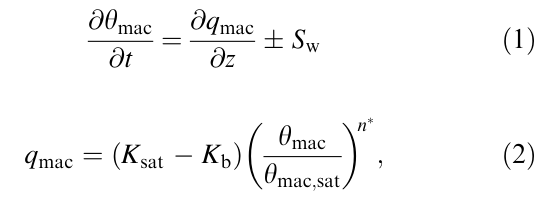
where ymac is the macropore water content [L3 L�3], Ksat is the saturated conductivity of the total pore system [L T�1], ymac,sat is the saturated macropore water content [L3 L�3], and n* is a ‘kinematic’ exponent reflecting macropore size distribution and tortuosity. Water exchange from macropores to micropores Sw [L3 L�3 T�1] is treated as a first-order approximation to the water diffusion equation that results from Richards equation when the influence of gravity is neglected:
式中,ymac为大孔隙含水量[L3 L−3],Ksat为整个孔隙系统的饱和导水率[L T−1],ymac,sat为大孔隙饱和含水量[L3 L−3],n*为反映大孔隙尺寸分布和弯曲度的“运动”指数。大孔隙向微孔隙的水分交换Sw [L3 L−3 T−1]被处理为水分扩散方程的一阶近似,该扩散方程由忽略重力影响的Richards方程导出:

where d is the effective diffusion pathlength [L], characteristic of the degree of macropore flow in the system, Dw is an effective water diffusivity [L2 T�1], gw is a dimensionless scaling factor introduced to match the approximate and exact solutions to the diffusion problem (Gerke & van Genuchten, 1993), and ymic [L3 L�3] is the water content in the micropores. Water flow in the reverse direction occurs if the water potential in the matrix exceeds hb. Uptake of water by the roots is calculated from evaporative demand, root distribution and soil water content, and it is distributed within the root depth according to the stress in each layer (Jarvis, 1989). The root distribution is assumed logarithmic with depth, and is defined by two parameters: the root depth and an empirical root distribution parameter that defines the percentage of the root length in the top 25% of the root depth.
式中,d为有效扩散路径长度[L],表征系统中大孔隙流的程度;Dw为有效水分扩散率[L2 T−1];gw为无量纲比例因子,用于使扩散问题的近似解与精确解相匹配(Gerke & van Genuchten, 1993);ymic [L3 L−3]为微孔隙含水量。当基质中的水势超过hb时,水流方向相反。根系吸水根据蒸发需求、根系分布和土壤含水量计算,并按各层所受胁迫在根深范围内分配(Jarvis, 1989)。根系分布假定随深度呈对数分布,由两个参数定义:根深以及定义根深上部25%范围内根长所占百分比的经验根系分布参数。
Solute transport in the micropores is calculated from the convection–dispersion equation, with source and sink terms Ui to represent mass exchange between flow domains, kinetic sorption, and solute uptake by roots:
微孔隙中的溶质运移由对流–弥散方程计算,其中源汇项Ui表示流动域间的质量交换、动力学吸附以及根系对溶质的吸收:

where S [M M�1] is the sorbed concentration in the equilibrium pool, C [M L�3] is the concentration in the liquid phase, rd [M T�3] is the bulk density, f is the fraction of sorption sites in the macropores, fne is the fraction of soil providing kinetic sorption sites, q [L T�1] is the water flow rate and D [L2 T�1] is the dispersion coefficient. Equilibrium sorption partitioning is calculated with the Freundlich isotherm:
式中,S [M M−1]为平衡库中的吸附态浓度,C [M L−3]为液相浓度,rd [M T−3]为容重,f为大孔隙中吸附位点所占比例,fne为提供动力学吸附位点的土壤所占比例,q [L T−1]为水流通量,D [L2 T−1]为弥散系数。平衡吸附分配采用Freundlich等温线计算:

where kd [L3 M] is the sorption coefficient, and b is the Freundlich exponent. An equivalent approach is used to calculate transport in the macropores, with dispersion set to zero because solute transport is assumed to be dominated by convection, and with only equilibrium sorption considered.
式中,kd [L3 M]为吸附系数,b为Freundlich指数。大孔隙中的运移采用等效方法计算,由于假定溶质运移以对流为主,弥散设为零,且仅考虑平衡吸附。
Mass transfer of solute between the two flow domains is given by a combination of a diffusion component and a mass flow component:
两个流动域之间的溶质质量传递由扩散分量和质量流分量共同给出:

where De [L2 T�1] is an effective diffusion coefficient, Cmac and Cmic [M L�3] are the solute concentrations in macropores and matrix, respectively, and C¢ [M L�3] indicates either the solute concentration in macropores or matrix, depending on the direction of water exchange Sw. The source term accounting for kinetic sorption describes the variation with time of the mass of solute stored per unit soil volume at the kinetic sites Ane [M L�3]. It depends on a first-order mass transfer coefficient ak [T�1] and follows the approach described by Altfelder et al. (2000):
式中,De [L2 T−1]为有效扩散系数,Cmac和Cmic [M L−3]分别为大孔隙和基质中的溶质浓度,C′ [M L−3]根据水分交换Sw的方向表示大孔隙或基质中的溶质浓度。表征动力学吸附的源项描述了单位土壤体积中动力学位点所储存溶质质量Ane [M L−3]随时间的变化。它取决于一阶质量传递系数ak [T−1],并遵循Altfelder et al. (2000) 所述的方法:

Solute uptake in the transpiration stream occurs at the maximum rate, unrestricted by the crop (i.e. passive crop uptake), and is described as a function of root water uptake and solute concentration. The transfer of solute in the soil solution towards the root is purely convective and does not take into account diffusive processes.
蒸腾流中的溶质吸收以最大速率进行,不受作物限制(即作物被动吸收),并表述为根系吸水量和溶质浓度的函数。土壤溶液中溶质向根系的迁移完全为对流过程,不考虑扩散过程。
Modelling strategy建模策略
We used a blind simulation (direct modelling) to simulate drainage from the lysimeters. We obtained the necessary parameters for Pb transport by inverse modelling and calibrated them against the measured Pb concentrations in the lysimeter drainage. These parameters were integrated into the calibration procedure because they were essential and could not be estimated accurately by other means. Finally, using the parameterization for the water transfer and the solute transport based on the inverse modelling, we investigated the long-term mobility of Pb in relation to vegetation cover.
采用盲模拟(直接建模)模拟渗漏计的排水。Pb运移所需参数通过逆向建模获得,并根据渗漏计排水中实测Pb浓度进行率定。将这些参数纳入率定过程,是因为它们不可或缺且无法通过其他方法准确估算。最后,基于逆向建模得到的水分传输和溶质运移参数化方案,研究了Pb长期迁移性与植被覆盖的关系。
Model parameterization模型参数化
When not calibrated, the model parameters were based on direct measurements, estimated by pedo-transfer functions, set as default values of the model, or based on expert judgements. The parameters of the Van Genuchten (1980) function were fitted to measured water retention data with the RETC code of Van Genuchten et al. (1991). The boundary between matrix flow and macropore flow hb was set to an equivalent pressure head of �10 cm, based on consistent results of solute breakthrough experiments on undisturbed soil cores at various pressure potentials (Seyfried & Rao, 1987; Jardine et al., 1993; Langner et al., 1999). This value was used to estimate the corresponding saturated matrix water content yb. We estimated the saturated matrix hydraulic conductivity Kb, the total saturated hydraulic conductivity Ksat, and the diffusion pathlength d using the internal transfer function included in MACRO. Values are given in Table 1.
未经率定的模型参数来源于直接测定、土壤转换函数估算、模型默认值或专家判断。Van Genuchten (1980) 函数的参数采用Van Genuchten et al. (1991) 的RETC程序对实测水分特征数据进行拟合。基于不同压力势下原状土柱溶质穿透试验的一致结果(Seyfried & Rao, 1987; Jardine et al., 1993; Langner et al., 1999),将基质流与大孔隙流之间的边界hb设定为等效压力水头−10 cm。利用该值估算相应的饱和基质含水量yb。饱和基质导水率Kb、总饱和导水率Ksat和扩散路径长度d采用MACRO内置的转换函数估算。各参数值见表1。
The fraction f of sorption sites in the macropores, Equation (4), was set to zero, to account for particulate-facilitated transport, because MACRO does not describe complexation of Pb with mobile colloids. We assumed here that particulate-facilitated transport occurred in the macropores only, and that all Pb that entered the macropores would instantaneously be fixed on mobile colloids. In batch sorption experiments by Serrano et al. (2005), Pb showed two stages time-dependent behaviour: an initial rapid sorption, followed by a much slower phase. This process can be assimilated to biphasic adsorption, differentiating rapid reactions on readily accessible sites from slow reactions on less accessible sites (Jardine, 1991). By transposing this behaviour at macroscopic time scales, that is, assuming that adsorption took place initially on the accessible sites and thereafter on the less accessible sites, we assumed that sorption sites were mainly of kinetic types. Therefore, the fraction of soil fne providing non-equilibrium sorption sites, Equations (4) and (7), was set to 0.95. From our observations we set the maximum root depth to 0.15 m and maximum plant height to 0.70 m. The leaf area index (LAI) and the percentage of the root length in the top 25% of the root depth x were set to the default values of 5 and 25%, respectively.
由于MACRO不能描述Pb与移动性胶体的络合作用,为表征颗粒促进运移,将大孔隙中吸附位点所占比例f(式4)设为零。本研究假定颗粒促进运移仅发生在大孔隙中,且所有进入大孔隙的Pb都会瞬时固定在移动性胶体上。在Serrano et al. (2005) 的批量吸附试验中,Pb表现出两阶段的时间依赖行为:初期快速吸附,随后为缓慢得多的阶段。该过程可视为双相吸附,即区分在易接近位点上的快速反应与在较难接近位点上的慢速反应(Jardine, 1991)。将这一行为推广至宏观时间尺度,即假定吸附先发生在易接近位点、随后发生在较难接近位点,因此假定吸附位点以动力学类型为主。据此,提供非平衡吸附位点的土壤比例fne(式4和式7)设为0.95。根据观测结果,将最大根深设为0.15 m,最大株高设为0.70 m。叶面积指数(LAI)和根深上部25%范围内根长所占百分比x分别取默认值5和25%。
| Parameter参数 | Value取值 |
|---|---|
| Saturated water contentysat/cm3 cm�3 | 0.700 |
| Residual water contentyr/cm3 cm�3 | 0.223 |
| Shape parameter of the van Genuchten equationN | 1.446 |
| Shape parameter of the van Genuchten equationa | 0.149 |
| Saturated matrix water contentyb/cm3 cm�3 | 0.570 |
| Saturated hydraulic conductivityKsat/mm hour�1 | 221 |
| Saturated matrix hydraulic conductivityKb/mm hour�1 | 1.88 |
| Kinematic exponentn* | 4 |
| Diffusion pathlengthd/mm | 20 |
The initial Pb concentration Cini in soil solution, the sorption coefficient kd and the Freundlich coefficient b, Equation (5), and the sorption rate coefficient ak, Equation (7), were calibrated with the global search algorithm SUFI (Abbaspour et al., 1997). We chose to calibrate those parameters because too little information on their value was available for our study, and only those to avoid an ill-posed problem. The iterative procedure in SUFI starts with a user-defined prior uncertainty domain on the parameters to be estimated, which is subsequently reduced as the parameters become more conditioned by the measured data. Each domain is divided into equidistant strata, and parameter values are defined by the midpoint of each stratum. The model MACRO is then run for every combination of parameter values. For each run, the goal function is expressed as the difference between the target simulated and measured output. We used the root mean square error (RMSE) between the measured and the simulated concentrations of Pb in the outflow as that function. In this case, the optimized parameter set for a given iteration is the one for which the RMSE is minimal. The procedure ends when a userdefined stop-criterion is reached. The optimized values are then given with a reduced posterior uncertainty domain.
土壤溶液中Pb初始浓度Cini、吸附系数kd和Freundlich系数b(式5)以及吸附速率系数ak(式7)采用全局搜索算法SUFI(Abbaspour et al., 1997)进行率定。选择率定这些参数,是因为本研究中有关其取值的信息过少;且仅率定这些参数,以避免问题不适定。SUFI的迭代过程从用户定义的待估参数先验不确定性域开始,随着参数受实测数据约束程度的提高,该域逐步缩小。每个域被划分为等距的层,参数值取各层的中点。随后对参数值的每一种组合运行MACRO模型。每次运行中,目标函数表示为目标模拟输出与实测输出之间的差异。本研究以出流中Pb浓度实测值与模拟值之间的均方根误差(RMSE)作为该函数。在此情况下,给定迭代的最优参数组即为RMSE最小的参数组。当达到用户定义的终止准则时,迭代结束。最终给出最优值及缩小后的后验不确定性域。
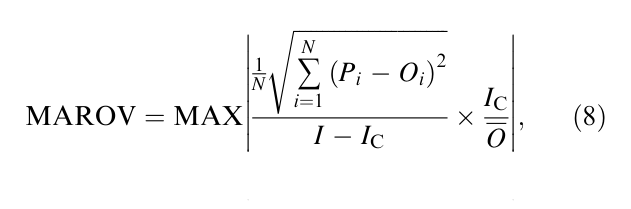
We estimated the sensitivity of the model to the calibrated parameters with a one-at-a-time sensitivity analysis. For each parameter the maximum ratio of variation of the model target output to the variation of the model input MAROV (Dubus & Brown, 2002) was calculated. The MAROV index for our study was where N is the number of observations, Oi and Pi are the observed and simulated values, respectively, I is the input parameter to be calibrated, IC is its calibrated value, and O is the average value of the observations. The larger is MAROV, the larger is the influence of a given input parameter I on a given output of the model. If MAROV is less than 1 then a variation in the input parameter will be attenuated throughout the model.
采用逐一变化(one-at-a-time)敏感性分析估算模型对率定参数的敏感性。对每个参数,计算模型目标输出变化与模型输入变化的最大比值MAROV(Dubus & Brown, 2002)。本研究的MAROV指数为:其中N为观测次数,Oi和Pi分别为观测值和模拟值,I为待率定的输入参数,IC为其率定值,O为观测值的平均值。MAROV越大,给定输入参数I对模型给定输出的影响越大。若MAROV小于1,则输入参数的变化在模型中将被削弱。
Model evaluation模型评价
The model efficiency EF (Loague & Green, 1991) was used to evaluate the performance of the model. It is
采用模型效率EF(Loague & Green, 1991)评价模型性能,其计算式为
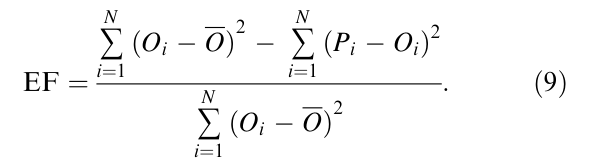
If all observed and predicted values are identical then EF will be 1 (maximum and ideal value), whereas a negative value of EF indicates a poor fit, meaning that the average value of the observations is a better predictor than the model estimates.
若所有观测值与预测值完全相同,则EF为1(最大值和理想值);而EF为负值则表示拟合较差,意味着观测值的平均值比模型估算值更能作为预测值。
Effect of the vegetation cover on the long-term mobility of Pb植被覆盖对Pb长期迁移性的影响
Vegetation on contaminated sites may mobilize the pollutants in the soil by creating preferential flow pathways in root macropores. Retaining the parameterization of MACRO for the short-term mobility of Pb based on the lysimeter experiments, we ran a 20-year simulation to calculate the long-term transport of Pb under a perennial vegetation. We used a 100-cm soil profile with two horizons: a 50-cm top layer of contaminated soil with 500 mg of Pb kg�1, overlying a 50-cm horizon of the same soil that was uncontaminated. Three scenarios were simulated, in order to investigate the long-term effects of root macropores on Pb mobility. These scenarios were:
污染场地上的植被可能通过在根系大孔隙中形成优先流通道而使土壤中的污染物活化。保留基于渗漏计试验建立的Pb短期迁移性MACRO参数化方案,进行了20年的模拟,以计算多年生植被下Pb的长期运移。模拟采用100 cm深、含两个层次的土壤剖面:上部为50 cm厚、含500 mg Pb kg−1的污染土层,其下为50 cm厚的同种未污染土层。为研究根系大孔隙对Pb迁移性的长期影响,共模拟了三种情景:
1 Transport under a shallow-rooted grass.
1 浅根草本植物下的运移。
2 Transport under deep-rooted trees, for which the root depth does not exceed the contaminated soil layer (50 cm).
2 深根树木下的运移,其根深不超过污染土层(50 cm)。
3 Transport under deep-rooted trees, where the root system extended through the whole soil profile (100 cm).
3 深根树木下的运移,其根系延伸至整个土壤剖面(100 cm)。
In the first case, the shallow root depth limits transpiration, thereby allowing a greater volume of water to pass through the profile. Due to its shallow depth, this root system is unlikely to generate much macropore flow through the whole soil profile. The two other scenarios are based on deep-rooted plants that reduce, via evapotranspiration, the water flux through the soil profile, but are likely to create more deep root-macropores. We simulated preferential flow associated with the root system by adjusting the diffusion pathlength d and the saturated matrix hydraulic conductivity Kb. We assumed that the presence of roots in one or the other layer of soil increased the degree of preferential flow in this layer. Table 2 shows the parameters used in the simulations. We assessed the mobility of Pb by simulating the profiles of total Pb concentration in the soil at 5, 10, 15 and 20 years. We used synthetic climate data that were based on records taken at a nearby meteorological station for the previous 20 years.
在第一种情景中,浅根深限制了蒸腾作用,从而使更多水量通过剖面。由于根系较浅,该根系不太可能在整个土壤剖面中产生大量大孔隙流。另外两种情景基于深根植物,它们通过蒸散作用减少通过土壤剖面的水通量,但可能形成更多深层根系大孔隙。通过调整扩散路径长度d和饱和基质导水率Kb来模拟与根系相关的优先流。假定某一土层中根系的存在会提高该层的优先流程度。表2列出了模拟所用参数。通过模拟第5、10、15和20年土壤中总Pb浓度的剖面分布来评估Pb的迁移性。所用合成气候数据基于附近气象站过去20年的记录。
To support the results found for the three scenarios, we ran a Monte Carlo sensitivity analysis to assess the most important parameters that affect the mobility of a strongly sorbed compound such as Pb. The parameters included in the analysis were the root depth zr, the diffusion pathlength d, and the saturated matrix hydraulic conductivity Kb, for both the contaminated and the uncontaminated horizons. We selected initial ranges (Table 2) for each parameter, and we generated 600 parameter sets by sampling those domains using the Latin hypercube method. The target output variable was the total amount of Pb leached out of the layer at 60 and 100 cm. Partial rank correlation coefficients were calculated between the parameters and the target outputs.
为验证三种情景的结果,进行了Monte Carlo敏感性分析,以评估影响Pb等强吸附化合物迁移性的最重要参数。分析所含参数包括污染层和未污染层的根深zr、扩散路径长度d和饱和基质导水率Kb。为每个参数选定初始范围(表2),并采用拉丁超立方抽样法在这些范围内生成600组参数。目标输出变量为60 cm和100 cm处淋出该层的Pb总量。计算了各参数与目标输出之间的偏秩相关系数。
4Results and discussion结果与讨论
Soil and plant Pb concentration土壤和植物Pb浓度
Of the total measured concentration, 445 mg kg�1, 74% was extractable with 0.1 M EDTA, yet only 0.03% was soluble in the 0.1 M NaNO3 extract.
在实测总浓度445 mg kg−1中,74%可被0.1 M EDTA提取,而仅0.03%可溶于0.1 M NaNO3提取液。
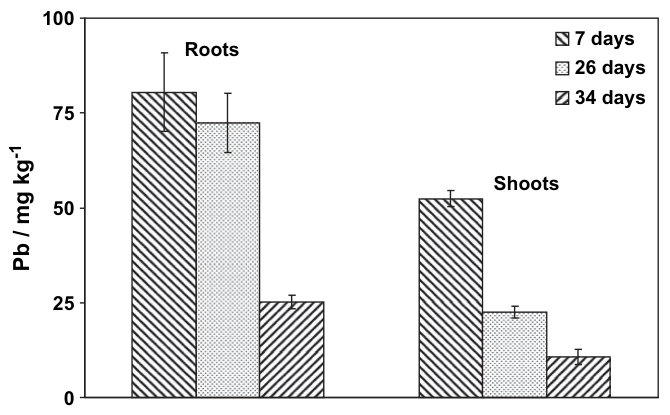
The Pb concentrations in the roots did not significantly differ between 7 and 26 days after sowing, but decreased by 67% thereafter (Figure 1). An unknown quantity of Pb might have arisen from attached soil particles attached to the roots, and could explain the large Pb concentrations.
根系Pb浓度在播种后第7天与第26天之间无显著差异,但此后下降了67%(图1)。部分Pb(量未知)可能来源于附着在根系上的土壤颗粒,这可以解释较高的Pb浓度。
The Pb concentration in the shoots decreased significantly (80%) as the plants grew, between the three sampling dates. The plant–soil transfer coefficient, defined as the quotient between the plant shoot concentration and the soil concentration, for Phacelia tanacetifolia was 0.024. The transfer coefficients for Pb depend on species. Kloke et al. (1994) reported values between 0.01 and 0.1. The transfer coefficient estimated for the lysimeter experiments was thus within this range. Given the small above-ground biomass of the Phacelia tanacetifolia (< 2 kg dry matter per lysimeter) and an average Pb concentration of less than 10% of the soil Pb concentration, the amount of Pb extracted by the plants was insignificant at �30 mg compared with that remaining in the lysimeter (5.7 kg). It is unlikely therefore that Pb would accumulate from plant material on the surface of the soil. Nevertheless, uptake of Pb, even at small concentrations, might facilitate the entry of this toxic element into the food chain.
在三个采样日期之间,随着植物生长,地上部Pb浓度显著下降(80%)。Phacelia tanacetifolia的植物–土壤转移系数(定义为植物地上部浓度与土壤浓度之比)为0.024。Pb的转移系数因物种而异。Kloke et al. (1994) 报道的值为0.01~0.1。因此,渗漏计试验估算的转移系数在此范围内。鉴于Phacelia tanacetifolia地上部生物量较小(每个渗漏计 < 2 kg干物质),且其平均Pb浓度不足土壤Pb浓度的10%,植物提取的Pb量(约30 mg)与渗漏计中残留的Pb量(5.7 kg)相比微不足道。因此,Pb不太可能经由植物材料在土壤表面积累。尽管如此,即使浓度较低,植物对Pb的吸收仍可能促使这一有毒元素进入食物链。
| 1. Grass1. 草本植物 | 2. Tree – root system only in the contaminated layer of the soil2. 树木——根系仅分布于 污染土层 | 3. Tree – root system in the entire profile3. 树木——根系分布于 整个剖面 | Initial ranges for the Monte Carlo analysisMonte Carlo分析的 初始范围 | |
|---|---|---|---|---|
| Root depthzr/m | 0.15 | 0.5 | 1 | 0.1–1 |
| Diffusion pathlengthd | /mm | |||
| 0<z<zr | 50 | 300 | 300 | 1–300 |
| zr<z<La | 20 | 20 | 300 | 1–300 |
| Saturated matrix hydr | aulic conductivity | Kb/mm hour�1 | ||
| 0<z<zr | 0.1 | 0.1 | 0.1 | 0.1–2 |
| zr<z<L | 2 | 2 | 0.1 | 0.1–2 |
aL is the depth of the soil profile.
aL为土壤剖面深度。
Drainage volumes and Pb concentrations排水量与Pb浓度
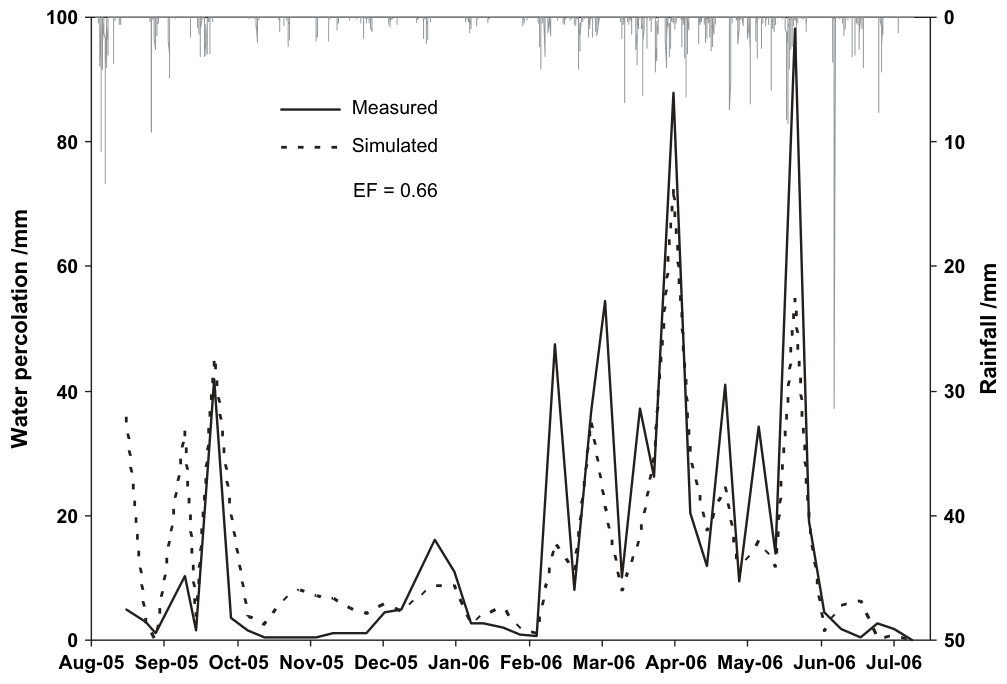
The dynamic and the amount of the weekly drainage discharge did not differ between the two lysimeters. Therefore, only the drainage from one lysimeter is shown in Figure 2. The first drainage peak, approximately 10 mm in 1 week, came at the end of October 2005, after 290 mm of cumulative rainfall. This amount corresponded approximately to 1 pore volume, indicating that the soil was close to residual water content at the beginning of the experiment. Thereafter, the drainage volumes followed the rainfall volumes except at the end of the measurement period. This was due to an 18-day dry period in late May and beginning of June 2006, associated with hot sunny weather. Consequently, the measured drainage did not respond to the rainstorm of 17 June.
两个渗漏计每周排水量的动态和数量无差异,因此图2仅显示一个渗漏计的排水。第一个排水峰值出现在2005年10月底,约为每周10 mm,此时累积降雨量为290 mm。该水量约相当于1个孔隙体积,表明试验开始时土壤接近残余含水量。此后,除测定期末外,排水量随降雨量变化。这是由于2006年5月下旬至6月初出现了为期18天的干旱期,并伴随炎热晴朗的天气。因此,实测排水对6月17日的暴雨没有响应。
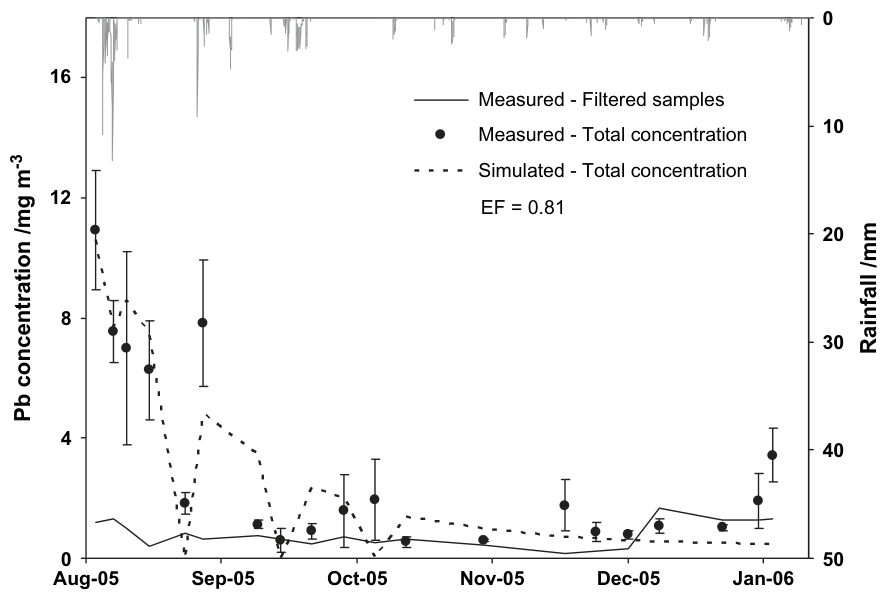
Figure 3 shows the average Pb concentrations in the drainage. The total Pb concentration in the drainage, that is both particleboundanddissolvedPb,wasmuchlargerthantheconcentrationof Pb in solution. This confirmed that the leached Pb was primarily bound to colloids or particulate matter. Several concentration peaks occurred after intense rainfall events, indicating preferential leaching of Pb. For example, the drainage response to a heavy rainstorm (29.1 mm in 3 hours) on 9 September came within 24 hours, with a Pb concentration peak of 7.83 mg m�3 on 11 September, in small amounts of drainage (Figure 2). The first concentration peaks that occurred at the beginning of the experiment might have been associated with both preferential flow and transport of suspended material. Totsche et al. (2006) also observed such a phenomenon in freshly settled soils. The total concentration of Pb in the drainage stayed close to the soluble concentration throughout the autumn, but increased again at the end of the monitoring period (starting at the beginning of December). This might have been caused by re-deposition of organic matter and decomposition of litter from the decaying vegetation and subsequent remobilization of Pb by particulate leaching. Jiang et al. (2006), for instance, showed that a mulch treatment in a bamboo crop increased water-soluble organic carbon in the soil by 72%, and Camobreco et al. (1996) showed enhanced transport of Pb in the presence of dissolved organic matter, so that Pb became comparable to Zn in terms of mobility.
图3为排水中Pb的平均浓度。排水中Pb的总浓度(即颗粒结合态与溶解态Pb之和)远大于溶液中Pb的浓度。这证实了淋溶的Pb主要与胶体或颗粒物结合。强降雨事件后出现了多个浓度峰值,表明Pb发生了优先淋溶。例如,9月9日一场强暴雨(3小时内29.1 mm)后,排水在24小时内即有响应,并于9月11日在少量排水中出现7.83 mg m−3的Pb浓度峰值(图2)。试验初期出现的最初几个浓度峰值可能与优先流和悬浮物质运移均有关。Totsche et al. (2006) 在新近沉降的土壤中也观察到类似现象。整个秋季排水中Pb的总浓度保持在接近可溶态浓度的水平,但在监测期末(自12月初起)再次升高。这可能是由于有机质的再沉积和腐解植被凋落物的分解,以及随后Pb通过颗粒淋溶而再活化所致。例如,Jiang et al. (2006) 表明,竹林覆盖处理使土壤水溶性有机碳增加了72%;Camobreco et al. (1996) 表明,溶解性有机质的存在增强了Pb的运移,使Pb的迁移性与Zn相当。
Modelling of the short-term mobility of PbPb短期迁移性的模拟
The results of the direct simulation, that is without calibration, of the drainage volumes agreed well with our measurements (Figure 2). The total amount of drainage during the 11-month experiment was well simulated (678 mm measured vs. 637 mm simulated, not shown), and the dynamic of the drainage was well reproduced by the model, resulting in a model efficiency of 0.66. However, the model underestimated the main maximum of drainage that occurred in the second part of the experiments.
排水量的直接模拟(即未经率定)结果与实测值吻合良好(图2)。11个月试验期间的总排水量模拟效果良好(实测678 mm,模拟637 mm,未列出),模型也很好地再现了排水动态,模型效率为0.66。但模型低估了试验后期出现的主要排水峰值。
The simulated and measured total concentrations of Pb in the drainage were in good agreement (EF = 0.81, Figure 3). MACRO reproduced well the initial decrease and the following peak of Pb concentration. However, it failed to reproduce the increase of concentration in the last part of the monitoring period. If this were due to remobilization of Pb by particulate leaching then we should not expect the model to reproduce it, because MACRO does not allow for an external factor that changes the mobility of a metal. Table 3 shows the parameters we estimated using inverse modelling together with their posterior uncertainty range and the values of the MAROV index. The result of the one-at-a-time sensitivity analysis showed that all MAROV indexes exceeded 1, except for the adsorption coefficient:MAROVinthiscasewas0.975.Itindicatesthatavariation of kd was slightly attenuated in the model, which explains the large posterior uncertainty range found for this parameter (Table 3). However, the values reported in the literature for the adsorption coefficient were one order of magnitude greater than both the calibrated value (kd = 150 cm3 g�1) and the upper value of the posterior uncertainty range of kd (300 cm3 g�1). The main parameter influencing kd for Pb is soil pH (Morera et al., 2001), which was 7.2 in our experiment. Based on regression models obtained from results of batch experiments by Sauve´ et al. (1997) and Carlon et al. (2004), at this pH we should expect kd to be at least 103 cm3 g�1. Persicani (1995) reported the same result when simulating profiles of Pb concentration in sludge amended soil with an early version of HYDRUS (Kool & Van Genuchten, 1991). He found kd calculated for field conditions two orders of magnitude smaller than those based on conventional batch studies. The kd calibrated in our study was small to compensate for Pb remobilization due to redeposition of organic matter, which was not accounted for in the model. This value could thus be assimilated to an effective sorption coefficient, and could be estimated only in dynamic conditions. We should therefore be cautious when using batch experiments to estimate kd input values to simulate field transport of strongly sorbed compounds.
排水中Pb总浓度的模拟值与实测值吻合良好(EF = 0.81,图3)。MACRO很好地再现了Pb浓度的初期下降及随后的峰值,但未能再现监测期后段浓度的升高。如果这一升高是由于Pb通过颗粒淋溶而再活化所致,则不应期望模型能够再现,因为MACRO未考虑改变金属迁移性的外部因素。表3列出了逆向建模估算的参数及其后验不确定性范围和MAROV指数值。逐一变化敏感性分析结果表明,除吸附系数外,所有MAROV指数均大于1:吸附系数的MAROV为0.975。这表明kd的变化在模型中略有削弱,从而解释了该参数后验不确定性范围较大的原因(表3)。然而,文献报道的吸附系数值比率定值(kd = 150 cm3 g−1)和kd后验不确定性范围上限(300 cm3 g−1)均高出一个数量级。影响Pb的kd的主要参数是土壤pH(Morera et al., 2001),本试验中为7.2。根据Sauvé et al. (1997) 和Carlon et al. (2004) 基于批量试验结果建立的回归模型,在该pH下kd应至少为103 cm3 g−1。Persicani (1995) 在用早期版本的HYDRUS(Kool & Van Genuchten, 1991)模拟施用污泥土壤中Pb浓度剖面时也得到了相同结果。他发现田间条件下计算的kd比常规批量研究得到的值小两个数量级。本研究率定的kd较小,是为了补偿模型未考虑的有机质再沉积所引起的Pb再活化。因此,该值可视为有效吸附系数,且只能在动态条件下估算。因此,在利用批量试验估算kd输入值以模拟强吸附化合物的田间运移时应谨慎。
| Parameter参数 | Estimated value估算值 | MAROVMAROV |
|---|---|---|
| Initial lead concentration | 13.5 (11–17) | 1.569 |
| in soil solution Cini/mg m�3 | ||
| Sorption rate coefficient ak/hour�1 | 70�10�6 (50�10�6 �100�10�6) | 1.819 |
| Sorption coefficient kd/cm3 g�1 | 150 (100–300) | 0.975 |
| Freundlich exponentb | 0.85 (0.75–0.9) | 1.233 |
Simulation of the long-term transport of lead铅长期运移的模拟
Figure 4 shows the results of the long-term simulation of Pb transport under three vegetation covers, described in Table 2. After 5 years of transport under a shallow-rooted plant, the calculated Pb concentration in the plant’s root zone peaked at a depth of between 8 and 12 cm (Figure 4a). This peak decreased图4为表2所述三种植被覆盖下Pb运移的长期模拟结果。在浅根植物下运移5年后,植物根区内计算的Pb浓度在8~12 cm深度处达到峰值(图4a)。该峰值降低
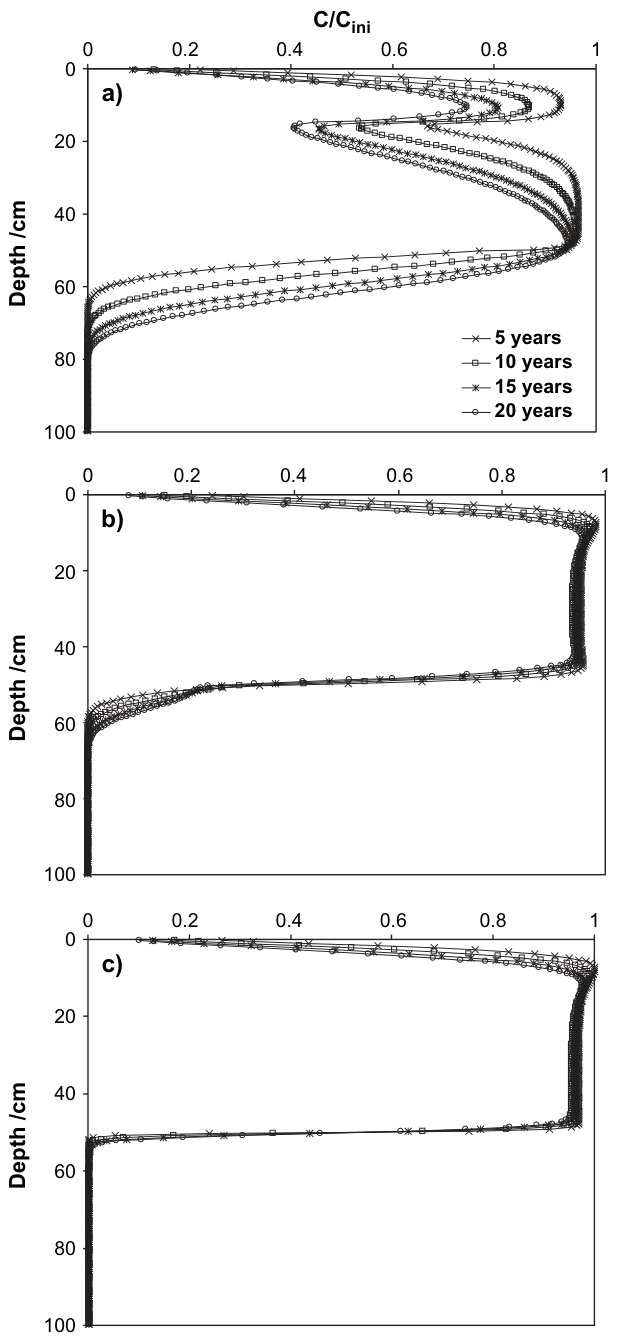
to 70% of the initial concentration after 20 years. However, it remained at the same depth and became narrower as a result of the combined effects of plant uptake and leaching. Below the root zone, in the contaminated layer, the Pb moved downwards, and leached into the uncontaminated layer to a 60 cm depth after only 5 years. After 20 years, the calculated penetration depth of the Pb front was 80 cm. This showed that in this scenario, with moderate preferential flow throughout the soil profile, some of the Pb was retained in the root zone and some transported through the matrix into the deeper layers of the uncontaminated zone. However, there was no breakthrough of lead at the bottom of the profile (100 cm).
至20年后初始浓度的70%。然而,由于植物吸收与淋溶的共同作用,峰值保持在同一深度并变窄。在根区以下的污染层中,Pb向下迁移,仅5年后便淋溶进入未污染层至60 cm深度。20年后,计算的Pb锋面穿透深度为80 cm。这表明在该情景下,整个土壤剖面存在中等程度的优先流,部分Pb保留在根区,部分则经由基质迁移至未污染区的较深土层。但剖面底部(100 cm)未出现铅的穿透。
In the second scenario, where the root system occupied the entire contaminated layer, and subsequently where there was more preferential flow, Pb concentration decreased at the surface as a result of plant uptake. Deeper in the root zone (50 cm), the Pb concentrations remained close to initial values (Figure 4b). Consequently, there was less Pb penetration into the uncontaminated layer than in the first scenario, with the Pb front reaching 68 cm. For strongly sorbed compounds such as Pb, the bulk of contaminant that is stored in the matrix is by-passed by the water that flows into the macropores when preferential flow occurs(Larsson & Jarvis,2000). This same pattern occurred in the contaminated layer for the third scenario (Figure 4c). However, after 10 years MACRO calculated that the Pb front broke through the base of the soil profile (100 cm), indicating that Pb migrated into the deeper layers of the soil through the root macropores, with less influence of Pb uptake by roots.
在第二种情景中,根系占据整个污染层,因而优先流更多,表层Pb浓度因植物吸收而降低。在根区较深处(50 cm),Pb浓度仍接近初始值(图4b)。因此,Pb向未污染层的渗透少于第一种情景,Pb锋面到达68 cm。对于Pb等强吸附化合物,当发生优先流时,流入大孔隙的水会绕过储存在基质中的大部分污染物(Larsson & Jarvis, 2000)。第三种情景的污染层中也出现了同样的规律(图4c)。然而,MACRO计算表明,10年后Pb锋面穿透了土壤剖面底部(100 cm),说明Pb经由根系大孔隙迁移至土壤深层,而根系对Pb吸收的影响较小。
Table 4 shows the water and solute mass balances after 20 years for each scenario. The predicted evapotranspiration was smallest for the firstscenario, because ofthe shallow root system, and resulted in the least solute uptake by the plants. The calculated evapotranspiration was larger in scenarios 2 and 3. As a result of the large preferential flow in the uncontaminated layer for scenario 3, however, MACRO calculated leaching from the bottom of the soil profile and less solute uptake by plants. These results indicated that preferential flow was a dominant factor affecting Pb mobility.表4列出了各情景20年后的水分和溶质质量平衡。由于根系较浅,第一种情景的预测蒸散量最小,植物对溶质的吸收也最少。情景2和情景3的计算蒸散量较大。然而,由于情景3中未污染层的优先流较强,MACRO计算出土壤剖面底部发生淋溶,且植物对溶质的吸收较少。这些结果表明,优先流是影响Pb迁移性的主导因素。
Table 5 shows results of the Monte Carlo analysis based on 600 random combinations of root depth and degree of preferential flow in the system. Initially, the analysis was run for two target outputs: the leaching at 60 cm and the leaching at the bottom of the profile (100 cm). However, no leaching was observed at 100 cm for the two first scenarios of the previous exercise. Therefore, only the results for the leaching at 60 cm are shown. The overall squared correlation coefficient between the parameters included in the analysis (Table 2) and the target output was R2 = 0.61. These results accord with the hypothesis that Pb mobility is affected primarily by preferential flow表5为基于根深和系统优先流程度600组随机组合的Monte Carlo分析结果。分析最初针对两个目标输出进行:60 cm处的淋溶量和剖面底部(100 cm)的淋溶量。然而,在前述模拟的前两种情景中100 cm处未观测到淋溶,因此仅给出60 cm处淋溶量的结果。分析所含参数(表2)与目标输出之间的总体平方相关系数为R2 = 0.61。这些结果支持Pb迁移性主要受优先流影响的假设,
| Scenario 1情景1 | Scenario 2情景2 | Scenario 3情景3 | |
|---|---|---|---|
| Water percolation /% | 59 | 31 | 26 |
| Evapotranspiration /% | 40 | 68 | 73 |
| Solute leached at the bottom | — | — | 4 |
| of the soil profile /% | |||
| Solute uptake by the plant /% | 13 | 30 | 23 |
| Parameter参数 | PRCCPRCC |
|---|---|
| Saturated matrix conductivity in the contaminated layer | �0.627* |
| Diffusion pathlength in the contaminated layer | 0.454* |
| Diffusion pathlength in the uncontaminated layer | 0.305* |
| Root depth | �0.181* |
| *P<0.001. | |
| *P<0.05. |
because the most sensitive parameters were those controlling the degree of preferential flow in the contaminated layer, and the diffusion pathlength in the uncontaminated soil. Root depth was also important, but to a lesser extent. However, these calculations did not account for production of organic matter, or for the subsequent redeposition of lead during the simulated period. This process may further exacerbate Pb leaching.
因为最敏感的参数是控制污染层优先流程度的参数以及未污染土壤中的扩散路径长度。根深也很重要,但程度较低。然而,这些计算未考虑模拟期间有机质的产生及随后铅的再沉积,这一过程可能进一步加剧Pb的淋溶。
5Conclusions结论
Our monitoring of Pb transport in soil under vegetation showed that Pb leached from the upper 50 cm of contaminated soil, despite a soil pH of 7.2 at which Pb is supposedly immobile. Lead was transported on mobile particles and colloids in solution. Some of these moieties might have resulted from organic matter produced by roots and decaying shoots. This process was enhanced by preferential flow triggered by intense rainfall events. The lysimeter system is suitable for the long-term monitoring of Pb in the soil plant water system. However, the elucidation of the combined effects of preferential flow and particulate leaching requires more intensive sampling, especially after heavy rainfall events, as well as the evaluation of the mass and chemical nature of leached particles and colloids.
对植被下土壤中Pb运移的监测表明,尽管土壤pH为7.2(通常认为此时Pb不迁移),Pb仍从上部50 cm的污染土壤中淋出。铅随移动性颗粒和溶液中的胶体迁移。其中部分组分可能来源于根系和腐解地上部产生的有机质。强降雨事件引发的优先流增强了这一过程。渗漏计系统适用于土壤–植物–水系统中Pb的长期监测。然而,要阐明优先流与颗粒淋溶的综合效应,需要更密集的采样(尤其是在强降雨事件之后),并需评估淋出颗粒和胶体的质量与化学性质。
A simple parameterization of the dual-porosity model MACRO showed the feasibility of transport models to calculate the short-term behaviour of Pb. However, processes such as particle-bound transport were essential for the prediction of Pb transport at the time scale of the vegetation cycle. Our study indicated that the value of the effective sorption coefficient estimated under dynamic conditions was unrelated to the values measured in conventional batch studies. This indicates that the use of batch studies to derive input values for the sorption coefficient for transport models requires caution. A stochastic analysis showed that the primary control of Pb transport in the long term is the degree of preferential flow in the system, and to a lesser extent the depth of the root system.
对双孔隙度模型MACRO的简单参数化表明,运移模型可用于计算Pb的短期行为。然而,在植被周期时间尺度上预测Pb运移,必须考虑颗粒结合运移等过程。本研究表明,动态条件下估算的有效吸附系数与常规批量研究测得的值无关。这说明利用批量研究为运移模型推导吸附系数输入值时需谨慎。随机分析表明,长期而言Pb运移的主要控制因素是系统中的优先流程度,其次是根系深度。
To assess the long-term risk associated with Pb contaminated sites with transport models, the plant cycle in relation to production of organic compounds and preferential flow needs to be investigated further.
为利用运移模型评估Pb污染场地的长期风险,需要进一步研究植物生长周期与有机化合物产生及优先流之间的关系。
6Acknowledgements致谢
The contribution of S. Roulier to this work was funded through the FP6 AquaTerra EU project (no 505428, GOCE). We thank Dr Michael Ploetze at the Institute for Geotechnical Engineering at the ETH Zurich for the estimation of the clay mineralogy. We are also grateful to colleagues and students at the Institute of Terrestrial Ecosystems, Werner Attinger, Anna Gru¨ nwald, Sabina Blum, Sybille Bu¨ sser, Domnique Ga¨ rtner and Peter Kurak for the follow-up of the lysimeter experiments and for the analysis of the soil samples.
S. Roulier对本研究的贡献由FP6 AquaTerra欧盟项目(编号505428,GOCE)资助。感谢苏黎世联邦理工学院(ETH Zurich)岩土工程研究所的Michael Ploetze博士对黏土矿物组成的测定。同时感谢陆地生态系统研究所的同事和学生Werner Attinger、Anna Grünwald、Sabina Blum、Sybille Büsser、Domnique Gärtner和Peter Kurak对渗漏计试验的跟踪管理及土壤样品的分析。
7References参考文献
Abbaspour, K.C., van Genuchten, M.T., Schulin, R. & Schla¨ ppi, E. 1997. A sequential uncertainty domain inverse procedure for estimating subsurface flow and transport parameters. Water Resources Research, 33, 1879–1892.
Altfelder, S., Streck, T. & Richter, J. 2000. Nonsingular sorption of organic compounds in soil: the role of slow kinetics. Journal of Environmental Quality, 29, 917–925.
Bruemmer, G.W., Gerth, J. & Tiller, K.G. 1988. Reaction kinetics of the adsorption and desorption of nickel, zinc, and cadmium by goethite: 1. Adsorption and diffusion of metals. Journal of Soil Science, 39, 37–52.
Camobreco, V.J., Richards, B.K., Steenhuis, T.S., Peverly, J.H. & McBride, M.B. 1996. Movement of heavy metals through undisturbed and homogenized soil columns. Soil Science, 161, 740–750.
Cao, X., Ma, L.Q., Chen, M., Hardison, D.W. & Harris, W.G. 2003. Lead transformation and distribution in the soils of shooting ranges in Florida, USA. Science of the Total Environment, 307, 179–189.
Carlon, C., Dalla Valle, M. & Marcomini, A. 2004. Regression models to predict water-soil heavy metals partition coefficients in risk assessment studies. Environmental Pollution, 127, 109–115.
Deiss, J., Byers, C., Clover, D., D’Amore, D., Love, A., Menzies, M.A. et al. 2004. Transport of lead and diesel fuel through a peat soil near Juneau, AK: a pilot study. Journal of Contaminant Hydrology, 74, 1–18.
Dubus, I.G. & Brown, C.D. 2002. Sensitivity and first-step uncertainty analyses for the preferential flow model MACRO. Journal of Environmental Quality, 31, 227–240.
Flury, M. 1996. Experimental evidence of transport of pesticides through field soils – a review. Journal of Environmental Quality, 25, 25–45.
Gerke, H.H. & van Genuchten, M.T. 1993. Evaluation of a firstorder water transfer term for variably-saturated dual-porosity flow models. Water Resources Research, 29, 1225–1238.
Germann, P.F. 1985. Kinematic wave approach to infiltration and drainage into and from soil macropores. Transactions of the American Society of Agricultural Engineers, 28, 745–749.
Hatano, R., Iwanaga, K., Okajima, H. & Sakuma, T. 1988. Relationship between the distribution of soil macropores and root elongation. Soil Science and Plant Nutrition, 34, 535–546.
Jacques, D., Simunek, J., Mallants, D. & van Genuchten, M.T. 2002. Multicomponent transport model for variably saturated porous media: application to the transport of heavy metals in soils. In: Computational Methods in Water Resource (eds S.M. Hassanizadeh,
R.J. Shotting, W.G. Gray & G.F. Pinder). Elsevier, Delft, the Netherlands. Developments in Water Science, 47, 555–562.
Jardine, P.M. 1991. Modelling nonequilibrium reactions of inorganic pollutants in soil columns. In: Rates of Soil Chemical Processes (eds D.L. Sparks & D.L. Suarez), pp. 225–251. Soil Science Society of America, Madison, WI.
Jardine, P.M., Jacobs, G.K. & Wilson, G.V. 1993. Unsaturated transport processes in undisturbed heterogeneous porous media. I. Inorganic contaminants. Soil Science Society of America Journal, 57, 945–953.
Jarvis, N. 1989. A simple empirical model of root water uptake. Journal of Hydrology, 107, 57–72.
Jarvis, N., Larsbo, M., Roulier, S., Lindahl, A. & Persson, L. 2007. The role of soil properties in regulating non-equilibrium macropore flow and solute transport in agricultural topsoils. European Journal of Soil Science, 58, 282–292.
Jiang, P.K., Xu, Q.F., Xu, Z.H. & Cao, Z.H. 2006. Seasonal changes in soil labile organic carbon pools within a Phyllostachys praecox stand under high rate fertilization and winter mulch in subtropical China. Forest Ecology and Management, 236, 30–36.
Kim, S.B. & Corapcioglu, M.Y. 2002. Contaminant transport in dual-porosity media with dissolved organic matter and bacteria present as mobile colloids. Journal of Contaminant Hydrology, 59, 267–289.
Kloke, A., Sauerbeck, D.R. & Vetter, H. 1994. The contamination of plants and soils with heavy metals and the transport of metals in terrestrial food chains. In: Changing Metal Cycles and Human Health (ed. J.O. Nriagu), pp. 113–141. Springer-Verlag, Berlin.
Kool, J.B. & van Genuchten, M.T. 1991. HYDRUS: one dimensional variably saturated flow and transport model, including hysteresis and root water uptake. US Salinity Laboratory, US Department of Agriculture, Riverside, CA, USA.
Lamy, I., van Oort, F., De` re, C. & Baize, D. 2006. Use of major- and trace-element correlations to assess metal migration in sandy Luvisols irrigated with wastewater. European Journal of Soil Science, 57, 731–740.
Langner, H.W., Gaber, H.M., Wraith, J.M., Huwe, B. & Inskeep, W.P. 1999. Preferential flow through intact soil cores: effects of matric head. Soil Science Society of America Journal, 63, 1591–1598.
Larsbo, M., Roulier, S., Stenemo, F., Kasteel, R. & Jarvis, N. 2005. An improved dual-permeability model of water flow and solute transport in the vadose zone. Vadose Zone Journal, 4, 398–406.
Larsson, M.H. & Jarvis, N. 2000. Quantifying interactions between compounds properties and macropore flow effects on pesticide leaching. Pest Management Science, 56, 133–141.
Loague, K. & Green, R.E. 1991. Statistical and graphical methods for evaluating solute transport models: overview and application. Journal of Contaminant Hydrology, 7, 51–73.
McBride, M.B. 1994. Environmental Chemistry of Soils. Oxford University Press, New York.
Morera, M.T., Echeverrı´a, J.C., Mazkiara´ n, C. & Garrido, J.J. 2001. Isotherms and sequential extraction procedures for evaluating sorption and distribution of heavy metals in soils. Environmental Pollution, 113, 135–144.
Persicani, D. 1995. Analysis of leaching behaviour of sludge-applied metals in two field soils. Water, Air and Soil Pollution, 83, 1–20.
Robinson, B., Green, S., Mills, T., Clothier, B., van der Velde, M., Laplane, R. et al. 2003. Phytoremediation: using plants as biopumps to improve degraded environments. Australian Journal of Soil Research, 41, 599–611.
Sauve´ , S., McBride, M.B. & Hendershot, W.H. 1997. Speciation of lead in contaminated soils. Environmental Pollution, 98, 149–155.
Serrano, S., Garrido, F., Campbell, C.G. & Garcı´a-Gonza´ les, M.T. 2005. Competitive sorption of cadmium and lead in acid soils of Central Spain. Geoderma, 124, 91–104.
Seyfried, M.S. & Rao, P.S.C. 1987. Solute transport in undisturbed columns of an aggregated tropical soil: preferential flow effects. Soil Science Society of America Journal, 51, 1434–1444.
Simunek, J., van Genuchten, M.T. & Sejna, M. 2005. The HYDRUS- 1D Software Package for Simulating the Movement of Water, Heat, and Multiple Solutes in Variably Saturated Media, Version 3.0. HYD- RUS Software Series 1, Department of Environmental Sciences, University of California, Riverside, CA.
Totsche, K.U., Jann, S. & Ko¨ gel-Knabner, I. 2006. Release of polycyclic aromatic hydrocarbons, dissolved organic carbon, and suspended matter from disturbed NAPL-contaminated gravelly soil material. Vadose Zone Journal, 5, 469–479.
Van Genuchten, M.T. 1980. A closed-form equation for predicting the hydraulic conductivity of unsaturated soils. Soil Science Society of America Journal, 44, 892–898.
Van Genuchten, M.T., Leij, F.J. & Yates, S.R. 1991. The RETC Code for Quantifying Hydraulic Functions of Unsaturated Soils. Technical Report IAG-DW 12933934, US Salinity Laboratory, US Department of Agriculture, Agricultural Research Service, Riverside, CA.
VBBo 1998. Verordnung u¨ber Belastungen des Boden [WWW document]. URL http://www.admin.ch/ch/d/sr/8/814.12.de.pdf. Accessed date: January 2007.
Vogel, T., van Genuchten M.T. & Cislerova, M. 2001. Effect of the shape of the soil hydraulic functions near saturation on variably-saturated flow predictions. Advances in Water Resources, 24, 133–144.