© 2009 Nova Science Publishers, Inc.
No part of this digital document may be reproduced, stored in a retrieval system or transmitted in any form or by any means. The publisher has taken reasonable care in the preparation of this digital document, but makes no expressed or implied warranty of any kind and assumes no responsibility for any errors or omissions. No liability is assumed for incidental or consequential damages in connection with or arising out of information contained herein. This digital document is sold with the clear understanding that the publisher is not engaged in rendering legal, medical or any other professional services.
未经许可,不得以任何形式或任何手段复制本数字文档的任何部分、将其存储于检索系统或进行传播。出版者在编制本数字文档时已尽合理注意,但不作任何明示或暗示的保证,亦不对任何错误或遗漏承担责任。对于因本文所含信息引起或与之相关的附带或间接损害,出版者概不承担责任。本数字文档在明确理解出版者不提供法律、医疗或任何其他专业服务的前提下出售。
Chapter 6
Fabio N. Moreno1∗, Joel B. Sígolo1, Chris W. N. Anderson2, Robert B. Stewart2, John A. Meech3 and Brett H. Robinson4
1Institute of Geosciences, Department of Environmental and Sedimentary Geology,
University of São Paulo, SP, Brazil
2 Institute of Natural Resources, Soil and Earth Sciences,
2 Institute of Natural Resources, Soil and Earth Sciences,
Massey University, Palmerston North, New Zealand
Massey University, Palmerston North, 新西兰
3 Environmental Research on Minerals, Metals and Materials (CERM3),
3 Environmental Research on Minerals, Metals and Materials (CERM3),
University of British Columbia, Vancouver, BC, Canada
University of British Columbia, Vancouver, BC, 加拿大
4 Institute of Terrestrial Ecosystems, Swiss Federal Institute of Technology, Zurich, Switzerland
4 Institute of Terrestrial Ecosystems, Swiss Federal Institute of Technology, Zurich, 瑞士
1ABSTRACT摘要
Although mercury (Hg) is one of the most toxic elements to living organisms, emission of Hg from natural sources worldwide has only a limited impact on life. However, over the past 150 years, anthropogenic Hg emissions have more than doubled the global Hg input from natural Hg sources (Hylander and Meili, 2003).
尽管汞(Hg)是对生物毒性最强的元素之一,但全球范围内自然来源的Hg排放对生命的影响有限。然而,在过去150年中,人为Hg排放已使全球Hg输入量超过自然来源Hg输入量的两倍以上(Hylander and Meili, 2003)。
There have been sporadic episodes of human Hg poisoning from discharge of Hg-containing wastes to soil and water systems. Nevertheless, human activity still causes Hg releases into the environment. The main Hg pollution sources are atmospheric Hg discharges from coal-burning power plants, mining operations and incineration of urban and medical wastes (Morel et al., 1998).
含Hg废物排入土壤和水体曾导致零星的人类Hg中毒事件。尽管如此,人类活动仍在不断向环境中释放Hg。Hg污染的主要来源是燃煤电厂、采矿作业以及城市和医疗废物焚烧所产生的大气Hg排放(Morel et al., 1998)。
The effect of Hg discharge into soils and aquatic systems is exacerbated by the transformation of inorganic Hg forms into methylmercury, which accumulates in living cells and tissues. It constitutes the greatest fraction of total mercury in living organisms and is quickly biomagnified in the aquatic and terrestrial food chains. Humans and wildlife can be exposed to methylmercury through ingestion of contaminated fish, which tend to accumulate high Hg concentrations in contaminated areas. Therefore, communities dependent on Hg-laden fish as a main food source frequently have elevated Hg levels in blood (Veiga and Hinton, 2002). Methylmercury is considered the sixth most toxic compound of a total of six million such toxins known to humankind (Malm, 2001).
无机形态Hg向甲基汞的转化加剧了Hg排入土壤和水生系统的影响,甲基汞可在活细胞和组织中积累。甲基汞在生物体总汞中所占比例最大,并在水生和陆地食物链中迅速生物放大。人类和野生动物可通过摄食受污染的鱼类而暴露于甲基汞,污染区域的鱼类往往积累高浓度的Hg。因此,以富含Hg的鱼类为主要食物来源的群体血液中Hg含量常常偏高(Veiga and Hinton, 2002)。在人类已知的共约六百万种此类毒物中,甲基汞被认为是毒性第六强的化合物(Malm, 2001)。
∗ Corresponding author: Fabio Netto Moreno, fabionmoreno@terra.com.br), Affiliation: Institute of Geosciences, University of São Paulo, R. do Lago, 562, Cidade Universitária, CEP 05508-080, São Paulo, Brazil.
The concept of using plants for environmental remediation has been intensively researched over the last 15 years. Phytoremediation embraces an array of low-cost plant-based technologies that could be potentially advantageous for remediation of Hg-polluted soils, especially in developing countries, where artisanal and small-scale mining for gold extraction has left a legacy of Hg pollution. Potentially, phytoremediation could remove Hg from the soil by growing successive crops of Hg-accumulating plants (phytoextraction). The Hg in the biomass could then be recovered, or stored in an area where it does not pose a risk to the environment. Alternatively, plants could be used to reduce the Hg flux in contaminated sites (phytostabilisation). This role relies on plants stabilising the soil surface, fixing Hg in the rootzone and returning water to the atmosphere via evapotranspiration. The reduction of Hg flux requires that the plants do not translocate large amounts of Hg into the shoots, where it may be consumed by herbivores.
利用植物进行环境修复的理念在过去15年中得到了深入研究。植物修复涵盖一系列低成本的植物技术,这些技术在Hg污染土壤的修复方面可能具有优势,尤其是在发展中国家,那里的手工和小规模金矿开采遗留了Hg污染问题。植物修复可通过连续种植Hg积累植物从土壤中去除Hg(植物提取)。随后可回收生物量中的Hg,或将其贮存于不对环境构成风险的区域。另一种方式是利用植物降低污染场地的Hg通量(植物稳定)。这一作用依赖于植物稳定土壤表面、将Hg固定于根区,并通过蒸散作用将水分返回大气。降低Hg通量要求植物不将大量Hg转运至地上部,以免被食草动物摄食。
Mercury in most soils is unavailable for uptake by plant roots. However, soil amendments can be used to increase the bioavailablility of Hg to plants. In this chapter, we examine the conditions by which the Hg concentration in the soil solution can be enhanced for plant uptake for three metal-contaminated mine sites where Hg pollution caused by anthropogenic or ASM activities are of concern.
大多数土壤中的Hg无法被植物根系吸收。然而,可利用土壤改良剂提高Hg对植物的生物有效性。本章针对三个受人为活动或ASM活动造成Hg污染的金属污染矿区,探讨了提高土壤溶液中Hg浓度以促进植物吸收的条件。
In this chapter, we review the most important sources of Hg into the environment, the behaviour of Hg in soils, and describe plant Hg uptake experiments, with a view to elucidating the most viable strategies for the phytoremediation of Hg-contaminated sites worldwide. We describe laboratory and greenhouse experiments where the effect of total Hg concentrations, plant species, and humic acids was investigated on induced Hg solubilisation and plant-Hg accumulation. The results of a field-scale phytoextraction experiment in situ is also presented. Based on the soil Hg chemistry, thiol-containing ligands were tested for their potential to enhance Hg solubility for subsequent plant uptake. Research was conducted with mine wastes collected from Hg-contaminated sites in New Zealand, Brazil, and China.
本章综述了Hg进入环境的最主要来源及Hg在土壤中的行为,并介绍了植物Hg吸收试验,旨在阐明全球Hg污染场地植物修复最可行的策略。我们介绍了实验室和温室试验,研究了总Hg浓度、植物种类和腐殖酸对诱导Hg溶解和植物Hg积累的影响,并给出了原位田间尺度植物提取试验的结果。基于土壤Hg化学特性,测试了含巯基配体提高Hg溶解度以促进后续植物吸收的潜力。研究所用矿山废弃物采自新西兰、巴西和中国的Hg污染场地。
The possibility of Hg (0) emissions to the atmosphere and/or Hg leaching to groundwater during the course of phytoextraction represents a threat to the health of humans and ecosystems and should not be overlooked. Therefore, we evaluated the generation of Hg-containing leachates and Hg vapour emissions from plant pots enclosed in gas-tight volatilisation chambers. These experiments provided a picture of Hg fate in the plant-soil-atmosphere continuum.
植物提取过程中Hg (0)向大气排放和/或Hg向地下水淋溶的可能性对人类和生态系统健康构成威胁,不应忽视。因此,我们评估了封闭于气密挥发室内的植物盆栽所产生的含Hg渗滤液和Hg蒸气排放。这些试验揭示了Hg在植物—土壤—大气连续体中的归趋。
Finally, we discuss the role of phytostabilisation to reduce the flux of Hg in the environment.
最后,我们讨论了植物稳定在降低环境中Hg通量方面的作用。
2INTRODUCTION引言
Artisanal and Small-Scale Mining (ASM)手工和小规模采矿(ASM)
Artisanal and small-scale mining (ASM) is any mining activity that does not follow the conventional technical approach adopted by organised mining companies. This means that the cycle of geological exploration, drilling, reserve proving and engineering studies are not part of ASM. Around 13 million miners are currently involved in ASM operations in approximately 55 countries. Between 80–100 million people worldwide directly or indirectly depend on this activity as a source of income (Veiga et al., 2006).
手工和小规模采矿(ASM)是指不遵循正规矿业公司所采用的常规技术路线的任何采矿活动。这意味着地质勘探、钻探、储量探明和工程研究等环节不属于ASM的组成部分。目前约有1300万矿工在约55个国家从事ASM作业。全球有8000万至1亿人直接或间接依赖这一活动作为收入来源(Veiga et al., 2006)。
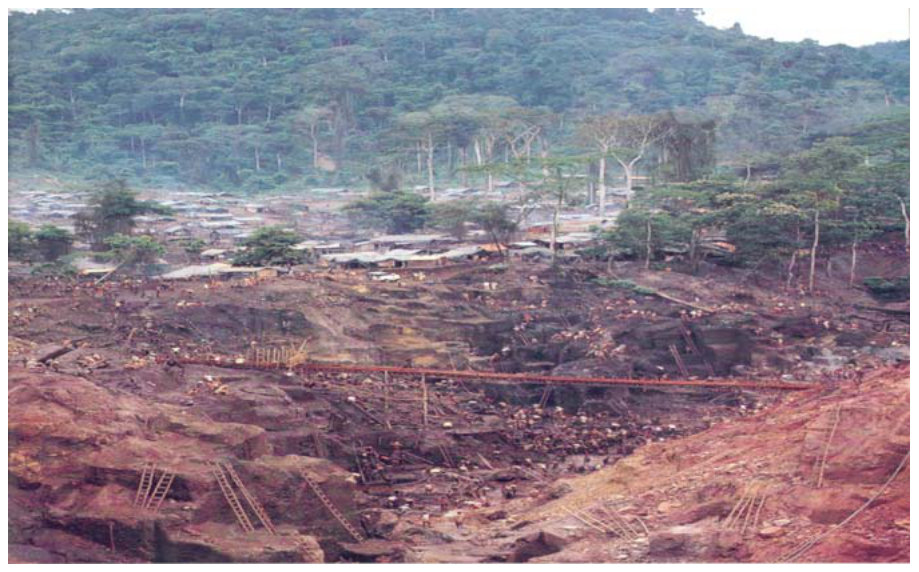
Environmental degradation and deplorable social conditions normally accompany ASM (Figure 1). The most profound impact of ASM is the pollution of the environment with metallic Hg. Mercury is a cheap, simple, and effective reagent for extracting alluvial gold, but its use results in environmental, social and human health problems (Veiga and Hinton, 2002).
ASM通常伴随着环境退化和恶劣的社会状况(图1)。ASM最深远的影响是金属Hg对环境的污染。Hg是提取冲积金的一种廉价、简便且有效的试剂,但其使用会导致环境、社会和人类健康问题(Veiga and Hinton, 2002)。
There are two main processes for extracting gold from secondary gold ores (alluvial, colluvial or illuvial material): amalgamation and cyanidation. Most miners use amalgamation, which relies on the capacity of the two metals to interpenetrate each other in a deep sorption process (Veiga et al., 2006). Once formed, the dense Hg-Au amalgam grain can be separated from the rest of the sediment by gravitation. Gold extraction using Hg consists of four main steps: amalgamation, separation of the mineral portion, amalgam decomposition, and gold smelting.
从次生金矿(冲积、坡积或淀积物质)中提取金主要有两种工艺:汞齐化法和氰化法。大多数矿工采用汞齐化法,该方法依赖于两种金属在深度吸附过程中相互渗透的能力(Veiga et al., 2006)。致密的Hg-Au汞齐颗粒一旦形成,即可通过重力作用与其余沉积物分离。用Hg提取金包括四个主要步骤:汞齐化、矿物部分的分离、汞齐分解和金的熔炼。
Excess Hg, which is removed from the amalgam by squeezing the liquid Hg through a piece of fabric by hand, is re-bottled and used again. Amalgam decomposition frequently involves heating the amalgam, which usually contains 60% of gold, in open-air pans or shovels using a blowtorch. Gold-doré is the result of amalgam heating and contains about 20g of Hg per Kg of gold. The residual Hg is released from the gold-doré by smelting in gold shops. Environmental contamination due to ASM gold mining occurs mostly from atmospheric deposition of emitted Hg (0) as a result of amalgam decomposition and gold smelting. A further substantial fraction of Hg can also contaminate water and soils after discharge of the amalgamation tailings, which can contain between 200–500 mg/kg of residual Hg (Veiga et al., 2006). This practice has been implicated in the generation of Hg hot spots in adjacent soils and water bodies (Veiga and Hinton, 2002).
多余的Hg通过手工将液态Hg挤过一块布料从汞齐中除去,重新装瓶后再次使用。汞齐分解通常是在露天的盘子或铁锹上用喷灯加热汞齐,汞齐中一般含60%的金。加热汞齐得到的产物为金锭(gold-doré),每千克金约含20 g Hg。残余的Hg在金店熔炼过程中从金锭中释放出来。ASM采金造成的环境污染主要来自汞齐分解和金熔炼过程中排放的Hg (0)的大气沉降。此外,汞齐化尾矿排放后,还有相当一部分Hg会污染水体和土壤,这些尾矿中残余Hg含量可达200–500 mg/kg(Veiga et al., 2006)。这种做法被认为是邻近土壤和水体中形成Hg热点的原因(Veiga and Hinton, 2002)。
The Hg problem due to ASM might be growing due to the gradual increase in gold price since 2003 (Veiga et al., 2006). As a result, Hg emissions from ASM may be increasing. It is estimated that between 80–100 tonnes are annually released to the environment due to ASM worldwide. Mercury emissions from China, the main source, comprise between 200–250 tonnes/annum. Indonesia releases 100–150 tonnes/annum, while Brazil, Bolivia, Colombia,
由于2003年以来金价逐步上涨,ASM造成的Hg问题可能日益严重(Veiga et al., 2006)。因此,ASM的Hg排放可能正在增加。据估计,全球每年因ASM向环境释放的Hg达80–100吨。中国是主要来源,其Hg排放量为每年200–250吨。印度尼西亚每年释放100–150吨,而巴西、玻利维亚、哥伦比亚、
Peru, Philippines, Zimbabwe and Venezuela each releases from 10 to 30 tonnes of Hg annually (Veiga et al., 2006). The number of artisanal mine sites worldwide is ca. 160,000, with some 2,000 abandoned artisanal gold mine sites in the Brazilian Amazon (Veiga and Hinton, 2002).
秘鲁、菲律宾、津巴布韦和委内瑞拉每年各释放10至30吨Hg(Veiga et al., 2006)。全球手工矿场数量约为160,000处,其中巴西亚马逊地区约有2,000处废弃的手工金矿场地(Veiga and Hinton, 2002)。
3MERCURY IN SOILS土壤中的汞
Most Hg that is released into soil is adsorbed onto the solid-phase of organic matter and onto soil minerals, such as sulphides and oxy-hydroxides of iron and aluminium (Evans, 1987). A substantial fraction, however, undergoes physical transformation (leaching, erosion, and volatilisation) and biochemical transformation (methylation, photochemical and biological reduction) (Morel et al., 1998). Mobilisation of Hg can occur through exchange reactions with sulphur-containing ligands and chloride ions, leading to enhanced Hg solubility in soil solution (Schuster, 1991). In weathered tropical soils, Hg bound to iron and aluminium oxy-hydroxides can be mobilised from the surface horizon through the erosion of deforested soils (Roulet et al., 2000). The removal of plant cover allows increased oblique runoff on slopes and subsequent depletion of iron oxy-hydroxides and Hg in the upper centimetres of the soil (Roulet et al., 1999). The mobilised Hg eventually forms complexes with dissolved organic constituents and reaches aquatic systems, where it can be exported to areas away from the pollution source (Oliveira et al., 2001; Veiga, 2004).
进入土壤的大部分Hg被吸附于有机质固相以及土壤矿物(如硫化物和铁、铝氢氧化物)上(Evans, 1987)。然而,相当一部分Hg会经历物理转化(淋溶、侵蚀和挥发)和生物化学转化(甲基化、光化学还原和生物还原)(Morel et al., 1998)。Hg可通过与含硫配体和氯离子的交换反应而活化,从而提高其在土壤溶液中的溶解度(Schuster, 1991)。在风化的热带土壤中,与铁、铝氢氧化物结合的Hg可通过毁林土壤的侵蚀从表层被活化迁移(Roulet et al., 2000)。植被移除使坡面斜向径流增加,随后导致土壤上层数厘米中铁氢氧化物和Hg的耗损(Roulet et al., 1999)。被活化的Hg最终与溶解性有机组分形成络合物并进入水生系统,进而被输送至远离污染源的区域(Oliveira et al., 2001; Veiga, 2004)。
The strong affinity of Hg for organic matter influences Hg solid phase speciation more than inorganic mineral colloids. The abundance of functional groups in HS provides many mechanisms for Hg binding including chelation, ionic exchange, complex formation, adsorption, and precipitation. Because of these interactions, Hg adsorption onto the solid phase of clay minerals, silicates, and metal oxides/hydroxides will not profoundly affect Hg speciation in soils as it would do for metals such as Zn, Al, Cd and Ni (Wallschalger, 1998).
与无机矿物胶体相比,Hg对有机质的强亲和力对Hg固相形态的影响更大。HS中丰富的官能团为Hg的结合提供了多种机制,包括螯合、离子交换、络合、吸附和沉淀。由于这些相互作用,Hg在黏土矿物、硅酸盐和金属氧化物/氢氧化物固相上的吸附对土壤中Hg形态的影响,不会像对Zn、Al、Cd和Ni等金属那样显著(Wallschalger, 1998)。
4MERCURY REMEDIATION汞污染修复
Ex-situ remediation technologies such as excavation, physical separation, and hydrometallurgical treatments are expensive, particularly if Hg contamination is spread over a large area or extends below the water table. Thermal treatment (soil heating combined with soil vapour extraction) can be effective for Hg removal from solid media but is technically complicated and costly. Furthermore, soil heating releases Hg as a vapour into the environment and can have deleterious effects on the physical, chemical and biological properties of soils (Meagher et al., 2000; Hinton and Veiga, 2001). Chemical stabilisation, electrolytic extraction and chemical leaching, although expensive, have proved effective for the clean up of Hg-contaminated media (Villas Boas, 1997; Hinton et al., 2003). Other methods, such as the use of impermeable plastic lines and the burying of contaminants will merely postpone clean up for a later date (Meagher et al., 2000).
挖掘、物理分离和湿法冶金处理等异位修复技术费用高昂,尤其是当Hg污染分布范围大或延伸至地下水位以下时。热处理(土壤加热结合土壤气相抽提)可有效去除固体介质中的Hg,但技术复杂且成本高。此外,土壤加热会将Hg以蒸气形式释放到环境中,并可能对土壤的物理、化学和生物学性质产生不利影响(Meagher et al., 2000; Hinton and Veiga, 2001)。化学稳定化、电解提取和化学淋洗虽然昂贵,但已被证明能有效清除Hg污染介质(Villas Boas, 1997; Hinton et al., 2003)。其他方法,如使用不透水塑料衬层和掩埋污染物,只会将清理工作推迟至以后(Meagher et al., 2000)。
Phytoremediation has been proposed as an environmentally friendly technology for the clean up of heavy metal polluted soils. It has attracted attention in recent years due to the low cost of implementation and environmental benefits (Robinson et al., 1998). These features make phytoremediation particularly welcome in developing countries, where there is a lack of financial incentive to remediate and rehabilitate heavy-metal polluted areas.
植物修复已被提出作为清除重金属污染土壤的一种环境友好型技术。由于实施成本低且具有环境效益,植物修复近年来备受关注(Robinson et al., 1998)。这些特点使植物修复在发展中国家尤其受欢迎,因为这些国家缺乏修复和恢复重金属污染区域的资金激励。
5PHYTOREMEDIATION植物修复
Phytoremediation refers to any plant-based system that is used to improve contaminated media (Pilon-Smiths, 2005). Phytoremediation uses the sun’s energy to cleanse contaminated soil and is therefore inherently cheaper than other remediation technologies. Plants contain, sequester, remove, or degrade contaminants as part of their normal physiological processes such as water uptake, inorganic ion uptake, evapotranspiration, root exudation and turnover, and the photosynthetic production of phyto-chemicals. Rhizosphere microbes stimulated by plant roots can biodegrade organic contaminants (Tsao, 2003). The application of these plantrhizosphere processes has been used to treat contaminated soils, sediments, surface and ground waters. Treatable contaminants include hydrocarbons, chlorinated compounds, and nitroaromatics in the organic contaminant class, as well as heavy-metals, metalloids, radionuclide, and salts in the inorganic contaminant class.
植物修复是指用于改善污染介质的任何基于植物的系统(Pilon-Smiths, 2005)。植物修复利用太阳能净化污染土壤,因此本质上比其他修复技术成本更低。植物在其正常生理过程中(如水分吸收、无机离子吸收、蒸散、根系分泌与周转以及光合作用产生植物化学物质)对污染物进行固持、封存、去除或降解。受植物根系刺激的根际微生物可生物降解有机污染物(Tsao, 2003)。这些植物—根际过程已被用于处理污染土壤、沉积物、地表水和地下水。可处理的污染物包括有机污染物类中的烃类、氯代化合物和硝基芳香化合物,以及无机污染物类中的重金属、类金属、放射性核素和盐类。
6PHYTOEXTRACTION植物提取
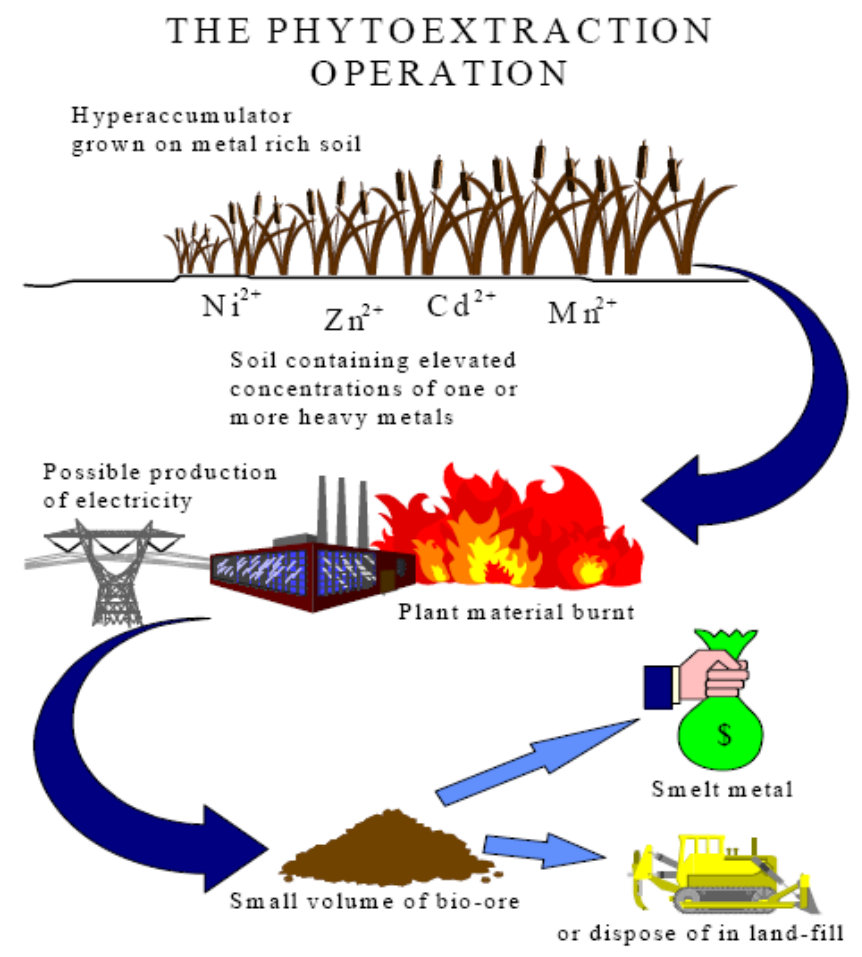
Inorganic soil contaminants can be phytoextracted from the soil subsurface through repeated cropping and safe storage of the harvested plant biomass following accumulation of metals in the plant aerial tissues. Incineration of the biomass can reduce up to 95% the material to be disposed of in landfills (Robinson et al., 1998) (Figure 2).
金属在植物地上组织中积累后,通过反复种植并安全贮存收获的植物生物量,可从土壤下层植物提取无机土壤污染物。焚烧生物量可使需送往填埋场处置的物料减少多达95%(Robinson et al., 1998)(图2)。
Phytoextraction can be applied to the soil removal either of those elements that are essential (e.g., B, Cl, Co, Cu, Fe, Mn, Mo, Ni, Zn) or non-essential (e.g., Cd, Pb, Cr, Hg and As) to plants (McGrath, 1998). Plant species suitable for phytoextraction can be divided in two classes according to metal accumulation capacity and biomass production. The first class is a group of plants known as metal hyperaccumulators. By definition, hyperaccumulator plant species are those that can accumulate metals to a concentration at least 100 times higher than “normal” plants growing in the same environment (Robinson et al., 1998).
植物提取既可用于去除土壤中对植物必需的元素(如B、Cl、Co、Cu、Fe、Mn、Mo、Ni、Zn),也可用于去除非必需元素(如Cd、Pb、Cr、Hg和As)(McGrath, 1998)。适用于植物提取的植物种类可根据金属积累能力和生物量产量分为两类。第一类是被称为金属超富集植物的植物类群。按定义,超富集植物是指其金属积累浓度至少比生长在同一环境中的“普通”植物高100倍的植物种类(Robinson et al., 1998)。
Plants that fall in this category can accumulate metals up to greater than 1% of the total plant dry weight (e.g the Zn hyperaccumulator Thlaspi caerulensces) but often do not produce high annual biomass (Robinson et al., 1998). So far, the metal hyperaccumulation trait has been observed for As, Ni, Cd, Co, Mn, Se, Tl, and Zn (Robinson et al., 1998; Ma et al., 2001) in more than 400 plant species. However, there are no reports of plants that can naturally hyperaccumulate Pb, Hg, Au and Ag.
属于这一类别的植物可积累超过植物总干重1%的金属(如Zn超富集植物Thlaspi caerulensces),但其年生物量通常不高(Robinson et al., 1998)。迄今为止,已在400多种植物中观察到对As、Ni、Cd、Co、Mn、Se、Tl和Zn的金属超富集特性(Robinson et al., 1998; Ma et al., 2001)。然而,尚无植物能够天然超富集Pb、Hg、Au和Ag的报道。
A clear advantage of phytoextraction is the generation of metal-rich biomass that can be recyclable. This approach has been successfully used to recover Ni from the biomass of the South-African Ni-hyperaccumulator Berkheya coddii grown in a Ni-contaminated soil (Moreno and Sígolo, 2007). Incineration of the metal-rich biomass could reduce substantially the volume and mass of contaminant that would need to go to landfills.
植物提取的一个明显优势是产生可回收利用的富金属生物量。这一方法已成功用于从种植于Ni污染土壤中的南非Ni超富集植物Berkheya coddii生物量中回收Ni(Moreno and Sígolo, 2007)。焚烧富金属生物量可大幅减少需送往填埋场的污染物体积和质量。
Conventional approaches to the reclamation of metal contaminated sites (removal, isolation, and incineration) are expensive and vary as a function of the soil density, regional transportation and landfill costs. It is estimated that the overall cost for removing one meter of soil from a one-hectare site ranges between US$ 1.5 to 6.2 million. In comparison, the costs for site preparation, planting, and harvesting of plant material for the same hectare site drop to between US$ 5000 to US$ 125000 (McIntyre, 2003).
金属污染场地复垦的常规方法(移除、隔离和焚烧)费用高昂,且随土壤密度、区域运输和填埋成本而变化。据估计,从1公顷场地移除1米厚土壤的总成本为150万至620万美元。相比之下,同一公顷场地的场地准备、种植和植物材料收获成本仅为5000至125000美元(McIntyre, 2003)。
An important concern in phytoextraction is that the plant should translocate metals from the soil to the aerial parts allowing a considerable quantity of the metal to be removed from the soil with each crop (Robinson et al., 1998). The bioconcentration factor (concentration of the metal in dried plants divided by the soil content of the same element) is a measure of the ability of a plant to take up and transport metals to the shoots, which are the parts of the plant that can be harvested. Most plants have bioconcentration factors for metals of less than 1. Modeling has shown that for these plants, the number of crops required to reduce the concentration of the metal in the top soil by half is in excess of 100 (McGrath and Zhao, 2003). Phytoextraction is a realistic approach for plants with a bioconcentration factor above 5 and biomass production of at least 10 t/ha.
植物提取中的一个重要问题是,植物应能将金属从土壤转运至地上部,从而每季作物都能从土壤中去除相当数量的金属(Robinson et al., 1998)。生物富集系数(干植物中金属浓度除以土壤中同一元素的含量)是衡量植物吸收金属并将其转运至地上部(即植物可收获部分)能力的指标。大多数植物对金属的生物富集系数小于1。模型研究表明,对于这些植物,使表土中金属浓度降低一半所需的种植季数超过100(McGrath and Zhao, 2003)。对于生物富集系数大于5且生物量产量至少为10 t/ha的植物,植物提取才是一种现实可行的方法。
The limitations for phytoextraction relates thus to the long period required for site clean up, the restricted number of target metals that can be extracted, the lower depth of rooting systems, the low biomass production of most metal hyperaccumulator plant species, the phytotoxicity levels of metals in soils and insufficient knowledge about agronomic and management practices (Van Netel et al., 2007).
因此,植物提取的局限性在于:场地清理所需时间长、可提取的目标金属种类有限、根系深度较浅、大多数金属超富集植物生物量产量低、土壤中金属的植物毒性水平,以及对农艺和管理措施认识不足(Van Netel et al., 2007)。
7LIGAND-INDUCED PHYTOEXTRACTION配体诱导植物提取
Some metals (e.g., Pb and Hg) are so strongly adsorbed to the solid phase of the soil that only trace concentrations will be available for plant uptake. Ligand-induced phytoextraction has been developed to deal with metal insolubility or with the low plant biomass problems of phytoextraction. In this case, chelates such as EDTA (ethylenediaminetetraacetic acid) are amended to soil in order to induce solubility and subsequent plant uptake of insoluble metals (Nowack et al., 2006). By using this approach, Pb has been shown to accumulate in shoot tissues of high biomass plant species (e.g., Zea mays and B. juncea) by factors of over 250 (Huang et al., 1997; Blaylock et al., 1997). The potential of ligand-induced phytoextraction for soil decontamination has been demonstrated in laboratory, greenhouse and field studies for Pb (Blaylock et al., 2000), Au (Anderson et al., 2005) and As (Tassi et al., 2001).
某些金属(如Pb和Hg)被土壤固相强烈吸附,仅有痕量浓度可供植物吸收。配体诱导植物提取的开发旨在解决植物提取中金属不溶性或植物生物量低的问题。在这种情况下,向土壤中施加EDTA(乙二胺四乙酸)等螯合剂,以诱导不溶性金属溶解并随后被植物吸收(Nowack et al., 2006)。采用这一方法,已证明高生物量植物(如Zea mays和B. juncea)地上部组织中Pb的积累可提高250倍以上(Huang et al., 1997; Blaylock et al., 1997)。配体诱导植物提取在土壤去污方面的潜力已在针对Pb(Blaylock et al., 2000)、Au(Anderson et al., 2005)和As(Tassi et al., 2001)的实验室、温室和田间研究中得到证实。
However, there is a concern about the leaching of metal-ligand complexes to groundwater. EDTA, for instance, is persistent in the environment being a common pollutant in almost all natural waters (Nowack et al., 2006). The implications of ligand-enhanced phytoextraction for groundwater pollution has been examined by Lombi et al. (2001), who found that EDTA complexes of Cu, Ni, Zn, Cd, and Pb metals were persistent in soil several weeks after EDTA treatment. Model studies have demonstrated that up to 90% of a chelant that is applied to soil is not taken up by plants and thus, can be leached down to groundwaters (Nowack et al., 2006). Biodegradable chelants such as EDDS (ethylenediaminedisuccinic acid) have been proposed as substitutes for EDTA in ligand-induced phytoextraction as metal-EDDS complexes have been shown to be easily biodegradable in soils (Tandy et al., 2006).
然而,金属—配体络合物向地下水淋溶的问题令人担忧。例如,EDTA在环境中具有持久性,是几乎所有天然水体中的常见污染物(Nowack et al., 2006)。Lombi et al. (2001)研究了配体强化植物提取对地下水污染的影响,发现EDTA处理数周后,Cu、Ni、Zn、Cd和Pb的EDTA络合物仍持久存在于土壤中。模型研究表明,施入土壤的螯合剂中多达90%未被植物吸收,因而可能淋溶至地下水(Nowack et al., 2006)。由于金属-EDDS络合物已被证明在土壤中易于生物降解,EDDS(乙二胺二琥珀酸)等可生物降解螯合剂已被提出作为配体诱导植物提取中EDTA的替代品(Tandy et al., 2006)。
8SUBSTRATE TYPES基质类型
Mercury-contaminated mine wastes from three different locations were investigated: the Tui base-metal mine, in the North Island of New Zealand; the Gold Mountain mine (GM), in North-Central China; and the Serra Pelada artisanal mine site (SP), in Northern Brazil. Selected geochemical characteristics of these substrates are presented in Table 1.
本研究考察了来自三个不同地点的Hg污染矿山废弃物:位于新西兰北岛的Tui贱金属矿、位于中国中北部的Gold Mountain矿(GM)以及位于巴西北部的Serra Pelada手工矿场(SP)。这些基质的部分地球化学特征见表1。
The Tui Base Metal MineTui贱金属矿
The Tui base-metal mine is located on the NW flank on Mount Te Aroha, approximately 3 km north east of the township of Te Aroha, North Island of New Zealand (Figure 3). The cessation of activities in 1974 left a tailings dam containing 100,000 m3 of sulphide-rich tailings. Metal-bearing minerals present in the tailings include sphalerite (ZnS), galena (PbS), chalcopyrite (CuFeS2) and pyrite (FeS2) with minor amounts of Cd, Ag and Au. The tailings have been have been left in contact with the air since closure of the mine. Oxidation of pyrite and other sulphide-bearing minerals has depressed the pH of surface tailings and increased metal bioavailability. Organic matter levels in this substrate are virtually absent. The nearby Tui stream and the local ground water supply have been severely contaminated by acid mine drainage (AMD) produced on site (Morrell et al., 1996).
Tui贱金属矿位于Mount Te Aroha西北坡,距新西兰北岛Te Aroha镇东北约3 km(图3)。1974年停止开采后,留下了一座含有100,000 m3富硫化物尾矿的尾矿坝。尾矿中的含金属矿物包括闪锌矿(ZnS)、方铅矿(PbS)、黄铜矿(CuFeS2)和黄铁矿(FeS2),并含少量Cd、Ag和Au。矿山关闭以来,尾矿一直暴露于空气中。黄铁矿及其他含硫化物矿物的氧化降低了表层尾矿的pH,并提高了金属的生物有效性。该基质中几乎不含有机质。附近的Tui溪和当地地下水供应已受到现场产生的酸性矿山排水(AMD)的严重污染(Morrell et al., 1996)。
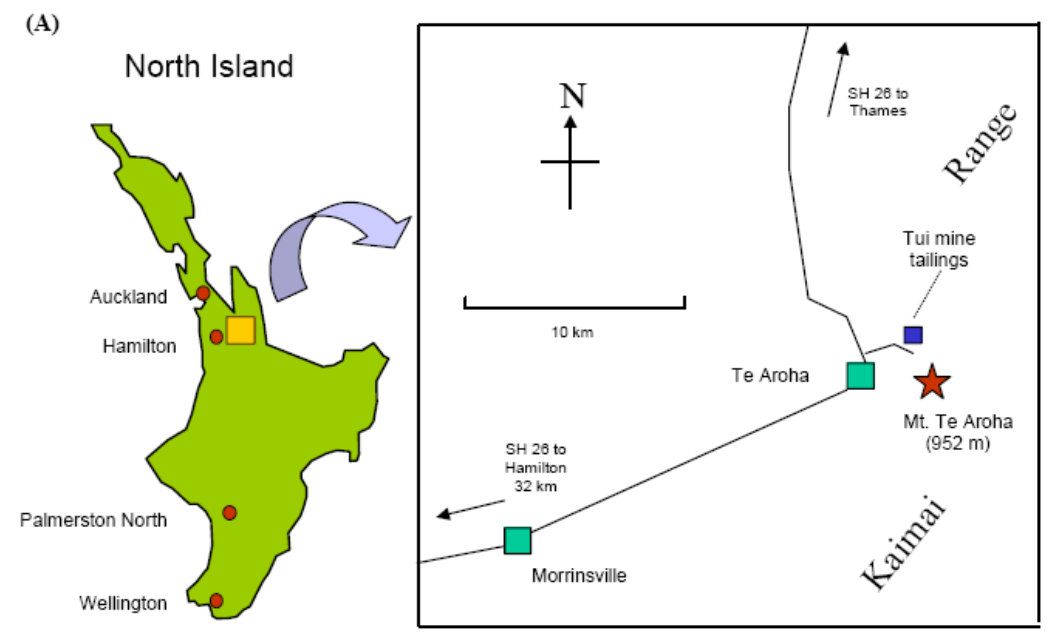
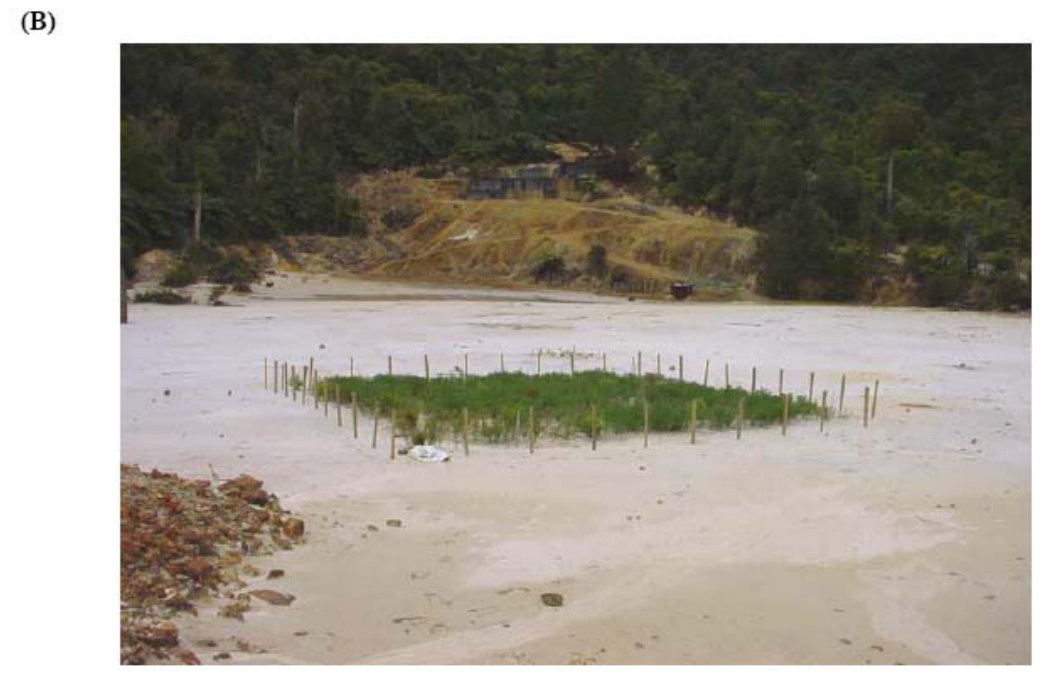
Table 1. Selected geochemical characteristics of Gold Mountain, Tui and Serra Pelada mine tailings used in this chapter表1. 本章所用Gold Mountain、Tui和Serra Pelada矿尾矿的部分地球化学特征
| Substrate Type基质类型 | |||
|---|---|---|---|
| Gold Mountain1 | Tui2 | Serra Pelada3 | |
| Total Concentration | |||
| Hg (mg/kg)4 | 100 | 2.82±0.31 | 0.27±0.06 |
| Au (mg/kg) | 1.58 | 0.5 | 0.09 |
| Cu (mg/kg) | 9356 | na | 1338 |
| Mn (mg/kg) | na | na | 188.4 |
| Cd (mg/kg) | na | 26 | na |
| Zn (mg/kg) | na | 5.400 | na |
| Pb (%) | na | 1.15 | na |
| Fe (%) | 4.48 | Na | 1.30 |
| Other Characteristics | |||
| PH5 | 9.4 | 3.9 | 5.4 |
| Eh (mV)5 | -137 | 400 | 93 |
| Total Carbon (%)6 | 0.7 | na | 0.1 |
| Total Nitrogen (%)6 | 0.07 | na | 0.02 |
| OM (%)6 | 1.3 | na | 0.3 |
| C:N6 | 10 | na | 5 |
| Soil Volume(g/ml)6 | 1.42 | 1.5 | 1.30 |
1Analysis of total Au, Cu, Mn and Fe for the original mine tailings were carried out by ACME Labs, Vancouver, BC, Canada.
1原始矿山尾矿中总Au、Cu、Mn和Fe的分析由ACME Labs(Vancouver, BC, 加拿大)完成。
2Source: Moreno et al., 2004.
2数据来源:Moreno et al., 2004。
3Source: Cabral et al., 2002.
3数据来源:Cabral et al., 2002。
4Total Hg concentrations in the samples were determined throughaqua-regia digestions; values are the mean of three replicates.
4样品中总Hg浓度通过王水消解测定;数值为三次重复的平均值。
5The pH and Eh values are the mean of three measurements.
5 pH和Eh值为三次测定的平均值。
6Analyses of these soil parameters were carried out by Fertilizer and Lime Research Centre, Palmerston North, NZ.
6这些土壤参数的分析由Fertilizer and Lime Research Centre(Palmerston North, 新西兰)完成。
Na= not analysed.
Na = 未分析。
The Gold Mountain MineGold Mountain矿
The Gold Mountain mine is a small-scale mine located in North Central China that extracts Au from ore using the amalgamation method. The exact location of the mine has been omitted so as to protect the local mining community. An aqueous slurry of the Au ore is ground with elemental Hg in locally manufactured mills. Gold liberated during rotation of iron wheels contacts Hg and forms an amalgam that may contain a 1:1 Au/Hg ratio. The Gold Mountain mine processes about 10 to 15 tonnes of ore daily and is responsible for discharge of an estimated 70 tonnes per year of Hg into the regional environment (Gunson and Veiga, 2004).
Gold Mountain矿是位于中国中北部的一座小规模矿山,采用汞齐化法从矿石中提取Au。为保护当地采矿社区,本文略去了该矿的确切位置。Au矿石的水浆与单质Hg在当地制造的研磨机中一同研磨。铁轮转动过程中释放出的金与Hg接触并形成汞齐,其Au/Hg比可达1:1。Gold Mountain矿每天处理约10至15吨矿石,估计每年向区域环境排放70吨Hg(Gunson and Veiga, 2004)。
The Serra Pelada Artisanal MineSerra Pelada手工矿
The Serra Pelada mine is located within the Carajás mineral province, approximately 100 km southwest of Marabá in the State of Pará, Brazil (Figure 4).
Serra Pelada矿位于Carajás矿产省内,在巴西Pará州Marabá西南约100 km处(图4)。
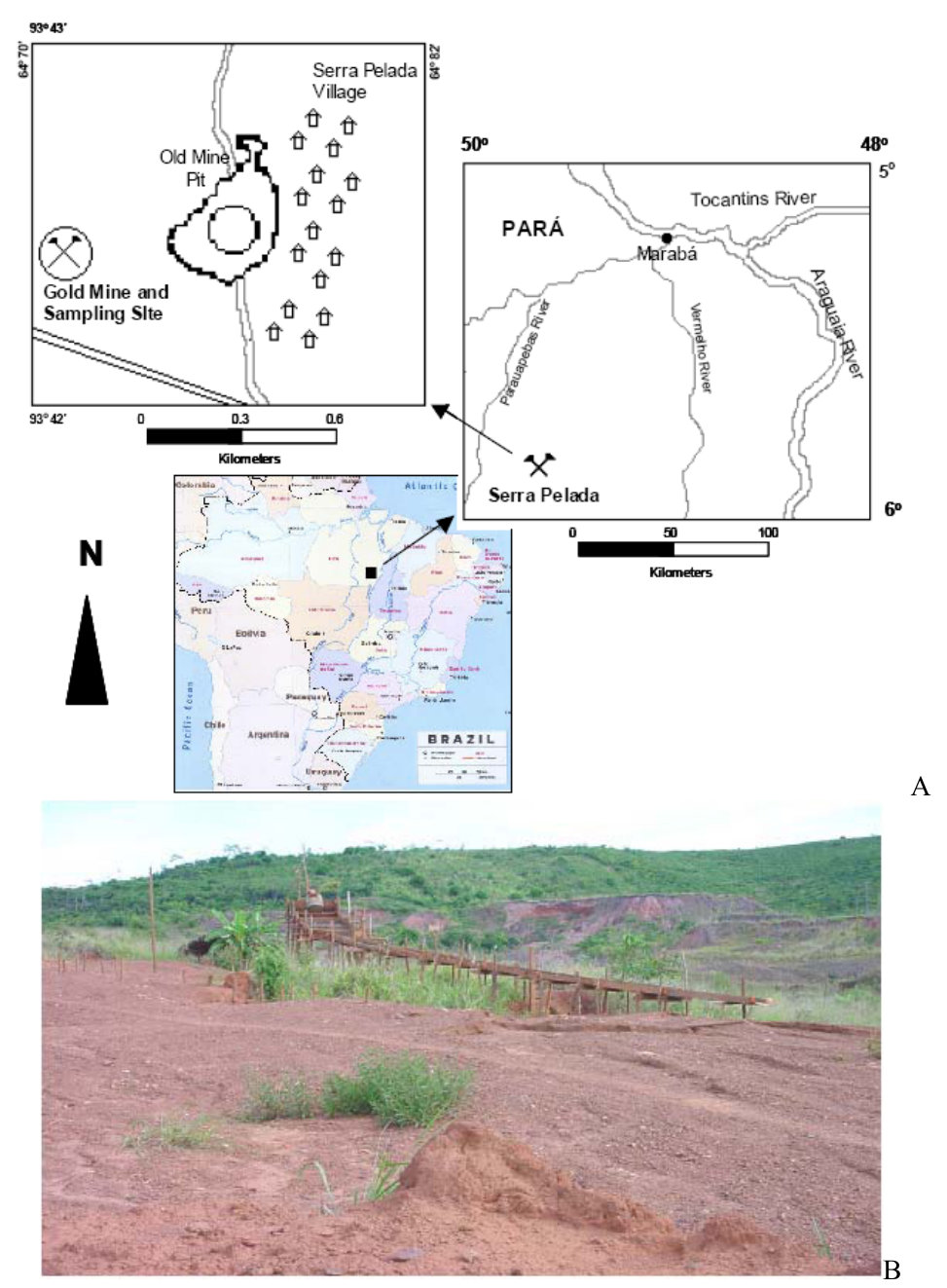
The mine attracted 20,000 miners within only a few months after gold was discovered, in January 1980. By 1990, the main pit was flooded and most of the gold miners had moved on. The Serra Pelada mine was responsible for officially producing 43 tons of gold in around 10 years. As the amalgamation method was the preferred method employed by local miners, there are many Hg-polluted spots in the 835ha of the Serra Pelada area. Deforestation is also prominent, as many hectares of native forest were destroyed in order to find exploitable ores. Loss of plant cover increased erosion and this has lead to a reduction in soil fertility. As the mineral resources in Serra Pelada were depleted, the community became increasingly dependant on agricultural activities for subsistence, and additional deforestation and soil erosion have occurred.
1980年1月发现金矿后仅数月,该矿便吸引了20,000名矿工。至1990年,主矿坑被淹,大多数淘金者已离开。Serra Pelada矿在约10年间官方产金43吨。由于当地矿工首选汞齐化法,Serra Pelada地区835 ha范围内存在许多Hg污染点。毁林问题也十分突出,大量公顷的原生森林为寻找可开采矿石而遭到破坏。植被丧失加剧了侵蚀,导致土壤肥力下降。随着Serra Pelada矿产资源枯竭,当地社区日益依赖农业活动维持生计,进一步造成了毁林和土壤侵蚀。
9MERCURY SPECIATION IN SUBSTRATES基质中汞的形态
The Tui Base Metal MineTui贱金属矿
The high sulphide content (>10%) and the presence of the sulphide-bearing minerals galena (PbS), sphalerite (ZnS), and chalcopyrite (CuFeS2) in the Tui ore indicate that Hg in the tailings might be present as sulphidic Hg forms such as cinnabar, metacinnabar, Hgpolysulphides or Hg associated with Fe-sulphides. Trace quantities of cinnabar have been shown to be present in the Tui ore (Morrel, 1996). These Hg forms are insoluble, not easily altered, and seldom found as detrital material (Kabata-Pendias, 2000). Because of their insolubility, sulphidic forms of Hg are said to be unavailable and/or immobile in the environment.
Tui矿石中较高的硫化物含量(>10%)以及含硫化物矿物方铅矿(PbS)、闪锌矿(ZnS)和黄铜矿(CuFeS2)的存在表明,尾矿中的Hg可能以硫化态Hg形式存在,如辰砂、黑辰砂、Hg多硫化物或与Fe硫化物结合的Hg。已证实Tui矿石中存在痕量辰砂(Morrel, 1996)。这些Hg形态不溶、不易蚀变,且很少以碎屑物质形式存在(Kabata-Pendias, 2000)。由于其不溶性,硫化态Hg在环境中被认为是不可利用和/或不可移动的。
The Gold Mountain MineGold Mountain矿
Given that the original tailings samples exhibited mild reducing conditions (-137 mV), high pH (9.45) (Table 1), the speciation of solid phase Hg in the tailings substrate may be in the elemental Hg (0) form. In this oxidation state, Hg is volatile and thus some Hg may have been lost from the system due to volatilisation. However, it is possible that dissolved Hg species in the tailings were adsorbed to iron oxy-hydroxides, as it has been demonstrated for soils with neutral to alkaline conditions (Andersson, 1979). The fact that the mine tailings has an alkaline pH and contains 17 % Fe provides support to this assumption.
鉴于原始尾矿样品呈现轻度还原条件(-137 mV)和高pH(9.45)(表1),尾矿基质中固相Hg可能以单质Hg (0)形态存在。在此氧化态下,Hg具有挥发性,因此部分Hg可能已因挥发而从体系中损失。然而,正如在中性至碱性条件土壤中所证实的那样(Andersson, 1979),尾矿中的溶解态Hg也可能被铁氢氧化物吸附。该矿山尾矿pH呈碱性且含17% Fe,这一事实支持了上述推测。
The Serra Pelada Artisanal MineSerra Pelada手工矿
Table 1 shows that SP mine tailings exhibit moderately oxidising conditions and pH 5.4. Therefore, Hg dispersed in this substrate during artisanal gold mining was likely to be stable in the elemental Hg (0) form. As the vapour pressure of Hg in the elemental state is high, some Hg fraction might have escaped from the system in the gaseous form. The SP tailings contain 1.15 % of Fe and 188 mg/kg of Mn, probably in the form of goethite (α-FeOOH) and表1显示,SP矿尾矿呈中度氧化条件,pH为5.4。因此,手工采金过程中分散在该基质中的Hg可能以单质Hg (0)形态稳定存在。由于单质Hg的蒸气压较高,部分Hg可能以气态形式从体系中逸出。SP尾矿含1.15%的Fe和188 mg/kg的Mn,可能以针铁矿(α-FeOOH)和
manganese oxides, as shown in Table 1. Therefore, it is likely that another Hg fraction was bound to the solid phase of these Fe and Mn oxide minerals.
锰氧化物的形式存在,如表1所示。因此,另一部分Hg很可能结合于这些Fe、Mn氧化物矿物的固相上。
10ENHANCEMENT OF HG AVAILABILITY IN MINE WASTES提高矿山废弃物中Hg的有效性
The success of phytoextraction is dependent on the availability of the target metal in soil for plant uptake (Blaylock et al., 1997). Mercury has limited solubility in soils, and thus low availability for plant uptake. In general, only trace concentrations of Hg are found in soil solution, mostly as uncharged complexes (Schuster, 1991). Plant availability and uptake of Hg will, therefore, be dependent on the ability to control the processes that enhance the concentration of this element in the soil solution (Moreno et al., 2004).
植物提取的成败取决于土壤中目标金属对植物吸收的有效性(Blaylock et al., 1997)。Hg在土壤中溶解度有限,因而对植物吸收的有效性较低。一般而言,土壤溶液中仅有痕量浓度的Hg,且主要以不带电荷的络合物形式存在(Schuster, 1991)。因此,Hg的植物有效性和植物吸收将取决于能否调控提高该元素在土壤溶液中浓度的过程(Moreno et al., 2004)。
In this section we describe the results for induced Hg solubility assays with the tested tailings in the presence of different chemical ligands. The effect of humic acid-amended substrates on induced Hg solubility was investigated only for the modified GM mine tailings. This substrate was prepared through dilution of the original GM mine tailings (100 mg/kg) with a 1:1 mixture of coarse and fine silica sand to give final Hg concentrations of 0, 1.25, 2.5 and 5 mg/kg. The humic acid (HA) powder was mixed with the substrate to give (w/w) HA concentrations of 0, 0.125, and 1.25 g/kg of substrate.
本节介绍在不同化学配体存在下供试尾矿诱导Hg溶解试验的结果。腐殖酸改良基质对诱导Hg溶解的影响仅针对改性GM矿尾矿进行了研究。该基质通过用粗、细石英砂1:1混合物稀释原始GM矿尾矿(100 mg/kg)制备,使最终Hg浓度分别为0、1.25、2.5和5 mg/kg。将腐殖酸(HA)粉末与基质混合,使HA浓度(w/w)分别为0、0.125和1.25 g/kg基质。
Effect of Ligand Type配体类型的影响
The coordination chemistry of Hg indicates that this element will be present mostly as a complex in soil solution. Therefore, the partitioning of Hg from the solid phase into soil solution will occur as a consequence of coordinative reactions where Hg ions are exchanged with water molecules for some preferred ligands (Moreno et al., 2004).
Hg的配位化学表明,该元素在土壤溶液中主要以络合物形式存在。因此,Hg从固相向土壤溶液的分配将通过配位反应发生,即Hg离子与水分子交换,从而与某些优先配体结合(Moreno et al., 2004)。
Mercury is described as a “soft metal” and has a tendency to form complexes with soft ligands such as NH3+, CN-, Cl- and S-donors. This affinity can be more pronounced when SCN- and S2O3- anions are present in the soil solution. The solution geochemistry of metalthiocyanate complexes favours stable complex formation under moderately acidic and oxidizing conditions (Bowell et al., 1993). Conversely, stable Hg-thiosulphate complexes are likely to form in neutral to alkaline pH conditions (Wilkinson et al., 1987).
Hg被称为“软金属”,倾向于与NH3+、CN-、Cl-和S供体等软配体形成络合物。当土壤溶液中存在SCN-和S2O3-阴离子时,这种亲和性会更加显著。金属硫氰酸盐络合物的溶液地球化学特性有利于在中等酸性和氧化条件下形成稳定络合物(Bowell et al., 1993)。相反,稳定的Hg-硫代硫酸盐络合物可能在中性至碱性pH条件下形成(Wilkinson et al., 1987)。
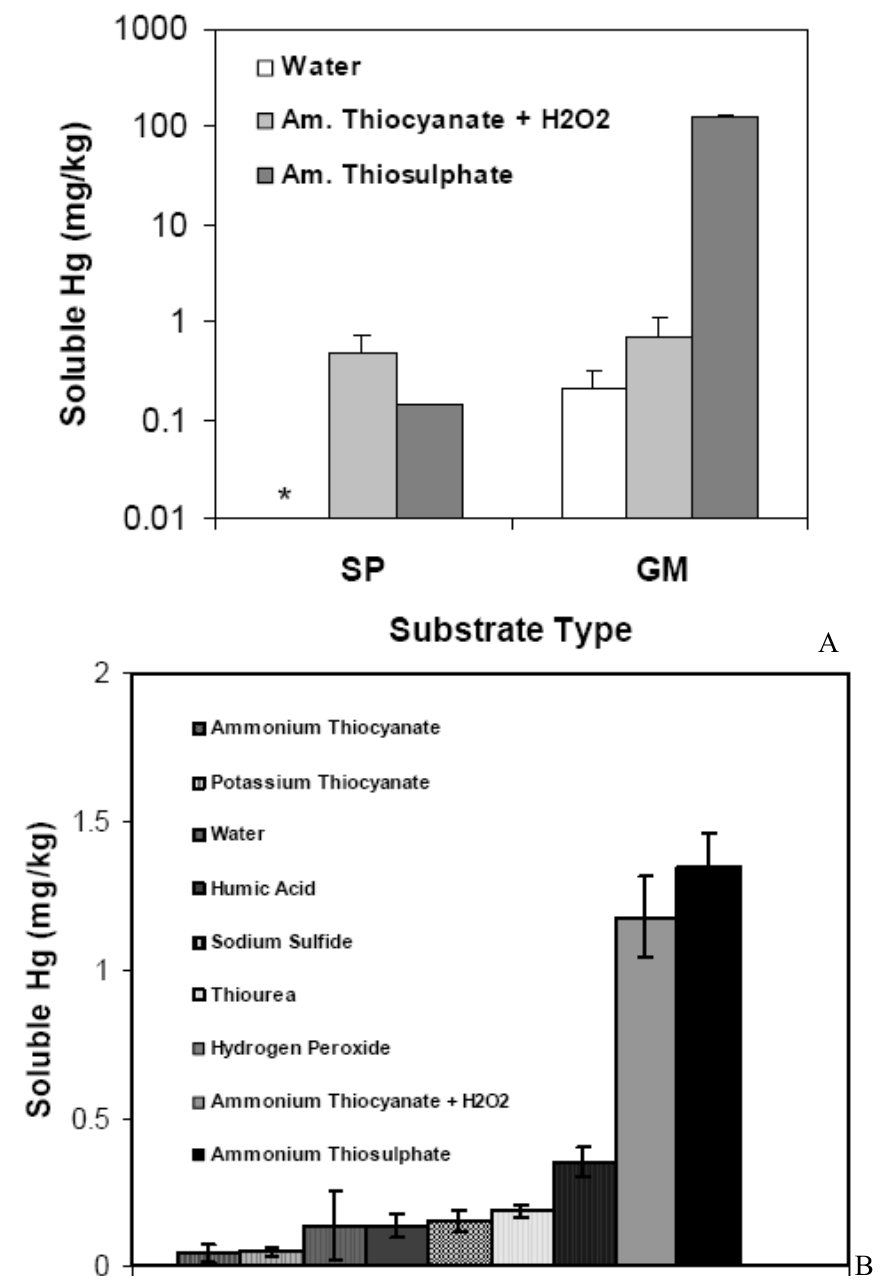
The geochemistry of GM and SP mine tailings (Table 1) indicates that Hg may form stable complexes with SCN- and S2O3- anions present in the soil solution. The GM tailings is alkaline (pH 9.4) whereas the SP tailings exhibits more acidic (pH 5.4) and oxidizing conditions (Eh 93), thus supporting the formation of stable Hg-thiosulphate and Hgthiocyanate complexes, respectively. Figure 5 A shows that the increase in the soluble Hg concentration relative to water in these substrates was possibly due to complex formation in the presence of the respective ammonium salts. For the Tui mine tailings, the soluble Hg concentrations were superior in the presence of the ammonium salts of thiosulphate ([NH4]2S2O3) and thiocyanate (NH4SCN) plus hydrogen peroxide (Figure 5 B). The increased Hg solubility from the Tui mine tailings was likely due to two processes. The first occurred in the presence of (NH4)2S2O3 and likely involved extraction of Hg bound to the solid phase minerals (mostly sulphidic) possibly through the formation of a thiosulphate-Hg complex. For the second process, hydrogen peroxide may have oxidised sulphidic Hg forms, allowing formation of a stable Hg-SCN complex.
GM和SP矿尾矿的地球化学特征(表1)表明,Hg可能与土壤溶液中的SCN-和S2O3-阴离子形成稳定络合物。GM尾矿呈碱性(pH 9.4),而SP尾矿呈较强酸性(pH 5.4)和氧化条件(Eh 93),分别有利于形成稳定的Hg-硫代硫酸盐和Hg-硫氰酸盐络合物。图5A显示,这些基质中可溶性Hg浓度相对于水的增加可能是由于在相应铵盐存在下形成了络合物。对于Tui矿尾矿,在硫代硫酸铵([NH4]2S2O3)以及硫氰酸铵(NH4SCN)加过氧化氢存在下,可溶性Hg浓度更高(图5B)。Tui矿尾矿Hg溶解度的提高可能源于两个过程。第一个过程发生在(NH4)2S2O3存在时,可能涉及通过形成硫代硫酸盐-Hg络合物提取结合在固相矿物(主要为硫化物)上的Hg。第二个过程中,过氧化氢可能氧化了硫化态Hg,从而形成稳定的Hg-SCN络合物。
The kinetics of the formation/decomposition of Hg thiosulphate complexes is unclear. However, Bowell et al. (1993) modelled the stability fields for the gold thiosulphate system in a pH-Eh diagram. These authors demonstrated that the formation of a stable Au-thiosulphate complex would be expected in the pH range of 3 to 12. As both Hg and Au exhibits similar geochemistry, then is possible that the acidic conditions that prevail in the Tui mine tailings were not restrictive to the formation of a stable Hg-thiosulphate complex.
Hg-硫代硫酸盐络合物形成/分解的动力学尚不清楚。然而,Bowell et al. (1993)在pH-Eh图中模拟了金-硫代硫酸盐体系的稳定场。这些作者证明,在pH 3至12范围内有望形成稳定的Au-硫代硫酸盐络合物。由于Hg和Au具有相似的地球化学性质,Tui矿尾矿中的酸性条件可能并未限制稳定Hg-硫代硫酸盐络合物的形成。
Effect of Humic Acids腐殖酸的影响
Humic substances (HS) represent 50% of the natural organic matter in soils and contain a high proportion of sulphur-containing functional groups (Wallchläger et al., 1998 a). The soluble fraction of HS comprises fulvic and humic acids (HA), which are known Hg ligands. Since Hg complexes with humic substances are stable over the entire pH range from 1-14 (Wallchläger, 1996), these complexes can be abundant in the solution of organic and mineral rich horizon soils (Evans, 1986). Therefore, Hg-HA complexes are mobile in soils (Wallchläger et al., 1998 b) and HA have been demonstrated to enhance both the Hg availability in soils and Hg uptake by organisms (Veiga and Hinton, 2002).
腐殖质(HS)占土壤天然有机质的50%,并含有高比例的含硫官能团(Wallchläger et al., 1998 a)。HS的可溶部分包括富里酸和腐殖酸(HA),二者均为已知的Hg配体。由于Hg与腐殖质形成的络合物在pH 1-14的整个范围内都是稳定的(Wallchläger, 1996),这些络合物可大量存在于富含有机质和矿物的土层溶液中(Evans, 1986)。因此,Hg-HA络合物在土壤中具有移动性(Wallchläger et al., 1998 b),且已证明HA可提高土壤中Hg的有效性及生物对Hg的吸收(Veiga and Hinton, 2002)。
The effect of Ha on the solubility of Hg in the GM mine tailings is shown in Figure 6. The Hg concentration in the extracts was almost two fold higher in the presence of (NH4)2S2O3 relative to water and averaged over 1 mg/kg. The Hg concentrations increased significantly with increasing Hg concentration in the water-soluble fraction of the HA-amended substrates. Conversely, humic acids had no significant effect in the Hg solubility in the presence of the thiosulphate ion in the soil solution.
HA对GM矿尾矿中Hg溶解度的影响见图6。与水相比,(NH4)2S2O3存在时提取液中Hg浓度几乎提高了两倍,平均超过1 mg/kg。在HA改良基质的水溶性组分中,Hg浓度随HA含量增加而显著升高。相反,当土壤溶液中存在硫代硫酸根离子时,腐殖酸对Hg溶解度无显著影响。
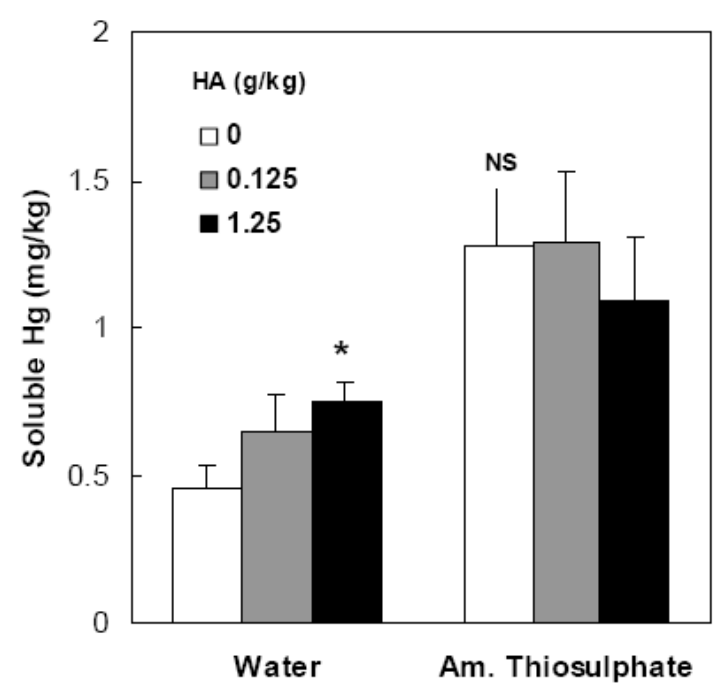
The enhanced Hg solubility in the water extracts for HA-amended substrates can only be explained through the formation of Hg-HA complexes. The fact that the pH of the modified GM substrates was around 8 and that humic acid is soluble at alkaline conditions (Wallschläger et al., 1996) provides support for this statement. Considering that soluble Hg- HA complexes were present in both water and (NH4)2S2O3 soluble fractions (Figure 6), we hypothesise that the total soluble Hg fraction of HA-amended substrates comprises a mixture of both Hg-HA and Hg-thiosulphate complexes. This result will have strong implications for the uptake of Hg by plants during the course of phytoextraction.
HA改良基质水提取液中Hg溶解度的提高只能用Hg-HA络合物的形成来解释。改性GM基质的pH约为8,而腐殖酸在碱性条件下可溶(Wallschläger et al., 1996),这一事实支持了上述观点。考虑到可溶性Hg-HA络合物同时存在于水溶性和(NH4)2S2O3可溶性组分中(图6),我们推测HA改良基质的总可溶性Hg组分由Hg-HA和Hg-硫代硫酸盐络合物的混合物组成。这一结果将对植物提取过程中植物对Hg的吸收产生重要影响。
11INDUCED PLANT-HG ACCUMULATION诱导植物Hg积累
Metal transport from the soil solution to plant roots can occur by diffusion as well as by convection with the transpiration water stream. Therefore, increasing the dissolved metal concentration by adding ligands or chelants to soils can enhance the diffusive and convective flux toward roots. Metals can be then delivered to the plant shoots via the xylem through the apoplastic pathway, an interconnected system that includes all cell walls in the root cortex (Nowack et al., 2006). The formation of Hg-complexes in the soil solution is thus, a prerequisite to induce the accumulation of Hg in aerial plant tissues. However, there is still a debate whether metal complexes are taken into the plant or not. It is believed that metalcomplexes disrupt cells in the root cortex allowing the free passage of metal complexes into the xylem vessels, therefore facilitating shoot metal accumulation (Nowack et al., 2006).
金属从土壤溶液向植物根系的迁移可通过扩散以及随蒸腾水流的对流进行。因此,向土壤中添加配体或螯合剂以提高溶解态金属浓度,可增强向根系的扩散和对流通量。随后金属可经质外体途径通过木质部输送至植物地上部;质外体是包括根皮层所有细胞壁在内的相互连通的系统(Nowack et al., 2006)。因此,土壤溶液中Hg络合物的形成是诱导Hg在植物地上组织中积累的先决条件。然而,金属络合物是否被植物吸收仍有争议。一般认为,金属络合物会破坏根皮层细胞,使金属络合物得以自由进入木质部导管,从而促进地上部金属积累(Nowack et al., 2006)。
In this section, we show the role of plant species and sulphur-containing ligands, substrate Hg concentration, substrate type and humic acids in the induced plan-Hg accumulation process. For plant growth, all substrates were supplemented with Osmocote (slow release fertiliser) at 5 g/kg. The acidic pH of Tui mine tailings was adjusted to 5.5 by addition of lime. Due to the phytotoxic Hg concentration (100 mg/kg) of the original GM mine tailings, the plant experiments on this substrate were carried out on a diluted substrate containing Hg at 1.25, 2.5 and 5 mg/kg, as explained before. Sulphur-containing ligands were applied at 2 g/kg rate in the form of solutions. All experiments were run for five days under greenhouse conditions.
本节阐述植物种类与含硫配体、基质Hg浓度、基质类型以及腐殖酸在诱导植物Hg积累过程中的作用。为满足植物生长需要,所有基质均以5 g/kg的用量补充了Osmocote(缓释肥)。通过添加石灰将Tui矿尾矿的酸性pH调节至5.5。由于原始GM矿尾矿的Hg浓度(100 mg/kg)具有植物毒性,该基质上的植物试验如前所述采用含Hg 1.25、2.5和5 mg/kg的稀释基质进行。含硫配体以溶液形式按2 g/kg的用量施加。所有试验均在温室条件下进行五天。
Effect of Sulphur-Containing Ligands and Plant Species含硫配体和植物种类的影响
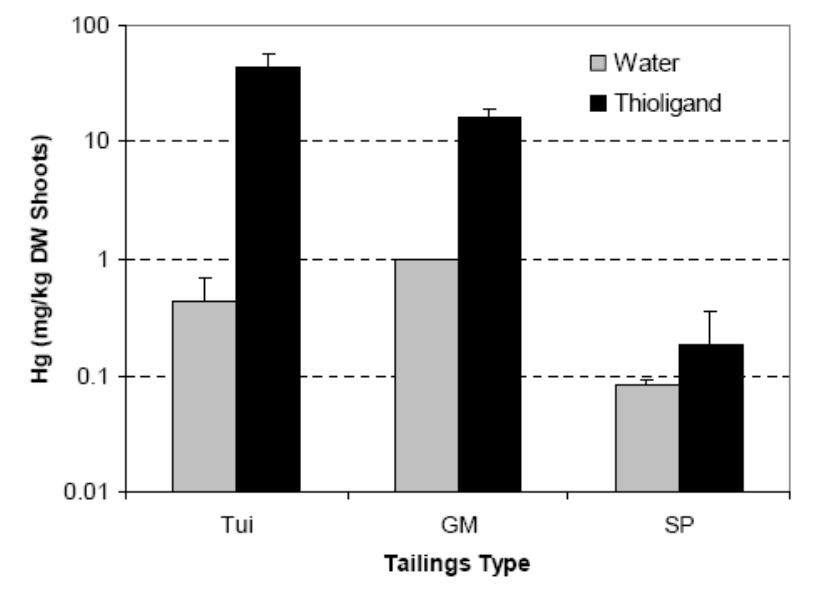
Average background levels of mercury in plants are usually not superior to 0.1 mg/kg dry weight (Kabata-Pendias, 2000). By adding (NH4)2 S2O3 to Tui mine tailings, B. juncea was able to accumulate over 400 times this value in the aerial tissues, as shown in Figure 7 A. Recorded values in aerial tissues of B. juncea averaged 43 mg/kg, thus reaching a bioconcentration factor around 15 (Plant Hg 43/ Soil Hg 2.8, values in mg/kg). Induced plant- Hg accumulation for plant species grown in the modified GM mine tailings (Hg at 2.5 mg/kg) was also effective in the presence of thiosulphate salts (ammonium and sodium) (Figure 7 B). However, shoot Hg values were not as pronounced as those observed for B. juncea grown in the Tui substrate.
植物中汞的平均背景水平通常不超过0.1 mg/kg干重(Kabata-Pendias, 2000)。如图7A所示,向Tui矿尾矿添加(NH4)2 S2O3后,B. juncea地上组织中积累的Hg超过该值的400倍。B. juncea地上组织中的记录值平均为43 mg/kg,生物富集系数因此达到约15(植物Hg 43/土壤Hg 2.8,单位均为mg/kg)。在硫代硫酸盐(铵盐和钠盐)存在下,生长于改性GM矿尾矿(Hg为2.5 mg/kg)中的植物的诱导Hg积累同样有效(图7B)。然而,其地上部Hg含量不如生长于Tui基质中的B. juncea显著。
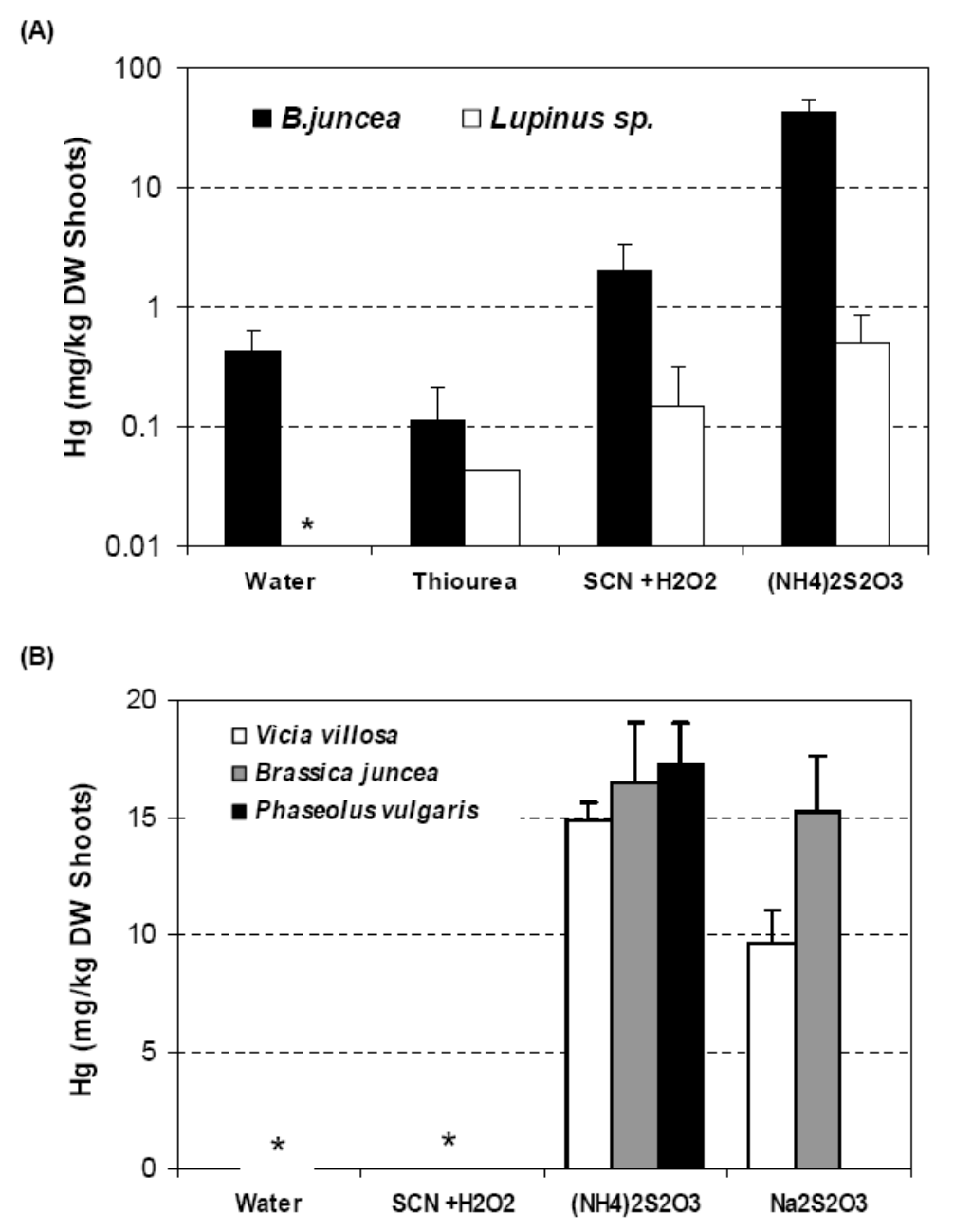
Overall, plants species grown in the modified GM substrate accumulated over 15 mg/kg in shoot tissues in the presence of the ammonium salt, hence yielding a bioconcentration factor around 6. The thiosulphate-induced plant-Hg accumulation process was, therefore, effective both under the moderately acidic (pH 5.5) and the slightly alkaline (pH 8.2) conditions existing in the Tui and modified GM substrates, respectively.
总体而言,在铵盐存在下,生长于改性GM基质中的植物地上组织积累的Hg超过15 mg/kg,生物富集系数约为6。因此,硫代硫酸盐诱导的植物Hg积累过程在Tui和改性GM基质中分别存在的中等酸性(pH 5.5)和弱碱性(pH 8.2)条件下均有效。
Application of other sulphur-containing ligands, such as thiourea or thiocyanate, to the Tui or GM substrates did not induce Hg levels to the same extent. For the modified GM tailings, Hg shoot accumulation was below detection levels in the presence of other ligands (Figure 7 A and B).
向Tui或GM基质施加其他含硫配体(如硫脲或硫氰酸盐)并未诱导同等程度的Hg积累。对于改性GM尾矿,在其他配体存在下地上部Hg积累低于检出限(图7A和B)。
The translocation of soluble Hg species was not only a function of ligand type but also of plant species. For example, application of thiosulphate to Lupinus sp. and Vicia villosa grown respectively in Tui and modified GM substrates did not enhance Hg accumulation in aerial tissues as it did for B.juncea and Phaseolus vulgaris under similar conditions. This discrepancy may result from intrinsic plant species characteristics such as root morphology, root surface area, and plant transpiration rates.
可溶性Hg形态的转运不仅取决于配体类型,还取决于植物种类。例如,对分别生长于Tui和改性GM基质中的Lupinus sp.和Vicia villosa施加硫代硫酸盐,并未像在相似条件下对B.juncea和Phaseolus vulgaris那样提高地上组织的Hg积累。这一差异可能源于植物种类的内在特性,如根系形态、根表面积和植物蒸腾速率。
Effect of Substrate Type基质类型的影响
In general, Hg has a low solubility regardless of the natural geochemical conditions that prevail in substrates. The application of thiosulphate substantially increased Hg solubility and subsequent shoot accumulation for B. juncea grown in Tui and Gold Mountain substrates, as shown in Figure 8. Thiocyanate was also effective for inducing Hg solubility in SP substrates (Figure 5 A) and, to some extent, shoot-Hg accumulation. Although shoot tissues accumulated around 2.3 times more Hg than controls, this difference was not statistically significant. This is possibly due to the low levels of total and hence soluble Hg in the SP substrate (Table 1), which limited the effect of NH4SCN on induced plant-Hg accumulation. Therefore, it is plausible that thioligand-induced plant-Hg accumulation will work only above a threshold value for total Hg in substrates.
总体而言,无论基质中普遍存在何种自然地球化学条件,Hg的溶解度都较低。如图8.所示,施加硫代硫酸盐大幅提高了生长于Tui和Gold Mountain基质中B. juncea的Hg溶解度及随后的地上部积累。硫氰酸盐同样能有效诱导SP基质中Hg的溶解(图5A),并在一定程度上诱导地上部Hg积累。尽管地上组织积累的Hg约为对照的2.3倍,但差异无统计学显著性。这可能是由于SP基质中总Hg及可溶性Hg水平较低(表1),限制了NH4SCN对诱导植物Hg积累的作用。因此,硫配体诱导的植物Hg积累可能仅在基质总Hg高于某一阈值时才有效。
Effect of Substrate Hg Concentration基质Hg浓度的影响
There is still no evidence of a physiological role for Hg in living organisms. Therefore, Hg is a non-essential element and can be toxic to higher plants. Reduced levels of biomass and plant transpiration rates are among the primary effects of Hg toxicity to aquatic and terrestrial plants (Moreno et al., 2008). As metal removal by plants relies on biomass production and metal-accumulating capacity, these toxic effects of Hg can limit the effectiveness of phytoextraction. Conversely, if soil Hg concentrations are not a limiting factor for plant growth, then increasing soil Hg concentration can increase the Hg content of plants (Figure 9 A).
目前尚无证据表明Hg在生物体内具有生理功能。因此,Hg是一种非必需元素,并可能对高等植物产生毒害。生物量和植物蒸腾速率降低是Hg对水生和陆生植物毒害的主要效应之一(Moreno et al., 2008)。由于植物对金属的去除依赖于生物量产量和金属积累能力,Hg的这些毒害效应可能限制植物提取的效果。相反,若土壤Hg浓度不是植物生长的限制因素,则提高土壤Hg浓度可增加植物的Hg含量(图9A)。
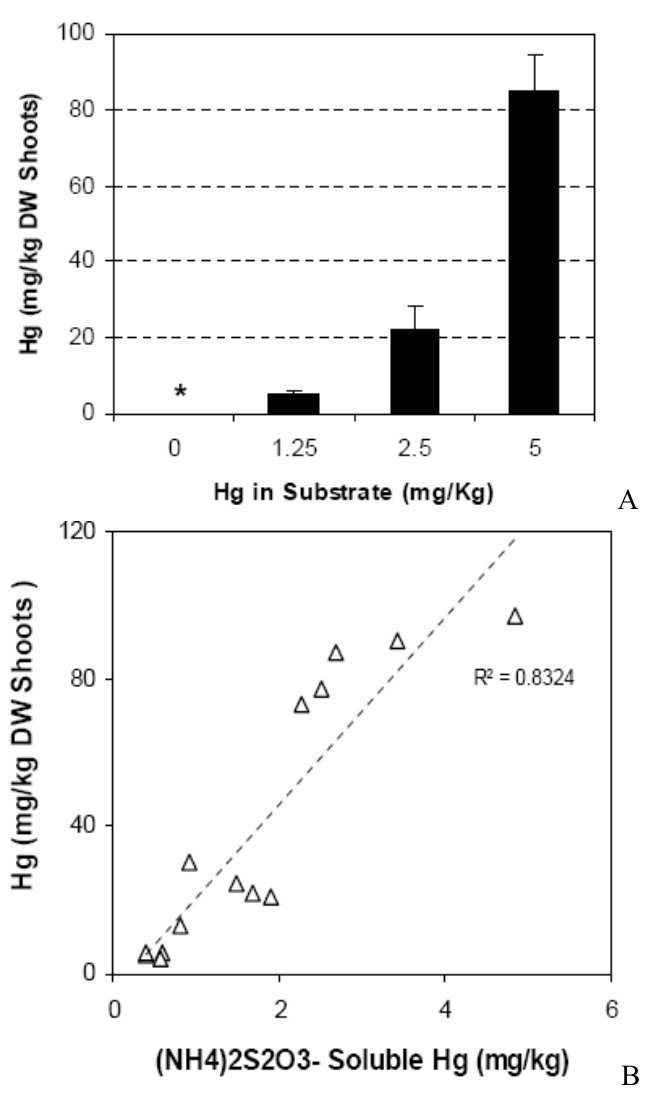
For example, Figure 9 (A) shows that Hg accumulation in the shoots of (NH4)2S2O3- treated B. juncea plants was significantly enhanced as a function of increasing Hg concentrations in the modified GM substrates. At the highest substrate level (5 mg/kg), Hg was accumulated in shoots at an average of 85 mg/kg, hence yielding a concentration factor of 17. The plot of the shoot Hg concentration versus the (NH4)2S2O3-extractable Hg concentration (Figure 9 B) confirms this trend as it shows a positive and linear response of Hg in shoots to the concentration of available Hg in the substrates.
例如,图9(A)显示,随着改性GM基质中Hg浓度的增加,经(NH4)2S2O3处理的B. juncea植株地上部Hg积累显著提高。在最高基质水平(5 mg/kg)下,地上部Hg积累平均达85 mg/kg,富集系数为17。地上部Hg浓度与(NH4)2S2O3可提取Hg浓度的关系图(图9B)证实了这一趋势,表明地上部Hg对基质中有效Hg浓度呈正线性响应。
Effect of Humic Acid腐殖酸的影响
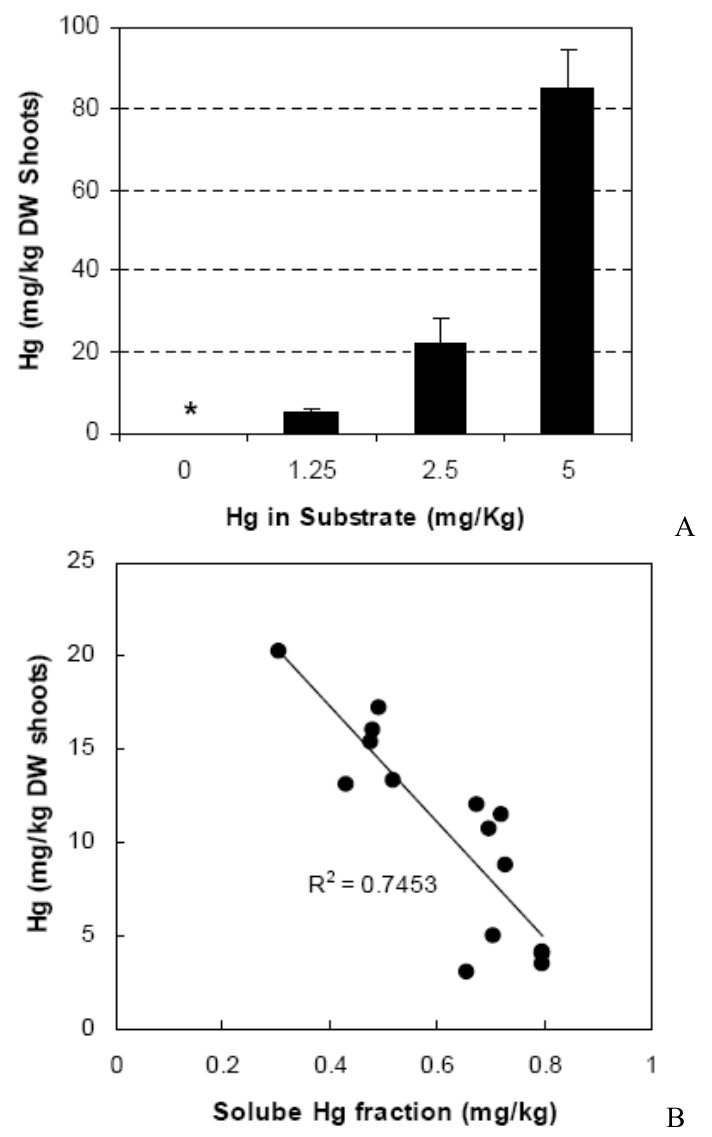
Some studies have shown that organic matter limits the dissociation of Hg bound to soil organic components. This effect translates into low Hg availability in soils and, therefore, into restricted Hg plant uptake as demonstrated by soil and hydroponic studies with Vulpia myuros L. (Zorro fescue), Lemna minor (Duckweed), Brassica chinesis and Lactuca sativa (Heeraman et al., 2001, Mo et al., 1989, Wang et al., 1997). The reason for the decline in the plant Hg concentrations was attributed to a decrease in the soluble Hg fraction due to Hg complexation with either organic matter or humic acid. Figure 10 (A) shows that the shoot Hg concentration of B. juncea was significantly decreased in the presence of HA thus corroborating with previous studies. Root to shoot transport, therefore, appears to be inhibited by humic acid. These results were confirmed by plotting the plant Hg concentration in B. juncea as a function of the soluble Hg concentration of HA-amended substrates, as shown in Figure 10 (B). It is possible that that Hg-S2O3 complexes were preferentially selected for shoot transport over other dissolved Hg species present in the substrate such as HA-Hg complexes, which were probably adsorbed by root tissues.
一些研究表明,有机质会限制与土壤有机组分结合的Hg的解离。这一效应导致土壤中Hg的有效性较低,进而限制植物对Hg的吸收,这已由以Vulpia myuros L.(鼠尾狐茅)、Lemna minor(浮萍)、Brassica chinesis和Lactuca sativa为对象的土壤及水培研究所证实(Heeraman et al., 2001, Mo et al., 1989, Wang et al., 1997)。植物Hg浓度下降的原因被归结为Hg与有机质或腐殖酸络合,导致可溶性Hg组分减少。图10(A)表明,在HA存在的条件下,B. juncea地上部Hg浓度显著降低,从而印证了以往的研究结果。因此,腐殖酸似乎抑制了Hg由根部向地上部的转运。如图10(B)所示,将B. juncea植株Hg浓度对HA改良基质的可溶性Hg浓度作图,进一步证实了上述结果。Hg-S2O3络合物可能相对于基质中存在的其他溶解态Hg形态(如可能被根组织吸附的HA-Hg络合物)被优先选择向地上部转运。
Ligand-Induced Phytoextraction Field Trials配体诱导植物提取田间试验
Three field plots with dimensions of 5 x 5 m were established on the tailings dam of the abandoned Tui base-metal mine. The plots were fertilised with NPK fertiliser at 75 g/m2 and had their pH adjusted to 5.5 by addition of lime. Organic matter (mushroom compost) was added at a rate of 3.2 L/m2in order to supplement plant nutritional needs. Around 75 grams of B. juncea seeds were planted in two rows. After 6 weeks of plant growth, Na2S2O3 was applied to the field plots at a concentration of 5 g/kg of substrate. Two weeks after the treatment, biomass from the plots was harvested and processed for Hg analyses. Results for ligand-induced phytoextraction on the Tui tailings are shown in Figure 11 and Table 2. The addition of Na2S2O3 to substrates enhanced Hg solubility, leading to increased Hg accumulation in the shoots of B. juncea. The extractable Hg concentration rose proportionally to increasing concentrations of Na2S2O3 added to the substrates.
在废弃的Tui贱金属矿尾矿坝上建立了3个5 x 5 m的田间小区。各小区按75 g/m2施用NPK肥料,并通过添加石灰将pH调节至5.5。为补充植物营养需求,按3.2 L/m2的用量添加有机质(蘑菇渣堆肥)。约75 g B. juncea种子分两行播种。植物生长6周后,按5 g/kg基质的浓度向田间小区施用Na2S2O3。处理2周后,收获小区生物量并进行Hg分析前处理。Tui尾矿配体诱导植物提取的结果见图11和表2。向基质中添加Na2S2O3提高了Hg的溶解度,使B. juncea地上部Hg积累量增加。可提取态Hg浓度随基质中Na2S2O3添加浓度的增加而成比例上升。
| Tui PlotTui小区 | Shoot Hg地上部Hg | Harvested收获量 | Equivalent Biomass折算生物量 | Hg ExtractionHg提取量 |
|---|---|---|---|---|
| (mg/kgDW) | Biomass(kg,DW) | (t/ ha)a | Yield(g/ ha)b | |
| 1c | 2.99±0.5 | 0.19 | 0.38 | 1.14±0.2 |
| 2 | 9.77±1.2 | 1.24 | 2.49 | 24.39±3.1 |
| 3 | 2.93±0.7 | 1.16 | 2.33 | 6.84±1.7 |
*Values are the mean± 1 standard deviation from 5 replicates (1 replicate = 0.1 g of ground roots and shoots digested in 15 ml HNO3,). aCalculated on a basis of 5 m2 area for each plot b Hg values for extraction yields (g /ha) are the product of shoot Hg concentrations (mg/ kg DW) and equivalent plant biomass production (t/ ha). cNa2S2O3 applied at 2.5 g/kg.
*数值为5次重复的平均值± 1个标准差(1次重复 = 0.1 g根和地上部磨碎样品经15 ml HNO3消解)。a按每个小区5 m2面积计算;b提取产量的Hg值(g/ha)为地上部Hg浓度(mg/kg DW)与折算植物生物量产量(t/ha)的乘积;c Na2S2O3施用量为2.5 g/kg。
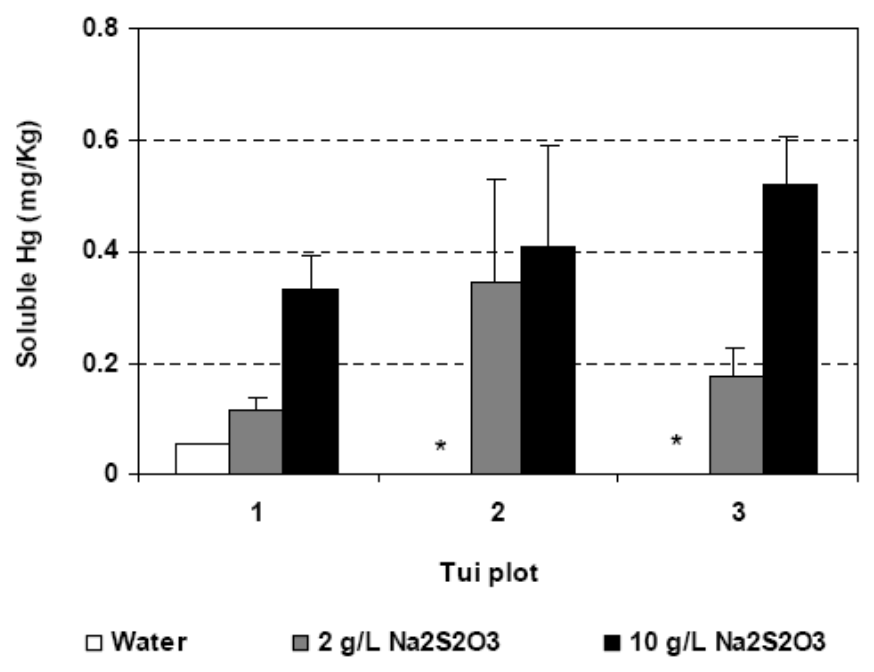
The thiosulphate treatment induced a significant increase in the shoot Hg concentration relative to the control treatments, which had Hg values below detection levels (data not shown). Mercury concentrations in shoots of B. juncea were higher in plot number 2, where the assayed value averaged around 10 mg/kg (Table 2), thus reaching a bioconcentration factor above 3 (plant Hg 9.77 /soil Hg 2.82, values in mg/kg).
与对照处理相比,硫代硫酸盐处理使地上部Hg浓度显著增加,而对照处理的Hg值低于检出限(数据未列出)。B. juncea地上部Hg浓度以2号小区最高,测定值平均约为10 mg/kg(表2),生物富集系数因而超过3(植物Hg 9.77/土壤Hg 2.82,单位为mg/kg)。
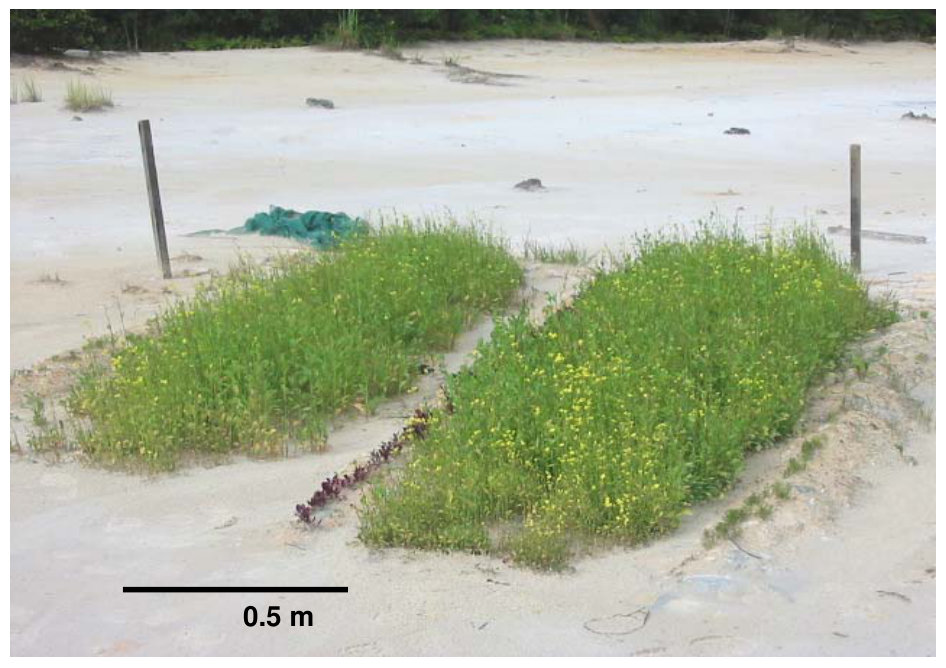
The phytotoxic conditions that prevail in the substrates of the Tui base metal mine did not prevent plant growth, as average plant height on site was around 25 cm (Figure 12). One week after treatment with sodium thisosulphate solutions, however, phytotoxic symptoms (e.g., wilting and chlorosis) were evident. Estimates of biomass production indicated a maximum dry matter yield of around 2.5 tonnes per hectare. Considering that plants on site had a relatively short growing season (6 weeks) and that the sulphide-rich tailings of the Tui mine exhibit high levels of the toxic metals Zn, Cu, Mn, Pb and Ag (Morrell et al., 1996), the low levels of plant biomass production on this site are no surprising. As a result, Hg-extraction yields were also low. Due to its highest biomass production and shoot Hg concentration, the maximum Hg-extraction yield was achieved at plot number 2 with an average of around 25 g Hg/ha (Table 2). The addition of organic matter to Tui substrates might also have played a negative effect on shoot Hg translocation, as highlighted by the shoot Hg concentrations for (NH4)2S2O3-treated B. juncea plants grown in the humic acid amended substrates.
Tui贱金属矿基质中普遍存在的植物毒性条件并未阻止植物生长,现场植株平均高度约为25 cm(图12)。然而,在施用硫代硫酸钠溶液1周后,植物出现了明显的毒害症状(如萎蔫和失绿)。生物量估算表明,最大干物质产量约为每公顷2.5 t。考虑到现场植物的生长期较短(6周),且Tui矿富含硫化物的尾矿中有毒金属Zn、Cu、Mn、Pb和Ag含量较高(Morrell et al., 1996),该地点植物生物量产量较低并不令人意外。因此,Hg提取产量也较低。由于2号小区生物量产量和地上部Hg浓度最高,其Hg提取产量最大,平均约为25 g Hg/ha(表2)。从生长在腐殖酸改良基质中经(NH4)2S2O3处理的B. juncea植株的地上部Hg浓度可以看出,向Tui基质中添加有机质也可能对Hg向地上部的转运产生了负面影响。
However, one should be bear in mind that the maximum Hg-extraction yield obtained in this experiment was over 30 times the maximum yield obtained for Hordeum vulgare (barley), which extracted 0.71 g Hg/ha from a Hg-contaminated site in Almadén, Spain (Rodriguez et al., 2003) without the application of synthetic chelates. Overall, ligand-induced phytoextraction increased the Hg removal efficiency by plants grown in situ thus encouraging more detailed studies under field conditions.
然而应当注意,本试验获得的最大Hg提取产量是Hordeum vulgare(大麦)最大产量的30倍以上;后者在未施用合成螯合剂的情况下,从西班牙Almadén的一处Hg污染场地提取了0.71 g Hg/ha(Rodriguez et al., 2003)。总体而言,配体诱导植物提取提高了原位生长植物的Hg去除效率,值得在田间条件下开展更为深入的研究。
12LEACHING淋溶
The application of chelants to soils to induce a higher metal concentration in plants raises environmental concerns due to the potential contamination of groundwater via the leaching of mobilised metals. Leaching can occur when the rates of solubilising agents applied to the soil are above the levels of metals that the plants can remove from soil solution (Moreno et al., 2004). This excess metal may leach below the root zone into groundwater, a process exacerbated by macropore flow (Bundt et al., 2000). Modelling calculations for the application of EDTA revealed that 90% of the applied chelant is not taken up by plants during the course of ligand-induced phytoextraction (Nowack et al., 2006). This explains the enhanced generation of Hg-containing leachates after the addition of (NH4)2S2O3 to substrates, as shown in Table 3. The generation of leachates also appeared to be affected by a plant-chemical factor. However, the experimental protocol utilised in the experimental method did not allow for explanation of discrepancies resulting from plant species variability.
向土壤施用螯合剂以提高植物体内金属浓度,可能因活化金属的淋溶而污染地下水,从而引发环境方面的担忧。当施入土壤的增溶剂用量超过植物能够从土壤溶液中去除的金属量时,就可能发生淋溶(Moreno et al., 2004)。这些过量金属可能淋溶至根区以下进入地下水,而大孔隙流会加剧这一过程(Bundt et al., 2000)。EDTA施用的模型计算表明,在配体诱导植物提取过程中,90%的施用螯合剂未被植物吸收(Nowack et al., 2006)。这解释了如表3所示向基质添加(NH4)2S2O3后含Hg渗滤液生成量增加的现象。渗滤液的生成似乎还受到植物—化学因素的影响。然而,本研究所采用的试验方案无法解释由植物种间差异所导致的差异。
Given the potential for leachate generation, ligand-induced phytoextraction may pose an unacceptable environmental risk unless the link to receiving waters can be broken. In this case, the operation could be carried out ex situ. Geo-textiles and subirrigation drainage systems would intercept leachates and pump it back to the irrigation supply, thus preventing leaching and the potential for ground water contamination. Mercury-leachate generation also could be managed by using plant species with high transpiration rates, such as willows and poplars or by intensive cropping practices and careful management of the irrigation system (Moreno et al., 2004). Additional research should be carried out to examine the potential for chemical and biological degradation of Hg-thiosulphate complexes in revegetated mine substrates.
鉴于可能产生渗滤液,除非能够切断其与受纳水体之间的联系,否则配体诱导植物提取可能带来不可接受的环境风险。在这种情况下,该操作可以异位进行。土工织物和地下灌溉排水系统可截获渗滤液并将其泵回灌溉水源,从而防止淋溶及潜在的地下水污染。含Hg渗滤液的生成也可以通过选用蒸腾速率高的植物种(如柳树和杨树),或通过集约化种植措施和灌溉系统的精细管理加以控制(Moreno et al., 2004)。还应开展进一步研究,考察Hg-硫代硫酸盐络合物在植被恢复矿山基质中发生化学和生物降解的可能性。
| Treatment处理 | ||||
|---|---|---|---|---|
| Substrate | Plant Species | Rep. | Watera | (NH4)2S2O3 b |
| Tuic | B. Juncea | 2 | 9.1±11.2 | 953±246 |
| _Lupinus_sp. | 3 | 20.8±6.6 | 3963±1063 | |
| B. Juncea | 3 | BDL | 2762±506 | |
| GMd | P. vulgaris | 3 | 1.3±0.5 | 1068±332 |
| V. villosa | 3 | BDL | 1868±492 | |
| GM + HAe | B.juncea | 3 | 3±3.4 | 2592±132 |
*Values are the mean± 1 standard deviation from 3 replicates unless otherwise stated. aWater = control; b(NH4)2S2O3 = ammonium thiosulphate; cTui mine tailings, 2.82 mg Hg/kg of substrate, Table 1; dGM, modified Gold Mountain mine tailings, 2.5 mg Hg/kg of substrate; eGM + HA, modified GM substrates amended with humic acid at 1.25 g/kg. BDL = below detection levels (5 ng/mL in the aqueous solutions)
*数值为3次重复的平均值± 1个标准差(另有说明者除外)。a水 = 对照;b(NH4)2S2O3 = 硫代硫酸铵;c Tui矿尾矿,基质含2.82 mg Hg/kg,见表1;d GM,改性Gold Mountain矿尾矿,基质含2.5 mg Hg/kg;e GM + HA,以1.25 g/kg腐殖酸改良的改性GM基质。BDL = 低于检出限(水溶液中为5 ng/mL)
13VOLATILISATION挥发
Mass balance calculations for greenhouse experiments investigating induced plant-Hg accumulation revealed a substantial Hg fraction in the substrates that could not be accounted for (Moreno et al., 2004). This fraction suggested that Hg (0) was volatilised from the substrate as a result of chemical and biological transformations. We, therefore, carried out a volatilisation study for ligand-induced plant-Hg accumulation using B. juncea plants grown in the Hg-contaminated mine tailings. Each plant pot was enclosed in a gastight acrylic chamber and these were subsequently placed inside a plant controlled light and temperature growht chamber (Figure 13). Volatile Hg was driven by air into two-successive trap solutions containing 5% KMnO4 dissolved in 2N H2SO4 The use of this experimental apparatus has allowed Hg recoveries of around 90% for B. juncea plants cultured in Hg-spiked solutions (Moreno et al., 2008).
针对诱导植物Hg积累的温室试验所进行的质量平衡计算表明,基质中有相当一部分Hg无法得到解释(Moreno et al., 2004)。该部分提示Hg (0)因化学和生物转化而从基质中挥发。因此,我们以生长在Hg污染矿山尾矿中的B. juncea植株开展了配体诱导植物Hg积累的挥发研究。每个盆栽均被封闭于气密性丙烯酸箱体内,随后将其置于光照和温度可控的植物生长箱中(图13)。挥发性Hg由气流带入两级串联的吸收液中,吸收液为溶于2N H2SO4的5% KMnO4。采用该试验装置时,在Hg添加溶液中培养的B. juncea植株的Hg回收率可达约90%(Moreno et al., 2008)。
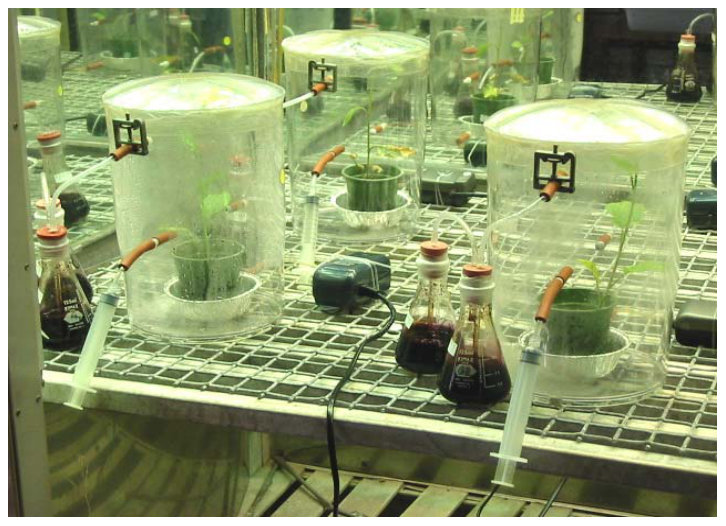
Figure 14 shows the daily Hg volatilisation rates for thioligand and water-treated B. juncea plants and control pots (without plants) on a mass basis. Mercury volatilisation was ubiquitous regardless of the substrate type, existence of vegetation, or application of ligands. Overall, the presence of plants considerably enhanced the Hg volatilisation rates over unplanted (barren) mine tailings.图14显示了经硫配体和水处理的B. juncea植株以及对照盆(无植物)以质量为基础的日Hg挥发速率。无论基质类型、有无植被或是否施用配体,Hg挥发均普遍存在。总体而言,与未种植(裸露)的矿山尾矿相比,植物的存在显著提高了Hg挥发速率。
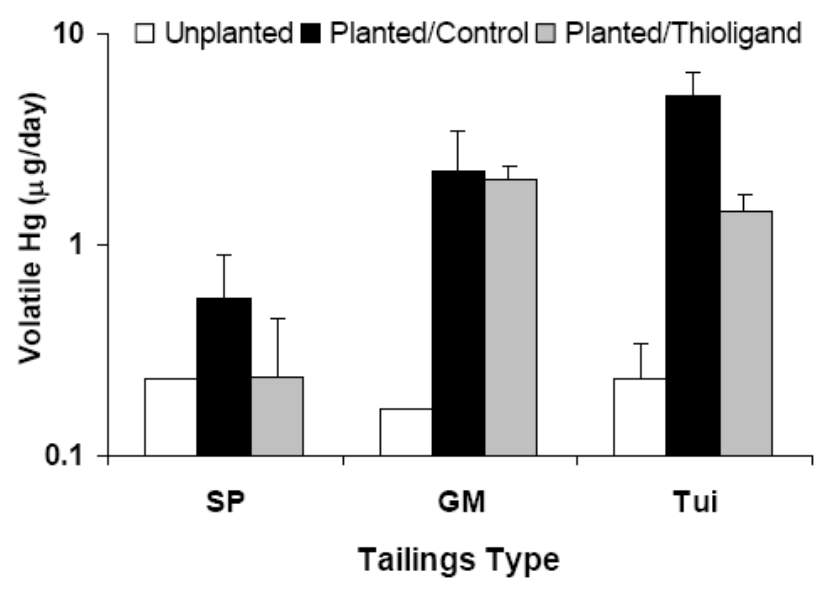
For Tui and SP mine tailings, Hg volatilisation was more pronounced for water-treated plants. For these substrates, the Hg volatilisation rate exceeded the Hg volatilisation rates from thioligand-treated plants at least by a factor of 2. Volatilisation rates between water and (NH4)2S2O3-treated plants grown in the modified GM substrate, on the other hand, were not statistically different. Application of thioligands did not cause any increase in the Hg volatilisation from substrates and in fact, for two substrates, there was a trend for a reduced Hg flux. A final point to note is that Hg volatilisation from barren substrates indicates that barren mine tailings appear to be inherently prone to biological or chemical transformations.
对于Tui和SP矿尾矿,水处理植株的Hg挥发更为明显。在这些基质中,水处理植株的Hg挥发速率至少为硫配体处理植株的2倍。另一方面,生长于改性GM基质中的水处理与(NH4)2S2O3处理植株之间的挥发速率无显著差异。施用硫配体并未导致基质Hg挥发增加;事实上,在两种基质中,Hg通量呈降低趋势。最后需要指出的是,裸露基质中存在的Hg挥发表明,裸露的矿山尾矿本身似乎易于发生生物或化学转化。
The quantitative capture of volatile Hg in the potassium permanganate solution under acid conditions can be written by the following equation:
酸性条件下高锰酸钾溶液对挥发性Hg的定量捕集可用下式表示:

Since elemental Hg (0) is oxidized by potassium permanganate, then we would presume that the predominant Hg form released from barren and planted substrates was the inorganic vapour Hg (0). The Hg volatilisation from tested mine tailings, therefore, may be the result of on site biological and sunlight-mediated reduction of Hg (see Morel et al., 1998 for a detailed explanation on Hg photoreduction).
由于单质Hg (0)可被高锰酸钾氧化,我们推测裸露和种植基质释放的主要Hg形态为无机蒸气态Hg (0)。因此,供试矿山尾矿的Hg挥发可能源于现场的生物还原和光致还原作用(Hg光还原的详细解释参见Morel et al., 1998)。
The role of bacteria on Hg volatilisation from Hg-contaminated environments has been well documented (Barkay et al., 2003). The reduction of Hg (II) to Hg (0) as well as the degradation of organomercury is carried out by Hg (II) resistant bacteria (both gram positive and negative). Bacteria resistant to Hg (II) produce a flavin-containing disulphide oxireductase known as mercuric reductase (MR) that catalyses the reaction:
细菌在Hg污染环境Hg挥发中的作用已有充分记载(Barkay et al., 2003)。Hg (II)还原为Hg (0)以及有机汞的降解由Hg (II)抗性细菌(包括革兰氏阳性菌和阴性菌)完成。Hg (II)抗性细菌可产生一种含黄素的二硫化物氧化还原酶,即汞还原酶(MR),其催化如下反应:

The MR removes Hg from stable thiol salts [Hg(SR)2] by eletrochemical reduction in a NADPH-coupled redox reaction (equation 2). The resulting Hg (0) is rather volatile [Henry’s constant (H) = 0.3] and escapes from the organism (Barkay et al., 2003). This strategy has been shown to be an effective solution to bacterial Hg-exposure, as Hg (0) is less toxic than methylmercury compounds (Meagher et al., 2000).
MR通过与NADPH偶联的氧化还原反应(式2)进行电化学还原,将Hg从稳定的硫醇盐[Hg(SR)2]中移除。生成的Hg (0)挥发性较强[亨利常数(H)= 0.3],从生物体中逸出(Barkay et al., 2003)。由于Hg (0)的毒性低于甲基汞化合物,该策略已被证明是细菌应对Hg暴露的有效方式(Meagher et al., 2000)。
The fact that planted substrates volatilised more Hg than the barren pots (Figure 14) indicates that there is a plant-mediated factor in the volatilisation of Hg from substrates. The enhanced Hg (0) emissions from planted substrates could be the result of biological Hg reduction carried out by Hg (II) resistant bacteria living in the rhizosphere or inside the roots. Experiments with B. juncea plants grown in Hg (II)-containing solutions have shown that around 95% of the total Hg mass volatilised from the plant originated from the root compartment, thus implicating the role of rhizosphere processes in Hg volatilisation (Moreno et al., 2008). Alternatively, increased soil moisture due to air-H2O emissions from plants inside the gas chamber could have enhanced the photoreduction of Hg (II) from the substrate surface (Gustin et al., 2004). Further experiments should be carried out to assess the contribution of biological and photochemical transformations to the volatilisation of Hg from planted substrates.
种植基质比裸露盆挥发更多的Hg(图14),表明基质Hg挥发中存在植物介导的因素。种植基质Hg (0)排放的增加可能源于生活在根际或根内的Hg (II)抗性细菌所进行的生物Hg还原。以生长在含Hg (II)溶液中的B. juncea植株开展的试验表明,植物挥发的Hg总量中约95%来源于根部,这说明根际过程参与了Hg挥发(Moreno et al., 2008)。另一种可能是,气室内植物释放的水汽使土壤湿度升高,从而增强了基质表面Hg (II)的光还原(Gustin et al., 2004)。应进一步开展试验,评估生物转化和光化学转化对种植基质Hg挥发的贡献。
All tested substrates showed some degree of Hg (0) volatilisation with and without the presence of plants suggesting that this process is likely to happen spontaneously from any barren, revegetated, or phytoremediated Hg-contaminated mine site. Although important from an environmental point of view, the scaling up of the volatilisation data to a field-scale scenario would be unrealistic as Hg (0) emissions may be related to biotic/abiotic factors that could not be controlled under the conditions utilised in the experimental method. The significance of Hg (0) emissions from a phytoremediation operation would depend, therefore, on the elucidation of the biological/chemical pathways by which Hg (II) is reduced in substrates and how plant roots affect this process.
所有供试基质无论有无植物均表现出一定程度的Hg (0)挥发,这表明该过程很可能在任何裸露、植被恢复或经植物修复的Hg污染矿区自发发生。尽管从环境角度看这一点很重要,但将挥发数据外推至田间尺度并不现实,因为Hg (0)排放可能与本试验条件下无法控制的生物/非生物因素有关。因此,植物修复工程中Hg (0)排放的重要性,将取决于对基质中Hg (II)还原的生物/化学途径以及植物根系如何影响这一过程的阐明。
Bacterial resistance to inorganic and organic mercury compounds is found in a wide diversity of Gram-positive and Gram-negative bacteria (Barkay et al., 2003). This fact has motivated the University of Georgia (USA) to conduct research on the development of transgenic Hg-tolerant plants able to volatilise Hg (0) to the atmosphere. At the present time, the microbial merA and the merB genes, expressing mercuric ion reductase and organomercury lyase enzymes respectively, have been inserted into herbaceous (Brassica sp. and Tobacco), trees (Poplar trees), and wetland (Rice) species (Meagher and Heaton., 2005). These Hg-resistant plants are, therefore, capable of phytoremediating soils and sediments polluted with inorganic and organic Hg species. Two issues that may retard the large-scale application of transgenic plant-based systems is negative public perception of the release of genetically modified plants into the environment and concerns regarding the release of plant- Hg (0) vapours to the atmosphere.
对无机和有机汞化合物的抗性广泛存在于多种革兰氏阳性菌和革兰氏阴性菌中(Barkay et al., 2003)。这一事实促使美国佐治亚大学开展了能够将Hg (0)挥发至大气的转基因耐Hg植物的研究。目前,分别表达汞离子还原酶和有机汞裂解酶的微生物merA和merB基因已被导入草本植物(Brassica sp.和烟草)、树木(杨树)和湿地植物(水稻)中(Meagher and Heaton., 2005)。因此,这些抗Hg植物能够修复受无机和有机Hg形态污染的土壤和沉积物。可能阻碍转基因植物系统大规模应用的两个问题是:公众对向环境释放转基因植物的负面看法,以及对植物向大气释放Hg (0)蒸气的担忧。
14PHYTOSTABILISATION植物稳定
The ability of plants to precipitate or immobilise metals in the organic fraction of soils, onto root surfaces, or within root tissues, can be harnessed to prevent the migration of contaminants off site or into ground water systems. This latter application is referred to as phytostabilisation (Tsao, 2003). Its primary purpose is to reduce metal mobility and bioavailability hence minimising the associated ecological (food chain entrance) and environmental (metal distribution to other compartments) risks. Phytostabilisation can occur through sorption, precipitation, complexation, or metal valence reduction. For instance, the enzymatic reduction of toxic and more soluble Cr (VI) to inert and less soluble Cr (III) has been demonstrated to occur in the fine lateral roots of Eichornia crassipes (Lytle et al., 1998). Phytotoxicity levels of metals in substrates may limit plant growth development thus requiring the application of chemical-immobilising agents. Besides improving soil physical properties, water holding capacity and water infiltration, the application of peat, biosolids and other organic amendments can increase cation exchange capacity, provide a source of carbon and protons and stimulate microbial activity. Reduction of metal bioavailability is achieved by adsorption, complexation and redox reactions thus allowing development of plant covers (Adriano et al., 2004; Moreno and Sígolo, 2007).
植物能够将金属沉淀或固定于土壤有机组分中、根表面或根组织内,这一能力可用于防止污染物向场外迁移或进入地下水系统。后一种应用称为植物稳定(Tsao, 2003)。其主要目的是降低金属的迁移性和生物有效性,从而将相关的生态风险(进入食物链)和环境风险(金属向其他介质扩散)降至最低。植物稳定可通过吸附、沉淀、络合或金属价态还原实现。例如,已证实在Eichornia crassipes的细侧根中可发生将有毒且溶解度较高的Cr (VI)酶促还原为惰性且溶解度较低的Cr (III)的过程(Lytle et al., 1998)。基质中金属的植物毒性水平可能限制植物的生长发育,因而需要施用化学固定剂。泥炭、生物固体(污泥)及其他有机改良剂的施用除可改善土壤物理性质、持水能力和水分入渗外,还能提高阳离子交换量,提供碳源和质子,并刺激微生物活性。通过吸附、络合和氧化还原反应降低金属生物有效性,从而使植被覆盖得以建立(Adriano et al., 2004; Moreno and Sígolo, 2007)。
The main advantages of phytostabilisation are the following: (1) it eliminates the necessity of toxic material/biomass disposal; (2) it is an effective system to the natural dispersal of wind blow dust or water borne wastes. Additionally, soil erosion can be prevented as root systems aggregate soil into large clumps. Organic carbon in barren soils can be built up as a result of root exudation and the deposition of organic material that sloughs off from root tissues, thus enhancing soil biodiversity. The limitations of phytostabilisation include: contaminant remaining in the site, application of extensive fertiliser or chemical amendments, mandatory monitoring is required and the immobilisation of contaminants may be largely due to chemical amendments (Adriano et al., 2004).
植物稳定的主要优点如下:(1)无需处置有毒物质/生物量;(2)能有效防止风吹扬尘或水携废物的自然扩散。此外,根系可将土壤团聚为大块,从而防止土壤侵蚀。根系分泌以及根组织脱落有机物质的沉积可使裸露土壤中的有机碳逐步积累,进而提高土壤生物多样性。植物稳定的局限性包括:污染物仍留在场地内,需要大量施用肥料或化学改良剂,必须进行监测,且污染物的固定可能在很大程度上归因于化学改良剂(Adriano et al., 2004)。
Mercury Retention by the Root System根系对汞的截留
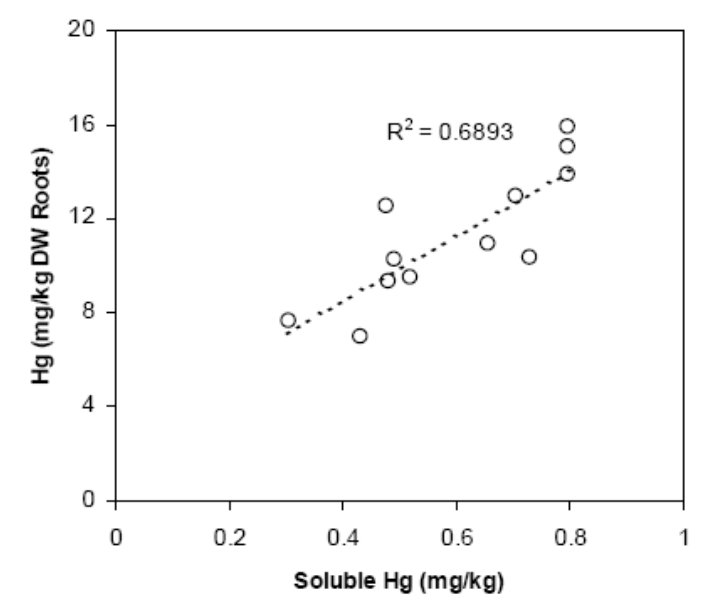
Successful phytostabilisation of Hg-contaminated substrates demands the use of plants with efficient root-Hg accumulation capacity and low Hg translocation to the shoot (Wang, 2005). Our studies show that untreated plants grown in mine tailings retained Hg preferentially in root tissues with minimal translocation to shoots, regardless of the substrate type and tested plant species. In fact, the analytical equipment did not detect Hg accumulation in shoots for most tested species (Table 4). In addition, the accumulation of Hg by roots was enhanced in the presence of both low and high levels of humic acids, as shown for B. juncea plants grown in the humic-acid amended modified GM substrate. Further experiments showed that the root-Hg accumulation pattern was positive and linearly correlated to the concentration of Hg in the water-soluble phase of humic–acid amended substrates (Figure 15). These results, consequently, indicate the strong affinity of roots for Hg, whose accumulated fraction may contain Hg adsorbed onto and/or taken up (absorbed) into root cells.
Hg污染基质的植物稳定要取得成功,需要选用根部Hg积累能力强且Hg向地上部转运少的植物(Wang, 2005)。我们的研究表明,无论基质类型和供试植物种类如何,生长在矿山尾矿中的未处理植物均优先将Hg截留于根组织中,向地上部的转运极少。事实上,对大多数供试植物,分析仪器均未检测到地上部的Hg积累(表4)。此外,如生长于腐殖酸改良的改性GM基质中的B. juncea植株所示,低浓度和高浓度腐殖酸的存在均增强了根系对Hg的积累。进一步的试验表明,根部Hg积累与腐殖酸改良基质水溶相中的Hg浓度呈线性正相关(图15)。因此,这些结果表明根系对Hg具有很强的亲和力,其积累部分可能包括吸附于根细胞表面和/或被根细胞吸收的Hg。
| Plan植物 | t Hg (mg/kg) | |||
|---|---|---|---|---|
| Substrate | Plant Species | Rep. | Root | Shoot |
| Tuic | B. Juncea | 5 | 18.9±15 | 0.4±0.2 |
| _Lupinus_sp. | 5 | 1.05±0.7 | BDL | |
| B. Juncea | 5 | 9.8±1.7 | BDL | |
| GMd | P. vulgaris | 5 | 4.2±0.3 | BDL |
| V. villosa | 5 | 5.5±0.8 | BDL | |
| GM + HA 0.125a | B. juncea | 5 | 6.5±0.8 | BDL |
| GM + HA 1.25b | B.juncea | 5 | 13.7±1.1 | BDL |
aModified GM mine tailings amended with humic acid at 0.125 g/kg; bModified GM mine tailings amended with humic acid at 1.25 g/kg; BDL = below detection leveles (5 ng/mL in the plant digests).
a以0.125 g/kg腐殖酸改良的改性GM矿尾矿;b以1.25 g/kg腐殖酸改良的改性GM矿尾矿;BDL = 低于检出限(植物消解液中为5 ng/mL)。
The results for plant species grown in the contaminated mine tailings corroborate with previous experiments with B.juncea plants exposed to Hg at concentrations ranging from 0.05 to 10 mg/L in hydroponics solutions, where almost all Hg is bioavailable (Moreno et al., 2008). For all solution concentrations, roots accounted for 98–99 % of the total plant Hg, thus demonstrating the ability of plant roots to retain Hg and control its transport to shoots. Cavalinni et al. (1999) demonstrated that most Hg taken up by roots of Triticum durum cv.
生长于污染矿山尾矿中的植物的结果,与以往B.juncea植株暴露于0.05~10 mg/L Hg水培溶液(其中几乎所有Hg均具有生物有效性)的试验结果相一致(Moreno et al., 2008)。在所有溶液浓度下,根部Hg占植株总Hg的98–99 %,表明植物根系具有截留Hg并控制其向地上部转运的能力。Cavalinni et al. (1999)证实,Triticum durum cv.
Creso after 25 days exposure to 203Hg-spiked solutions was found on cell walls at the external layers of the cortical cylinder. The binding of Hg to specific sites on the cell wall can restrict transport to sensitive sites in shoots and was suggested, therefore, as an important factor to Hg tolerance in plants (Cavallini et al., 1999).
Creso在203Hg标记溶液中暴露25天后,其根系吸收的大部分Hg分布于皮层柱外层的细胞壁上。Hg与细胞壁特定位点的结合可限制其向地上部敏感部位的转运,因此被认为是植物耐Hg的重要因素(Cavallini et al., 1999)。
Although preliminary, the results of this investigation provide conspicuous evidence that the root-Hg accumulation process may be used to phytostabilise Hg in contaminated mine tailings where phytoextraction is not possible or feasible. Further research should be carried out to investigate the role of plant roots and organic amendments on the reduction of the Hg bioavailable and mobile fractions in the soil profile.
尽管是初步结果,本研究仍提供了明确的证据,表明在无法或不宜开展植物提取的污染矿山尾矿中,可利用根部Hg积累过程实现Hg的植物稳定。应进一步研究植物根系和有机改良剂在降低土壤剖面中Hg生物有效组分和可移动组分方面的作用。
15CONCLUSION结论
Laboratory, greenhouse and field results from this research revealed that plants can remove Hg from mine tailings through ligand-induced phytoextraction. Providing that metal levels in substrates are non-phytotoxic and support biomass growth, this simple technique would allow for off-site transport and safe disposal of this contaminant. Although greenhouse studies indicated that single B. juncea crops could be induced to extract between 500 to 850 g of Hg per hectare (10 tonnes/ha x 50–85 mg of Hg/kg of shoots DW), the maximum yield for this species in the Tui field was around 25 g Hg/ha. To be economically feasible, phytoextraction yields at least 20 times higher would be needed to reduce considerably soil Hg concentrations. In order to maximise plant-Hg uptake, attention should be given to the ligand-irrigation system and plant water demands. The possibility of leaching soluble Hg species after ligand application requires such an operation to be performed ex situ where measures (e.g., geomembrane lining) can be implemented to avoid groundwater contamination. Risk analysis should be performed to quantify the risks of shoot-accumulated Hg contaminating the food chain.
本研究的实验室、温室和田间结果表明,植物可通过配体诱导植物提取从矿山尾矿中去除Hg。只要基质中金属水平不产生植物毒性并能支持生物量生长,这一简便技术即可实现该污染物的场外运输和安全处置。尽管温室研究表明,单季B. juncea作物经诱导可每公顷提取500~850 g Hg(10 t/ha x 地上部50–85 mg Hg/kg DW),但该植物在Tui田间的最大产量仅约为25 g Hg/ha。要在经济上可行,植物提取产量至少需提高20倍,才能显著降低土壤Hg浓度。为使植物Hg吸收最大化,应关注配体灌溉系统和植物需水量。由于施用配体后可溶性Hg形态可能发生淋溶,此类操作须在异位条件下进行,并采取相应措施(如铺设土工膜衬层)以避免地下水污染。还应开展风险分析,以量化地上部积累的Hg污染食物链的风险。
Phytoremediation offers advantages for the management of Hg-polluted mining areas. The establishment of a vegetative cover is a better option than inaction, as Hg (0) is spontaneously emitted from any barren or naturally-revegetated mine site, and AMD can severely contaminate local surface and groundwater supplies. Phytostabilisation could be used in situ to prevent Hg flow to other compartments. Plant roots would stabilise the substrate, reduce the Hg bioavailable fraction and Hg leaching. Ligand-induced phytoextraction could be used ex situ to remove Hg from substrates and to generate a low volume disposal residue. After reaching acceptable soil Hg levels, the substrate would allow new land uses. Additionally, a plant-based remedial system could be coupled to profit-making operations (forestry, carbon credits generation or biomass energy programs).
植物修复在Hg污染矿区管理方面具有优势。建立植被覆盖是比不采取行动更好的选择,因为任何裸露或自然植被恢复的矿区都会自发释放Hg (0),且AMD可严重污染当地地表水和地下水水源。植物稳定可在原位用于阻止Hg向其他介质迁移。植物根系可稳定基质,降低Hg生物有效组分并减少Hg淋溶。配体诱导植物提取可在异位用于从基质中去除Hg,并产生体积较小的待处置残余物。在土壤Hg达到可接受水平后,该基质即可用于新的土地用途。此外,基于植物的修复系统还可与营利性经营(林业、碳信用生成或生物质能源项目)相结合。
In spite of its apparent limitations, there are some examples of successful commercial applications of phytoextraction for Pb- and As-contaminated soils (Edenspace, 2008). The scaling up of ligand-induced Hg phytoextraction or phytostabilisation to a commercial scale, however, will require time and multidisciplinary research efforts. This would include the contribution of expertise from a wide array of disciplines, such as soil science, geology, genetics, biochemistry, microbiology, botany, environmental engineering, and human health. It is imperative that scientific knowledge be disseminated to the public in comprehensible form, as phytoremediation is strongly dependant upon their support.
尽管存在明显的局限性,植物提取在Pb和As污染土壤中已有一些成功的商业应用实例(Edenspace, 2008)。然而,将配体诱导Hg植物提取或植物稳定推广至商业规模,需要时间以及多学科的研究投入,包括土壤学、地质学、遗传学、生物化学、微生物学、植物学、环境工程和人类健康等众多学科的专业贡献。由于植物修复在很大程度上依赖公众的支持,必须以通俗易懂的形式向公众传播科学知识。
16ACKNOWLEDGEMENTS致谢
We gratefully acknowledge the National Council for Scientific and Technological Development (CNPq/Brazil) for providing a post-doctoral scholarship to the first author. The authors are also in debt to lab and field assistance provided by the technical staff of Massey University, especially to Mr. Bob Toes and to Mr. Ian Fuckert.
衷心感谢巴西国家科学技术发展委员会(CNPq/Brazil)为第一作者提供博士后奖学金。作者还感谢梅西大学技术人员在实验室和田间工作中提供的帮助,特别是Bob Toes先生和Ian Fuckert先生。
17REFERENCES参考文献
Adriano, D.C., Wenzel, W.W., Vangronsveld, J. and Bolan, N.S. (2004). Role of assisted natural remediation in environmental clean up. Geoderma , 122, 121-142.
Anderson, C., Moreno, F. and Meech, J. (2005). A field demonstration of gold phytoextraction technology. Minerals Engineering, 18, 385-392.
Andersson, A. (1979). Mercury in soils. In: J.O. Nriagu (Ed.), The Biogechemistry of Mercury in the Environment (pp. 79-106).Amsterdan, The Netherlands: Elsevier Biomedical Press.
Barkay, T., Miller, S.M. and Summers, A. O. (2003). Bacterial mercury resistance from atoms to ecosystems. FESM Microbiology Reviews, 27, 355-384.
Blaylock, M.J., Salt, D.E., Dushenkov, S., Zakharova, O., Gussman, C., Kapulnik, Y., Ensley, B. and Raskin, I. (1997). Enhanced accumulation of Pb in indian mustard by soil-applied chelating agents. Environmental Science and Technology, 31, 860-865.
Blaylock, M.J. (2000). Field demonstrations of phytoremediation of lead-contaminated soils. In: N. Terry, and G. Bañuelos (Eds.) Phytoremediation of Contaminated Soil and Water (pp. 1-12). Florida : Lewis Publishers.
Bowell, R.J., Foster, R.P. and Gize, A.P. (1993). The mobility of gold in tropical rain forest soils. Economic Geology, 88, 999-1016.
Bundt, M., Albrecht, A., Froidevaux, P., Blaser, P. and Fluhler, H. 2000. Impact of preferential flow on radionuclide distribution in soil. Environmental Science and Technology, 34, 3895–3899.
Cabral, A.R., Lehmann, B., Kwitko, R. and Cravo Costa, C.H. (2002). The Serra Pelada Au- Pd-Pt deposit, Carajás mineral province, Northern Brazil: reconnaissance, mineralogy and chemistry of very high grade palladian gold mineralization. Economic geology, 97, 1127-1138.
Cavallini, A., Natali, L., Durante, M. and Maserti, B. (1999). Mercury uptake, distribution and DNA affinity in durum wheat (Triticum durum Desf.) plants. Science of the Total Environment, 233/234, 119-127.
Evans, L.J. (1989). Chemistry of metal retention by soils. Environmental Science and Technology, 23(9), 1046-1056.
Heeraman, D.A., Claassen, V.P. and Zasoski, R.J. (2001). Interaction of lime, organic matter and fertilizer on growth and uptake of arsenic and mercury by Zorro fescue (Vulpia myuros L.). Plant and Soil, 234, 215- 231.
Hinton, J.J. and Veiga, M.M. (2001). Mercury contaminated sites: a review of remedial solutions. In: Proceedings of the National Institute of Minamata Disease Forum (NIMD) (pp 73-84), Minamata City, Japan.
Hylander, L.D. and Meili, M. (2003). 500 years of mercury production: global annual inventory by region until 2000 and associated emissions. Science of the Total Environment, 304,13-27.
Gunson, A.J. and Veiga, M..M. (2004). Mercury and artisanal mining in China. Environmental Practice, 6(2), 109-120.
Gustin, M. S., Ericksen, J. A., Schorran, D. E., Johnson, D. W., Lindberg, S. E. and Coleman, J. S. (2004). Application of controlled mesocosms for understanding mercury air-soil-plant exchange. Environmental Science and Technology, 38, 6044-6050.
Kabata-Pendias, A. (2000). Trace Elements in Soils and Plants (3rd Edition). Florida: CRC Press.
Lytle, C.M., Lytle, F.W., Yang, N., Qian, J-H., Hansen, D., Zayed, A. and Terry, N. (1998). Reduction of Cr(VI) to Cr(III) by wetland plants: potential for in situ heavy metal detoxification. Environmental Science and Technology, 32, 3087-3093.
Ma, L.Q., Komar, K.M. and Tu, C. (2001). A fern that accumulates arsenic. Nature, 409, 579.
McGrath, S.P. (1998). Phytoextraction for soil remediation. In: R.R Brooks (Ed.) Plants that Hyperaccumulate Heavy Metals (pp 261-287). Cambridge, United Kingdom: CAB International.
McGrath, S.P. and Zhao, F.J. (2003). Phytoextraction of metals and metalloids from contaminated soils. Current Opinion in Biotechnology, 14, 277-282.
McIntyre, T. (2003). Phytoremediation of heavy metals from soils. In: D.T. Tsao (Ed.) Phytoremediation (pp. 97-124). Berlin,Germany:Springer.
Malm, O. (2001). Autismo é associado ao uso excessivo de vacinas. Ciência Hoje, 30(175),17-18.
Meagher, R.B., Rugh, C.L. Kandasamy, M.K., Gragson, G. and Wang, N.J. (2000). Engineering phytoremediation of mercury pollution in soil and water using bacterial genes. In N. Terry, and G. Bañuelos (Eds.), Phytoremediation of Contaminated Soil and Water (pp 201-219). Florida: Lewis Publisher.
Meagher, R.P. and Heaton, A.C.P. (2005). Strategies for the engineered Phytoremediation of toxic element pollution: mercury and arsenic. Journal of Industrial Microbiology and Biotechnology,32, 502-513.
Mo, S.C., Choi, D.S. and Robinson, J.W. (1989). Uptake of mercury from aqueous solutions by duckweed: the effects of pH, copper, and humic acid. Journal of Environmental Science and Health, A24, 135-146.
Morel, F.M.M., Kraepiel, A.M.L. and Amyot, M. (1998). The chemical cycle and bioaccumulation of mercury. Annual Reviews in Ecological Systems, 29,543-566.
Moreno, F. N., Anderson, C. W. N., Stewart, R. B. and Robinson, B. H. (2004). Phytoremediation of mercury-contaminated mine tailings by induced plant-Hg accumulation. Environmental Practice, 6(2), 165-175.
Moreno, F.N. and Sígolo, J.B. (2007). Fitoestabilização controlada: proposta de processo de revitalização para passivos de areias de fundição. In: E. N. Moeri, D. Rodrigues, and A. Nieter (Eds.) Áreas Contaminadas : Remediação e Revitalização (pp.81-99). São Paulo, São Paulo: Signus.
Moreno, F. N., Anderson, C. W. N., Stewart, R. and Robinson, B. H. (2008). Phytofiltration of mercury-contaminated water: plant accumulation and volatilisation aspects. Environmental and Experimental Botany, 62, 78-85.
Morrell, W.J., Stewart, R.B., Gregg, P.E.H., Bolan, N.S. and Horne, D. (1996). An assessment of sulfide oxidation in abandoned base-metal tailings, Te Aroha, New Zealand. Environmental Pollution, 94(2), 2176-225.
Nowack, B., Schulin R. and Robinson, B. H. (2006). Critical assessment of chelant-enhanced metal phytoextraction. Environmental Science and Technology, 40 (17), 5225-5232.
Oliveira, S.M.B., Melfi, A.J., Fostier, A.H., Forti, M.C., Favaro, D.I.T. and Boulet, R. (2001). Soil as an important sink for mercury in Amazonia. Water, Air, and Soil Pollution, 126, 321-337.
Pilon-Smits, E. (2005). Phytoremediation. Annual Review on Plant Biology, 56, 15-39.
Robinson, B.H., Leblanc, M., Petit, D., Brooks, R.R., Kirkman, J.H. and Gregg, P.E.H. (1998). The potential of Thlaspi caerulencens for phytoremediation of contaminated soils. Plant and Soil, 203, 47-56.
Rodriguez, L., Lopez-Bellido, F.J., Carnicer, A. and Alcade-Morano, V. (2003). Phytoremediation of Hg-polluted soils using crop plants. Fresenius Environmental Bulletin, 12(9), 967-971.
Roulet, M., Lucotte, M., Farella, N., Serique, G., Coelho, H., Souza Passos, C.J., De Jesus S. E., Scavone, A. P., Mergler, J. R. D. and Amorin, M. (1999). Effects of recent human colonization on the presence of mercury in Amazonian ecosystems. Water, Air, and Soil Pollution, 112(3-4), 297-313.
Roulet, M., Lucotte, M., Canvel, R., Farella, N., Courcelles, M., Guimarães, D. Mergler, J.R.D. and Amorin, M. (2000). Increase in mercury contamination recorded in lacustrian sediments following deforestation in Central Amazon. Chemical Ecology, 165(3-4), 243- 266.
Schuster, E. (1991). The behaviour of mercury in the soil with special emphasis on the complexation and adsorption processes- a review of the literature. Water, Air, and Soil Pollution, 56, 667-680.
Tandy, S., Schulin, R. and Nowack, B. (2006). Biodegradation and speciation of residual SSethylenediaminedisuccinic acid (EDDS) in soil solution left after soil washing. Environmental Pollution, 142, 191-199.
Tsao, D.T. (2003). Phytoremediation. Berlin, Germany: Springer.
Tassi, E. and Barbafieri, M. (2004). Phytodec: um projeto europeu para uso da vegetação no gerenciamento de áreas contaminadas. In: E. Moeri, R. Coelho, and A. Marker (Eds.) Remediação e Revitalização de Áreas Contaminadas (pp. 159-168). São Paulo, São Paulo: Signus.
Wallschläger, D., Desai, V.M.M. and Wilken, R. (1996). The role of humic substances in the aqueous mobilization of mercury from contaminated floodplain soils. Water, Air, and Soil Pollution, 90, 507-520.
Wallschläger, D., Desai, V.M.M., Spengler, M. and Wilken, R. (1998 a). Mercury speciation in floodplain soils and sediments along a contaminated river transect. Journal of Environmental Quality, 27,1034-1044.
Wallschläger, D., Desai, V.M.M., Spengler, M., Windmöller, C.C. and Wilken R. (1998 b). How humic substances dominate mercury geochemistry in contaminated floodplain soils and sediments. Journal of Environmental Quality, 27, 1044-1057.
Wang, D.Y., Qing, C.L., Guo, T.Y. and Guo, Y.J. (1997). Effects of humic acid on transport and transformation of mercury in soil-plant systems. Water, Air, and Soil Pollution, 95, 35-43.
Wang, Y., Stauffer, C., Keller, C. and Greger, M. (2005). Changes in Hg fractionation in soil induced by willow. Plant and Soil, 275, 67-75.
Wilkinson, G., Gillard, R. D. and McCleverty, J. A. (1987). Comprehensive Coordination Chemistry: the synthesis, reactions, properties and applications of coordination compounds (Volume 2). London,United Kingdom: Pergamon Press.
Van Netel, L., Mertens, J., Oorts, K. and Verheyen, K. (2007). Phytoextraction: how far from practice. Environmental Pollution, 150, 34-40.
Veiga, M.M. and Hinton, J.J. (2002). Abandoned artisanal gold mines in the Brazilian Amazon: a legacy of mercury pollution. Natural Resources Forum, 26,15-26.
Veiga, M.M. (2004). Mercury pollution: revealing sources and suggesting solutions. Environmental Practice, 6(2), 97-98.
Veiga, M.M., Maxson, P.A. and Hylander, L.D. (2006). Origin and consumption of mercury in small-scale gold mining. Journal of Cleaner Production, 14, 436-447.